
‘Evil doesn’t sleep; it waits’

by Pam Tinsley

Pixabay

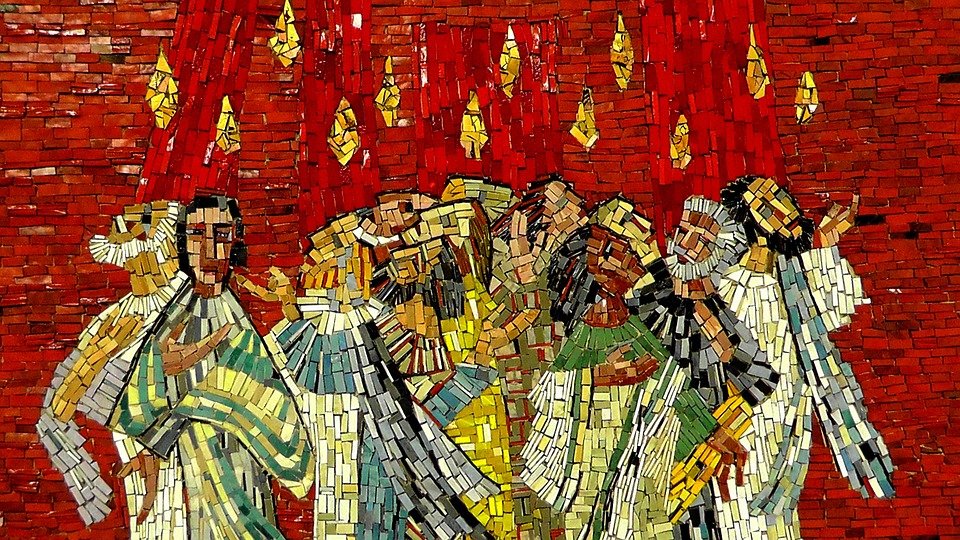
In his March 21 sermon, a preacher I know quoted from the movie Justice League: “Evil doesn’t sleep; it waits.” The text for the sermon was John 12:20-33, and Jesus tells his followers that their discipleship has a cost. He also proclaims that the “ruler of this world will be driven out.”

The ruler of this world is evil, and evil still wields horrific power. Our nation has just witnessed yet another racist and misogynist hate crime perpetrated – this time against women of Asian descent. This heinous act of violence and terrorism reminds us that the pandemic of racism relentlessly ravages our nation and our common humanity. These evils aren’t new. For those of us who are White, the evils might appear to be beneath the surface and then erupt. For those who are Black, Indigenous, and People of Color (BIPOC), these evils are pervasive. Instead of confronting and telling the truth about racism, our nation has chosen to ignore it or believe that it doesn’t exist. It does exist. Evil waits. It waits for opportunity.

One of the promises we make at Baptism is to renounce the “evil powers of this world which corrupt and destroy the creatures of God” (BCP, 302). There is no doubt that racism, domination/supremacy, terrorism, or violence – whether physical, psychological, or verbal – are dehumanizing evil powers. And the fight against evil requires both our words and our actions.

As we will soon promise at the Great Vigil of Easter, let us “reaffirm [our] renunciation of evil and renew our commitment to Jesus Christ.”

I’ll be the first to say that this isn’t easy. Yet, it’s incumbent upon us all to take this vow to heart, to follow Jesus into the hard places where he leads us, and to name and confront the evil we encounter daily wherever we are.

God in the bond market?

by Fletcher Lowe

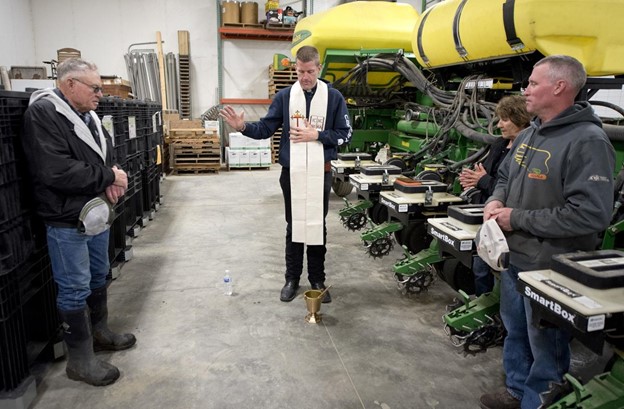
Over the years in the parishes I have served, I have been visiting members where they work.  The conversations usually go: What do you do here?  What is the Sunday-Monday – the Faith/Work – connection with what you do here?  This latter question is, for most all of the church members, the first time that question has been raised for them.  Yet where they work is the place where they spend most of their God-given time and talent.  What an indictment of the Church! 

Here are the words of one businessman, David Wofford, I visited. The words he wrote (pre COVID-19) describe his “Aha!” to that second question:   

Excuse me? Faith at work?  I’m not a priest or a rabbi. It’s not my job to heal the sick or mend broken souls. I’m just a “used-bond salesman.”  These were my initial thoughts when Fletcher said he wanted to visit me at work to discuss faith at work.

Upon his arrival, Fletcher surveyed my work area. The space is a large trading floor with people sitting in front of several monitors blinking price action in the bond market. Everyone sits almost elbow to elbow and it can get a bit loud. The two of us then moved to an office for a little privacy. I tried to explain that the atmosphere in my office was closer to that of a fraternity house and not exactly like a place of worship. We work hard, do a good job, and at the same time, have a lot of fun.  More often than not, that fun is similar to the fun we had in elementary school.

After asking for more details about my job, Fletcher thought a bit and he said something that opened my eyes. My faith was all around me. It is there when I try to help my accounts meet their goals with honesty and integrity. If they are down, I try to cheer them up or put them at ease. The camaraderie with my colleagues is also a part of my faith. Many of us have worked together over twenty years in a very stressful occupation. We share lots of laughs. We pull together when times are tough.  Another salesman and I like to read “Forward Movement” on line during down time. There is also an email I receive from Fletcher entitled “On the Job Prayers.” I pass that around to some in my office to help alleviate some of the stress during the day.

I park across the street from my office. Each morning there is a little ritual on my walk. I thank God for my great family. I ask for Him to help me be a better father and husband. I thank Him for the opportunities I have and the friends around me.  I ask for His help when times are rough or a friend is in need. I thank Him for the sunshine or the rain. God walks me to work….and everyone in the office says I only park across the street because I’m a tight wad and can save $30 a month!!

Faith at work?  Even for a “used-bond salesman”? Believe it or not it can happen.

Peace be with you

by Demi Prentiss

Attainment of Inner Peace Flickr photo by Karthik Prabhu

St. Seraphim of Sarov is often quoted as having said, “Acquire inner peace and thousands around you will find their salvation.”

All during Christmas and Epiphany, we Christians have focused our awareness on the Light of Christ. As we walk our Lenten journey, we’re invited to practice silence and stillness, discovering Christ’s light within our own hearts as well as in the world around us. Our Lenten practices can help us nurture that light, grounding us in the peace that Christ’s presence brings.

The daily work of practicing inner stillness can free us to remember who we are – a Child of God, beloved and called. And in that clarity of our true identity, joy blossoms as quietly as a flower unfolding. That joy is the wellspring of the generosity – in terms of possessions and time, skills and spirit – that is the hallmark of one who follows Christ’s way of love.

Seraphim understands that joy as God’s irresistible gift – whenever we receive that joy and offer it to another, it sets the world alight.  “We cannot be too gentle, too kind. Shun even to appear harsh in your treatment of each other. Joy, radiant joy, streams from the face of one who gives and kindles joy in the heart of one who receives.” In the sharing and receiving, such a community of joy participates in the reign of God.

May our inner work in Lent lead us to the realization that our daily work – offering ourselves as such conduits of joy – can bring us to a place of true peace.

Hearts and Ashes

by Demi Prentiss

We’ve just celebrated Valentine’s Day, on the very same day as the lectionary reminds us of Jesus’ transfiguration, marking the shift from his Galilean ministry to his prophet’s journey to Jerusalem and the cross. We Christians are about to move from the festivities of Mardi Gras to the solemnities of Ash Wednesday and the 40-day journey that leads us to witness Christ’s transit from death to life.

This liminal week reminds us that love is the catalytic transformational force that God brings into the world. Love – the love that made St. Valentine a martyr – gives us new eyes to perceive God’s transformational work all around us. Love – the love that announced “This is my beloved. Listen!” – created light in the darkness and lights each of our lives.  Love – the love that tenderly reminds us that we are dust – proclaims that we are made in the very image and likeness of God.

As we embark on the journey of Lent, may we remember that our calling is not to religious athleticism, demonstrating by our strenuous practice that we are worthy of God’s love. As God reminds us, in the words of the prophet Amos, “I hate, I despise your festivals, and I take no delight in your solemn assemblies.” (Amos 5:21)  Our calling, instead, was proclaimed by Micah: “He has told you, O mortal, what is good; and what does the Lord require of you but to do justice, and to love kindness, and to walk humbly with your God?” (Micah 6:88)

This Lent, may we walk the Way of Love, remembering that “Go” is an essential element of the Christian life.  Go out from the comfort of church pews into the challenges of daily life. Go beyond our timeworn practices to experience a new perspective. Go into respectful relationship with unmet neighbors and unfamiliar cultures, to look into the eyes of siblings we’ve never met.

May our journey this Lent awaken us to new life, as we walk into the immensity of the reign of God.

Pick your ‘Pathway’

by Fletcher Lowe

 “Throughout my career, I have heard lay leaders and professionals yearning for affordable, accessible education, training, and resources to support their ministries,” WOW!! Those words come from Dr. Julie Lytle, the Director of Distributive and Lifelong Learning, speaking of Pathways for Baptismal Living, developed out of the Episcopal Bexley Seabury Seminary. “We’ve created Pathways as a resource hub in response. It is designed for people to enter where they want and need so they can discern, explore, and deepen their faith and respond to God’s call.”

Over 20 courses, workshops, events, and activities are available and can be taken in the order that best suit personal interests and needs. There are programs for discernment, personal enrichment, licensure in cooperation with the local bishop, and ways to meet church-wide imperatives. The programs are designed with opportunities for personal reflection as well as live and asynchronous online interaction with the instructor and other participants.

One of Pathways’ signature offerings is coming Sunday, February 14, 6:30-7:30pm, Eastern. “Sharing Stories of Baptismal Living” will air live, featuring Byron Rushing.  Known as a politician, public historian, community organizer, and Christian, Rushing has said, “If Jesus was not in the legislature, I wouldn’t be there either.”  He currently serves as vice president of the Episcopal Church’s House of Deputies and spent 25 years as a representative in the Massachusetts state legislature.

Register here to participate in the Feb. 14 conversation.  I hope to “see” you there and then.

Baptised into Light

by Pam Tinsley

YouTube – CBC News Jan. 20, 2021

Like so many, I found Amanda Gorman’s inauguration poem, “The Hill We Climb,” inspiring.

I’m reminded of the promises we make at baptism by her closing verses:

When day comes we step out of the shade,

aflame and unafraid,

the new dawn blooms as we free it.

For there is always light,

if only we’re brave enough to see it.

If only we’re brave enough to be it.

In John’s Gospel Jesus is the light of all people, and his light shines in the darkness. Jesus then invites us to be brave enough to see his light and to be his light in the world. Each question posed at baptism also asks us to be Christ’s light in the world: Will we teach, pray and gather – even if by Zoom? Will we persevere in resisting evil and then repent when we stray? Will we model the Good News by our words and our actions? Will we love one another? And will we strive to make our world more loving and more just?

Whenever we live into our baptismal promises – wherever we are and however minor our actions might seem – we shine a light that others can see. We might heal someone’s wounds with a kind word; we might lend a listening heart to a shut-in – or someone wearied by the persistent isolation of quarantining; we might encourage a spirit of community; we might help someone make an appointment for a covid-19 vaccination. This is how we reveal Christ’s presence in the world.

Even in the midst of pandemic, racial injustice, social and political turmoil, and isolation, we can be brave enough to look for and to see Christ’s light – there in the seemingly never-ending shade. For, as Ms. Gorman reminds us, there is always light.

Gifted

by Demi Prentiss

Creative Commons arsenat29 – G-55801-U1H

For many of us whose faith is shaped by the traditions of the Christian year, we’ve been thinking about gifts for two or three months. From well before Christmas Day all the way through Jan. 6, Epiphany, we’ve been asking questions:

  • What gift can we choose to put under the Christmas tree to convey our love to those we cherish?
  • How do we best prepare our hearts and homes for celebrating God’s greatest gift to each of us – the Christ Child, God incarnate?
  • How can we join with the Three Kings in offering our gifts to Immanuel?

At this point in the Christian year, our attention has moved on to the baptism of Jesus, traditionally the focus of the readings on the first Sunday after Epiphany. We’ve moved from focusing on gifts to getting down to the work of ministry. In the context of our own baptism, and of the Baptismal Covenant, perhaps that “doing” focus overlooks an important message that baptism conveys, to us and to the world:

Because of God’s gifts to us, and because of the covenant between us and our Creator that baptism represents, we can claim an important part of our identity. We are not only gifted; we are also gift.

Baptism sets in motion God’s sending of each of us into the world as God’s gift. Our person, our presence, and our distinctive perspective on the world – all God-given – are gifts that no one else can offer. Wherever we find ourselves, we have a part we can play that is unique. It is that self-offering that is the essence of our ministry in the world. We best serve as God’s ambassador when we show up as the precious, gifted, and called Child of God we are created to be. Claim that. Claim your identity as God’s gift for healing the brokenness confronting you. Perhaps less by what you do than simply by being who you are – a Christ-bearer. Be the change you long to see. Be the gift that keeps on giving.Because of God’s gifts to us, and because of the covenant between us and our Creator that baptism represents, we can claim an important part of our identity. We are not only gifted; we are also gift.Because of God’s gifts to us, and because of the covenant between us and our Creator that baptism represents, we can claim an important part of our identity. We are not only gifted; we are also gift.

Baptism, Epiphany, Insurrection

by Fletcher Lowe


A man holds a wooden cross after retrieving it from the Bosphorus river’s Golden Horn, as part of celebrations of the Epiphany day at the Church of Fener Orthodox Patriarchiate in Istanbul, on Jan. 6, 2015. The Orthodox faith uses the old Julian calendar in which Christmas falls 13 days after its more widespread Gregorian calendar counterpart on Dec. 25. AFP PHOTO / BULENT KILIC

January 6 was the Feast of the Epiphany.  Sunday, January 10 we marked the Baptism of Jesus.  What do they have to do with the insurrection at the U.S. Capitol that took place on Epiphany? Everything!!

The Magi were seeking their true king and they found him in Jesus. It is a reminder that our true king is  not a sports figure or an actor or a political figure, even a President. We as Christians are subject to Christ the King – the name that is above all names. He is the filter through which we view all others who would be our “kings.”. The only personality cult that any Christian belongs to is the personality of Jesus. All others are idolatry.

And the Baptism of our Lord reminds us of our own baptism, wherein we vowed to “proclaim by word and example the good news of Christ,” “to seek and serve Christ in all persons, loving our neighbor as ourselves,” “to strive for peace and justice among all people and respect the dignity of every human being.” Those are our marching orders as the Baptized, as important now as ever amidst the dangers that currently prevail in our national life.

So, let’s remember who our true king is and, as his followers, be mindful of living into the vows of the Baptismal Covenant as Christians and as citizens.

How race shapes baptismal living

by Fletcher Lowe

We at Partners for Baptismal Living have been exploring how race impacts our daily lives. There is a major contrast.

Here are conversations with two African Americans.  A former CEO of a large Richmond, VA hospital said that white privilege is subtlety present as he interacts with white folks in the workplace. He has also been aware that in promotion, his path has been harder than others who were white, having been passed over even when he felt he was more qualified.  An African American lady, shared that fear was omnipresent when she goes out – fear of police pulling her over because she is in the wrong neighbor or driving too fancy a car.  In stores she always gets a receipt lest she be accused of stealing.  She also feels that the playing field is not level with both her race and her gender being liabilities.

Now for the contrast.  For the white folks we have conversed with, the racial issue is less the backdrop of one’s daily life. Awareness of race comes less from how it affects these whites directly and more from how it affects people of color connected to their work situations. A friend who is in Virginia state government’s office of Conservation and Parks mentioned how they are reaching out to employ more people of color in his agency and how they are training the Park rangers in dealing with situations of racial harassment among visitors.  A head of a mental health non-profit spoke of how his agency works with Black congregations to help them help their members overcome the mental illness stigma that sometimes prevents them from getting treatment.

Some of us white folks are often blinded by our racial assumptions.  The CEO mentioned above was in the church building of the multiracial congregation of which my wife and I are a part.  In came a couple of white tourists for the building has historical significance. They began a conversation with the CEO and asked him how he liked his job as the sexton. Without losing a beat, he replied, “I am not the sexton, I’m the Senior Warden!”

As each of these people is a committed Christian, it raises the question for us: How do we work to level the playing field, to work so fear is not a constant undercurrent. The Advent message of preparation for the coming of the Prince of Peace calls us to work for that peace among races that manifests itself in diversity, equity, and inclusion.

Listening = Action

by Pam Tinsley

Our Baptismal Covenant is much more than the words we recite at baptism or when we renew our baptismal promises. Our Baptismal Covenant is a call to action. It is a call to live our lives differently from secular society by living and loving as Jesus does. And that call applies to every aspect of our lives, whether we’re at home, in the community, at work, or at church.

Sometimes the action that we are called to do is simply to listen – in particular as we, the body of Christ, strive for racial justice and to respect the dignity of People of Color.

In October the Diocese of Olympia devoted most of its day-and-a-half annual convention to listening to the voices of those who have been deeply hurt by the Church. Our diocesan Ethnic Ministries Circles of Color invited us into a Listening Circle of Voices in The Wilderness. A dozen or so panelists shared their experiences of pain and perseverance in response to the questions:

  • What do you love about being part of the Diocese of Olympia?
  • What harm have you experienced or witnessed in the Episcopal Church?
  • What might the diocese do to more fully become the Beloved Community?

Each story revealed how deep and pervasive both systemic racism and cultural indifference to it are. Panelists relived the historical trauma that the dominant culture had inflicted upon them with the uncertainty of how others would respond.  Sharing their personal pain was a profound act of trust. These advocates of repentance, reconciliation, and justice were willing to invite those of us who benefit from White privilege into this circle of love so that together, through acceptance and respect, we can transform the world.

Their stories of pain were at times heart-wrenching. And yet, we also heard stories of joy and we heard wisdom – simply by listening deeply and respectfully to our friends as they called us to live more intentionally into our baptism in order to be more fully the body of Christ.

Who might you listen more deeply to as a first step in inviting trust?