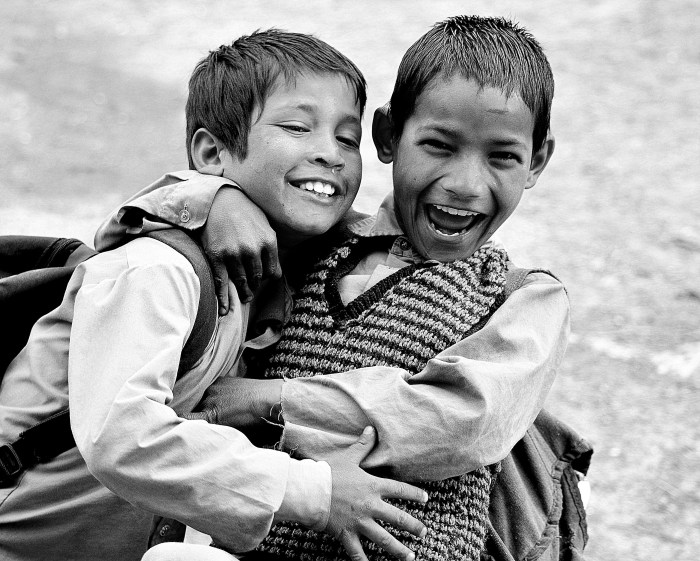
Worship as resistance

Photo by Luis Morera on Unsplash

by Pam Tinsley

A priest I know recently attended a meeting of local business leaders who were struggling to comprehend the many changes that are being thrust upon our nation. The meeting included an elected official who was also struggling for answers and how to respond in such times. The leaders conveyed a sense of hopelessness, pondering where to find hope. Then, they turned to the priest and said that the church was their only hope. This took place in a blue city in the heart of the “none zone.”  Their message was that the church is our only hope.

When we focus on our baptismal promises, as Episcopalians we often focus on the three action-oriented promises – especially in these challenging times as we advocate on behalf of so many who are being increasingly marginalized and ostracized. We are actively striving to proclaim the Good News of the Jesus of the Beatitudes, especially in response to the loud voices of Christian Nationalists.

Yet, our first promise at baptism calls us to continue in the apostles’ teaching and fellowship, in the breaking of bread, and in the prayers. This promise is about worship. As Demi Prentiss wrote in her blog last week, this promise points to being rooted in Christ. And we can’t be rooted in Christ if we aren’t engaged in worship.

Communal worship matters because it helps us learn about Jesus. It helps us pattern our lives after him. We encounter Christ in the sacraments and hear the stories of God’s profound love for us in the scriptures. We offer our thanks and praise to God. Our souls respond to the Holy One.

We can’t respond to our second baptismal promise – to persevere in resisting evil and to repent and return to the Lord whenever we fall into sin – without faithful worship in community. Corporate worship inspires us to love and to good deeds – and to become inspired ourselves. It keeps us accountable to God and to one another.

Worship is also a form of resistance that pushes against the status quo. Worship transforms what could be fleeting hope from mere wishful thinking to something concrete and sustaining. And worship transforms us into agents of God’s hope to go forth into the world.

Rooted in Christ

by Demi Prentiss

For in the water and the Word of baptism, we have been rooted into the very life of Christ.

Photo by Anjas A V on Unsplash

What a glorious vision of what takes place at every baptism, and even at the four yearly occasions when Episcopalians renew our baptismal covenant (Feast of the Baptism of our Lord, Easter, Pentecost, and All Saints’ Day): “Rooted in the very life of Christ.” Like the tree planted by the water, we recognize that we are sustained by the Word of God (Jesus Christ, especially as revealed in scripture) and the water that represents God’s sustaining love, bathing us at all times and in all places.

The opening quote above was written by Mark S.B. Docken, a 1982 graduate of Luther Seminary, in a reflection on Psalm 1.  To offer more context:

….[T]here was a severe drought when I served in northeast Montana, and the Big Muddy went dry. Nevertheless, the cottonwoods were sustained by the subterranean moisture invisible to the eye. When we encounter the arid times of depression, oppression, loneliness, ill-health, and grief, we trust that God will sustain us even when we cannot sense it. For in the water and the Word of baptism, we have been rooted into the very life of Christ. “It is not I who lives, but Christ who lives in me” (Galatians 2:20). We trust that God is an ever-flowing stream of justice, unconditional love, and blessing.

Each day, each hour, each minute we are immersed in the blessing of being rooted in Christ. Our challenge is to claim and proclaim it, by living into our identity as members of Christ’s Body.

The birth of respect

by Brandon Beck

Sister Wendy Beckett, SNDdeN (25 February 1930 – 26 December 2018), well-known Catholic nun, hermit, teacher, and art historian is my Lenten guide this year. Among the many videos, TV series, books, and other media Sister Wendy produced in her life, two books stand out to me for such a time as Lent: The Art of Lent: A painting a day from Ash Wednesday to Easter (SPCK: London, 2017) and The Art of Holy Week & Easter: Meditations on the Passion and Resurrection of Jesus (SPCK: London, 2021, posthumous).

Recently, I was asked “to recall a time when [I] came to respect the dignity of another human being [and to share w]hat allowed that to happen.”

How divine that God should give me Sister Wendy’s Lenten and Easter books as guides while also asking me this discernment question.

I wonder how you might answer the prompt for yourself, what you might recall of such a transformational moment in your own life.

As I am walking with Sister Wendy this season, I find that I cannot pinpoint the moment I came to respect the dignity of another until I reflect on the moment I came to respect my own dignity.

I struggle by using words when words are not necessary. I speak to fill silence, over-intellectualize, info-dump, and people-please with mimicry and excessive explanation. At times,  I can be inauthentic, raising my own feelings of inadequacy and subsequent lack of self-respect.

Lent has become a time for me to practice a better way of thinking, feeling, and acting toward myself. I focus more deeply on drawing near to God through silence, pause, listening, and taking on perspectives other than my own.

If I can improve my conscious contact with God through seeing myself more as God sees me –with dignity and respect – then I can see others more as God sees them, with that same dignity and respect. With those clearer lenses, I can perform fewer of those overcompensating behaviors, thus reducing my shame cycle.

Woman with a pink (1665-69) Rembrandt, The Met 5th Ave, G616

Here’s just one example of how Sister Wendy is helping me.

The First Sunday of Lent, Sister Wendy themes Silence. For Monday of that first week, she reflects on Profound silence using Rembrandt’s Woman with a pink (1665-69). She says, “The capacity for silence – a deep, creative awareness of one’s inner truth – is what distinguishes us as human.”

Sister Wendy says of Rembrandt’s Woman, “she is explicitly encountering the mystery of being human.”

And that’s the key for me: simply encounter the mystery of being human. In the silence of the streets of New York City surrounded by the crowds rushing by; on the edge of the Grand Canyon surrounded by skunks, squirrels, and moose; holding the hand of my beloved; not doing, when yesterday I would have done.

Let me find my own inner silence and let the mystery be.

Choose spirit-filled!

by Pam Tinsley

How Full is Your Bucket Is the title of a book I read years ago for professional development.Authors Tom Rath and Donald Clifton’s premise is that each of us has an invisible “bucket,” and each interaction with another person can help fill our “bucket” by making us feel more valued, more positive. Conversely, when we say or do negative things, we diminish other people and ourselves. Those interactions affect our physical health; our mental health; our productivity; and even our longevity.

Each of us also has an invisible “dipper.”  When we use that dipper to fill other people’s buckets – by saying or doing things to increase their positive emotions and energy[1] – not only do we fill their buckets, but we also fill our own bucket.

I was reminded of this book on the first Sunday in Lent when we read in Luke’s Gospel that Jesus is full of the Holy Spirit as he is led in the wilderness by the Holy Spirit. It’s no surprise that Jesus is full of the Holy Spirit. After all, he’s just been baptized in the Jordan River by John the Baptist and anointed by the Holy Spirit. He’s also been affirmed as God’s beloved Son, with whom God is well-pleased. As Jesus fasts for 40 days in the wilderness, the devil keeps trying to empty Jesus’ bucket by tempting him.

At baptism, we, too, are anointed and affirmed. We’re sealed by the Holy Spirit and marked as Christ’s own – forever. Our buckets are full. They’re full of the Holy Spirit. They’re full of love – because God created us in love and for love.

Every day, throughout the course of our lives, each of us has multiple opportunities to fill someone else’s bucket – or to dip from it. Each such encounter is a choice. We can fill someone’s bucket, or we can dip from it. We do this by choosing to be loving and kind – especially in the face of adversity and even cruelty. By choosing to be kind we can profoundly shape our relationships, our health, and our spiritual well-being. This Lent, I’m choosing a daily practice of kindness. And I invite you to join me in this practice, as together we spread Christ’s love in a way that just might offer hope and healing to our hurting world.


[1] Tom Rath and Donald Clifton, PhD. How Full is Your Bucket (New York: Gallup Press, 2004), 15.

Not far . . .

Marked as Christ’s own forever – Instagram

by Edward Lee [From his parish’s daily 2025 Lenten Reflections written by parishioners]

And when Jesus saw that he [the scribe] answered wisely,  he said to him, “You are not far from the kingdom of God.”  Mark 12:34

And what was the scribe’s wise answer? A paraphrase of what Jesus had declared earlier when the scribe asked him, “Which commandment is the first of all?” Jesus’s reply, drawn from Hebrew scripture: “The first commandment is this: Hear, O Israel: The Lord our God is the only Lord. Love the Lord your God with all your heart, with all your soul, with all your mind, and with all your strength. The second is this: Love your neighbor as yourself. There is no other commandment greater than these.”

I am a “cradle Episcopalian” from birth (1934) and baptism (1935), all the way to becoming a bishop (1989). I am steeped in the language and liturgies of the Book of Common Prayer (BCP) the many texts of which have informed and nurtured my life as a disciple of Jesus, the Christ. And probably none more so than the above passage. For centuries it has been referred to as Jesus’s “Summary of the Law” with the “shall nots” of the Ten Commandments firmly echoing in mind and memory. In the current BCP it is incorporated in the text of “A Penitential Order” that can precede celebrations of the Eucharist. The emphasis in both contexts is on personal contrition, confession, repentance, amendment of life, and pardon; the getting our lives right with God, and therefore closer to God’s kingdom. Let’s be clear, it is a basic and faith-tested practice of Christian spirituality and discipleship. And still is when it comes to serious soul-searching.

However, over the years I’ve come to realize it is also a spirituality and discipleship for Christian community: how we relate to each other and our neighbors as deemed and demonstrated by Jesus; and live in the whole world that God with/in Jesus has “so loved,” and not just the church.

For me the operative biblical word is Covenant with a capital C. It’s about a holy relationship that is mutual and reciprocal, initiated by God in Christ, but beckoning us, even wanting us, to come and be nearer to God’s kingdom with all our capacities of heart, soul, mind, and strength, and not only our contrite confessions and repentance. It’s a radical hope and dare by God. Dare we reciprocate and embrace it?

The sacramental sign and action of this Covenant is Holy Baptism (BCP, p. 299ff) by which we are “sealed by the Holy Spirit in Baptism and marked as Christ’s own for ever.” Yes, marked for ever. This Lent let’s think, reflect, and pray about that holy claim on our lives. It can be risky, but I suspect we won’t get much closer to God’s kingdom if only we would let ourselves. 

I want to walk as a child of the light*

by Demi Prentiss

For me, darkness can feel big, oppressive.  Standing outside on a moonless night, or alone in a closed, utterly dark room, there are times that the darkness seems to grow, like a slowly expanding comforter that threatens to smother me. It can feel almost invincible.

Yet when the tiny beam of my penlight cuts through that darkness, it shrinks. It practically evaporates wherever the light touches it. And a path appears, guiding my vision ahead and allowing my footsteps to follow.

As individuals, we often underestimate what we have to give. When the darkness presses in upon us, we can hardly imagine that we might wield power against it. Br. Curtis Almquist, SSJE, warns against yielding to such fear: “If you were to say, ‘there doesn’t seem to be much light in me right now…’ you might be surprised. In a dark place, even a little bit of light will have a brilliant effect.” Almquist writes:

“Your own life is a … gift from God to the world. As followers of Jesus Christ, we are to bear the beams of God’s love and light and life, especially to those who wouldn’t otherwise know it. If you were to say, ‘there doesn’t seem to be much light in me right now…’ you might be surprised. In a dark place, even a little bit of light will have a brilliant effect.”

The little bit that each of us brings is enough.  And as more of us choose to let our little light shine, we increasingly become what God has created us to be, acting as a community of faith.  As John 1:3-5 reminds us, “What has come into being in him was life, and the life was the light of all people. The light shines in the darkness, and the darkness did not overcome it.”

May we grow daily in our vocation of being light bearers, overcomers of darkness.

* The [Episcopal] Hymnal 1982, Hymn 490

Loving yourself

by Brandon Beck

There is within us something so powerful and so denied that lest we evade it, avoid it, we are brought again and again to its face.  Be here, stand with it, risk being devoured by it.  For only in dying are we born into eternal life.  – Dr. Catherine Crews, clinical psychologist, Episcopalian, and monk living in Russellville, AR

My six-year-old step-son made this at school. He gave himself the “prad to be aliv” award (proud to be alive) after choosing to take the MMR vaccine at the beginning of the recent measles outbreak here in Texas. He demonstrated an amazing act of radical self love and love of others.

When we live into the promises of our baptism, when we carry out in word and deed the beliefs we affirm in our baptismal covenant, when we say “we will” in support of the growth and formation of each newly baptized person, we are also promising to practice The Great Commandment.

Sometimes I forget how difficult it is to be “Great Commandment” people. I can be a Jesus Follower in my heart and mind and teach those ideals to others only to wake up to the realization that I have not been living a “Great Commandment” life. And it’s less likely to be in the love of God or love of neighbor part where I’ve fallen short. I am a person who struggles to love myself.

I wonder about you. Do you also wake up to the realization that you have forgotten to love yourself as God loves you?

Dr. Crews teaches this very basic Jesus concept of love for self in a postmodern, psychology way – “There is within us something so powerful and so denied that lest we evade it, avoid it, we are brought again and again to its face.” Jesus summarized God’s command to Moses: “Love God, Love your neighbor, and while you’re at it Love yourself” (Bishop Michael Curry’s translation). That thing within us that we tend to deny is our own self-doubt and even self-hatred.

If we are in the world “respect[ing] the dignity of all people” but not loving ourselves, then we are not being “Great Commandment” people. We are not living our baptismal promises.

Dr. Crews calls us to “Be here, stand with it, risk being devoured by it.” “It” is that very self-doubt and self-hatred that we face in our ministry work, in times when we most love God and neighbor but lose sight of the value of our work because we struggle to see the fruit. But Dr. Crews reminds us, “only in dying are we born into eternal life.” And it is in those very promises we’ve made to God, others, and ourselves to love more, respect more, listen more, that we have to honor the dignity of ourselves just as we do the dignity of God and others.

Crossing the future

by Brandon Beck

There is a new energy, a new feeling coming into our life. We cannot base our expectations about how we will feel tomorrow, or even a few hours from now, on how we feel at this moment.

There are no two moments in time alike. We are recovering. We are changing. Our life is changing. At times, things haven’t worked out the way we wanted. We had lessons to learn. The future shall not be like the past. (From The Language of Letting Go, “New Energy Coming,” by Melody Beattie ©1990, Hazelden Foundation)[1]

A younger me wondered what a “cross-eyed bear” meant to singer/song-writer Alannis Morissette. I didn’t have the allegorical/Biblical knowledge to hear and perceive the words Alannis actually wrote/sang. Sometimes, when we don’t have prior knowledge/experience, we misperceive the world around us; it becomes more difficult to see ourselves and others – to love ourselves and others – to choose to follow Jesus in words and deeds. In the chorus of her 1995 song, “You Oughta Know,” Alannis actually writes/sings “It’s not fair, to deny me/ Of the cross I bear,” and I am drawn more deeply into the whole story she presents now that I see the cross and co-carry it because I hear and respond to the call to do so.

Early first-century teacher-philosopher, martyr, and mystic Jesus of Nazareth is quoted throughout both canonized and interpretive theological literature as having said, “If any wish to come after me, let them deny themselves and take up their cross daily and follow me.” (Matt 10:38, 16:24; Mark 8:34; Luke 9:23) How often do we hear those words in church? In popular culture? In our hearts and minds?

The RCL Year C Collect for the Last Sunday After the Epiphany says, “O God, who before the passion of your only­begotten Son revealed his glory upon the holy mountain: Grant to us that we, beholding by faith the light of his countenance, may be strengthened to bear our cross, and be changed into his likeness from glory to glory; through Jesus Christ our Lord, who lives and reigns with you and the Holy Spirit, one God, for ever and ever. Amen.” We ask to be “changed” by carrying our cross – to become like Jesus, whom we follow because we have responded to a call to do so. We ask for the strength to do that lifting. Does the placement of this collect mean we do this only once every three years? Or is this an every moment of every day “pray continually” (1 Thess 5:17) ask?

Contemporary Christian Rock Band Big Tent Revival, in 1999, released a song called “Choose Life.” The chorus says, “Choose life/ that you might live/ The life that He gives/ He gives you forever/ Choose life/ the way that is true/ From the One who chose you/ your Father in heaven/ Choose life.” Perhaps it’s more than an ask; perhaps it is a choice. A life choice. A forever choice. Maybe it’s not just one and done, either. Maybe it’s a choice we have to make over and over again in order to live like Jesus – that choice to bear our cross.

Famed twentieth-century psychotherapist, Dr. Albert Ellis, founder of Rational Emotive Behavioral Therapy, is quoted throughout both professional and pop culture psychology literature as having said, “The best years of your life are the ones in which you decide your problems are your own. You do not blame them on your mother, the ecology, or the president. You realize that you control your own destiny.” (my emphasis) Is controlling my own destiny compatible with my theology and interpretation of Scripture? Is it possible to decide my problems are my own and to bear my cross and follow Jesus at the same time? What would it mean for me to choose life, not blame others for my problems (not even God or the president), and to carry my cross – to see Jesus in and be Jesus to others? Maybe, just maybe, if I decide to carry my own cross, I might have a “new energy, a new feeling” or hope and possibility that Jesus followers, bearing crosses, are all around, making a difference for peace and justice in our world.


[1] https://www.soberrecovery.com/forums/friends-family-substance-abusers/193061-language-letting-go-jan-23-new-energy-coming.html

Striving to be one with God

by Pam Tinsley

During this past two weeks, we have collectively remembered two individuals who dedicated their lives to seeking and serving Christ in each person they met. One was a pastor – Martin Luther King, Jr. – who dedicated his short life to civil rights and racial justice. The other was a statesman – President Jimmy Carter – who dedicated his long life to improving innumerable lives through his geopolitical and humanitarian work, in addition to his faithful support of Habitat for Humanity.

As I was reflecting on these two individuals and the many challenges facing our nation and the Church today, the following reflection from Forward Day by Day landed in my inbox:

Ephesians 4:6 One God and Father of all, who is above all and through all and in all.

The Message adds another sentence to this verse that helps me see the implication of Paul’s words: “Everything you are and think and do is permeated with Oneness.” Imagine what our lives, and what the world, would be like if we truly believed this, knew this to be true, and lived this truth out every day.

If those of us who say we know and love God acted as though God was Father of all, above, through, and in all – all people, every living thing on earth, the very earth itself – and that we are permeated with Oneness, how would things change? I think we can begin living this out by offering everyone kindness and compassion. This, then, grows into dignity and respect, which eventually evolves into harmony and peace and ultimately becomes simply Love. This is a world I want to inhabit. It begins with me, now and in each moment. May I live into the Oneness I know exists with God, my neighbor, and all things, and may you, too.

MOVING FORWARD: What step can you take today to living into this Oneness?

I’m reminded that – even in the most challenging of times – each of us is an instrument of God, called to reveal God’s love for all despite the many obstacles. We have voice, and we have agency because we serve the God of love, justice, and peace – and love will cast out fear.

The work of Christmas is begun

by Demi Prentiss

Celebrating the Feast of the Epiphany – January 6 – recognizes the Incarnation as God at work before our eyes – in all of creation and in God’s good news in Christ. For me, it’s more creaturely than Christmas and brings Easter and Pentecost to life.

Jim Strathdee’s song “I Am the Light of the World” increases my joy each time I hear it.  Singing this song is the best way I can imagine walking through the next eight weeks – the season of Epiphany that takes us from the visit of the Wise Men to Ash Wednesday.

I Am the Light of the World by Jim Strathdee

CHORUS:
“I am the Light of the World,
You people come and follow me.”
If you follow and love, you'll learn the mystery
Of what you were meant to do and be.

1. When the song of the angels is stilled,
When the star in the sky is gone,
When the kings and the shepherds have found their way home,
The work of Christmas is begun:

2. To find the lost and lonely one,
To heal that broken soul with love,
To feed the hungry children with warmth and good food,
To feel the earth below the sky above!

3. To free the prisoner from all chains,
To make the powerful care,
To rebuild the nations with strength and goodwill,
To see God’s children everywhere!

4. To bring hope to every task you do,
To dance at a baby's new birth,
To make music in an old person's heart,
And sing to the colors of the earth!

Words & Music: Jim Strathdee, © 1969 Desert Flower Music
Written in response to a Christmas poem by Howard Thurman