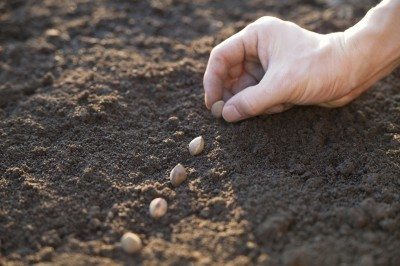
Seeds – We need Jesus’ resurrection power in order to face tomorrow. Resurrection comes small, like seeds and leaven. One little word of encouragement, one affirmation, perhaps evoking one smile or laugh. One little gift can change us. – Br. Luke Ditewig, SSJE
Day after day, the news we consume fills us with fear and grief – news of insurrection, retribution, indiscriminate violence, political misbehavior, crippling moral failings. How can any person find a glimmer of hope, the source of resilience and resurrection?
Our failure to deal with our fear and our grief begets anxiety that becomes chronic. As Seth Godin wrote, “Anxiety is experiencing failure in advance.” Perhaps our calling in an increasingly turbulent and anxious world is planting seeds, or kneading leaven into the dough of our lives. Receiving a seed – a little word of encouragement or affirmation, a smile or a laugh – is a gift. A gift that can change us, if we dare to receive it and allow it to grow.
Even more so, having enough hope to offer such a seed is a transformational act. Perhaps our willingness to be such a courageous giver is the power of God at work through us.
May the resurrection seeds you receive grow and blossom. May the seeds you offer to others leave a trail of hope that marks your path through life.
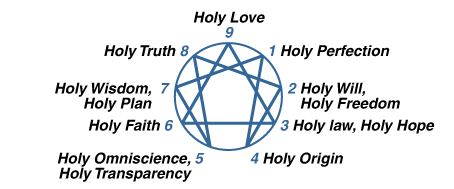
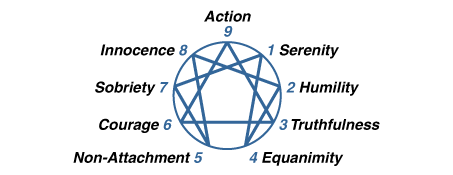
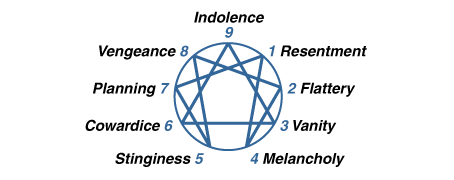
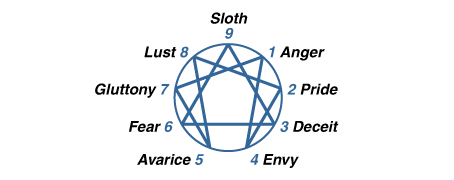
The Enneagram Institute describes Oscar Ichazo’s Traditional Enneagram of Personality as a system by which we can understand ourselves and others in order to draw nearer to God. The Sacred Geometry of The Enneagram, pictured above, labeled with the Holy Ideas (top left) and corresponding Ego-Fixations (bottom left), Virtues (top right) and corresponding Passions (bottom right), can guide us in prayer, daily reflection, and at-one-ment.
The Enneagram Institute offers a test to help us see the number on the gram with which we most align. Teachers share that each of us is innately in tune with the characteristics of one number more so than others, but that we each carry the characteristics of every number in some measure. Our strongest number guides our path in our relationships, though. The lines in the gram indicate our movement in ascension and in disintegration from our true nature, offering us insight into personality characteristics we can observe in ourselves and others in order to journey to the center of ourselves again and again…drawing ever nearer to God.
October 15 is the Holy Feast Day of St. Teresa of Avila (1550-1582), Nun, a Doctor of the Church. As we contemplate the memorial of St. Teresa, we remember one of her great contributions in the writing of Interior Castle or The Mansions. St. Teresa explores the soul of us and encourages us in our search for “knowledge of ourselves,” saying it “is so very important,” and she wishes that we “never to admit any relaxation therein, however highly elevated [we] may be, because while we live on this earth, nothing is more necessary for us than humility.” (p 11) She goes on to say, “We shall never be able to know ourselves, except we endeavor to know God. By considering His greatness, we discover our own baseness; by contemplating His purity, we discover our own filthiness; and beholding His humility, we shall discover how far we are from being truly humble.” (p 11-12).
St. Teresa’s Interior Castle approach says we know God by reflecting on ourselves, looking inside our hearts, bodies, and minds. Oscar Ichazo and contemporary interpreters of his Enneagram offer a way to do that. It does not matter with which number you most align; every number has something to teach us about our soul and the souls of others. We strive to embody the Holy Ideas and Virtues and to see them and empower them in others. We recognize when we are losing them and expressing Ego-Fixations and Passions in their place, and we forgive ourselves and others when the Ego-Fixations and Passions arise. And always we notice the interconnectedness of us all and rely on the strengths of each other. As St. Teresa teaches, we listen to God’s call “so that [we] would desire even to be dissolved into the praises of that great God, who created [our] soul to His image and likeness.” (p 200)
Care for Creation – Muir Woods, California. Photo courtesy of the Episcopal Office of Government Relations
As the Feast of St. Francis of Assisi approaches with its beloved – and joyful – tradition of the Blessing of the Animals, this year I’m particularly struck by St. Francis’s relationship to Creation Care. Thanks to Presiding Bishop Michael Curry, Creation Care is one of the three priorities of the Episcopal Church’s Jesus Movement. And the Episcopal Church now joins other faith traditions around the world in marking the Season of Creation from September 1 to October 4, St. Francis Day.
The season is set aside as a time of prayer and action focused on protecting the Earth that God has entrusted to our care. The devastating wildfires, hurricanes, floods, and other natural disasters over the past several months, along with the loss of biodiversity, are stark reminders of the effects of a changing climate, exacerbated by human behaviors. Even starker was the matter-of-fact statement from a young adult: He expects his generation to be the last because of the dire condition of our Earth.
During the past several years, trial usage of Creation Care language has been approved at General Convention for our Baptismal Covenant and our liturgies. One option for the Baptismal Covenant was the proposal of a sixth baptismal vow: Will you cherish the wondrous works of God, and protect and restore the beauty and integrity of all creation? Another option expanded the current fifth baptismal vow to read: Will you strive for justice and peace among all people, and respect the dignity of the Earth and every human being? Creation-focused liturgies are being developed to recognize mourning and lamentation, joy and celebration, and repentance and reconciliation.
Creation Care is a serious matter, even without revised liturgies and baptismal promises to call attention to it. As Christians we need to ask hard questions about our choices in daily life and how they impact the world. And so I ask: How will you cherish the wondrous works of God, and protect and restore the beauty and integrity of all creation – with God’s help?
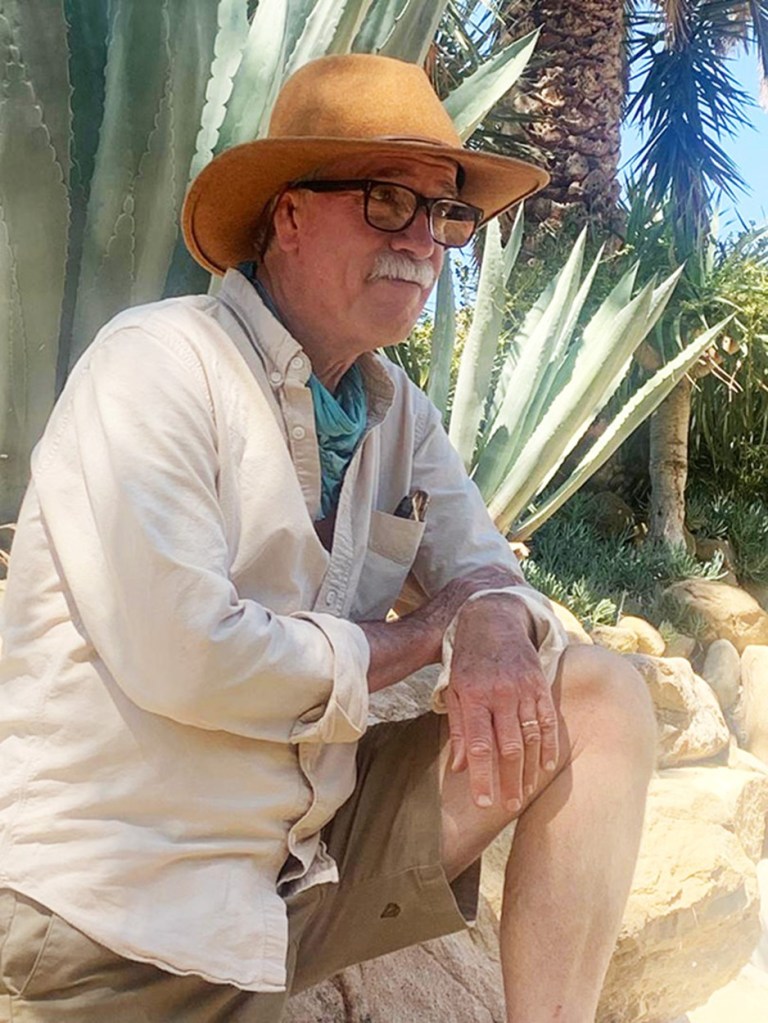
Jim Burklo, who serves as pastor of United Church of Christ of Simi Valley, CA, recently mused whether Christians might be able explain our faith in one paragraph in entirely non-religious language, with no reference to God or Jesus or the Bible. The challenge is increasingly experienced in everyday American culture, where growing numbers of people identify as “nones,” meaning people with no religious affiliation – now about 20 to 29 percent of Americans.
Burklo retired in 2022 as Senior Associate Dean of Religious and Spiritual Life at the University of Southern California. His blog, Musings, can be found at www.ProgressiveChristianity.org.
Burklo explains,
If we really believe that God is love, then we can describe the essence of our faith entirely in terms of that love, leaving out the G-word. Not that the G-word is bad: it is integral to the rich mytho-poetic language of our faith tradition. But if we want to get our message across to people who either don’t relate to the G-word, or associate it with bad experiences, we need to start with purely secular language.
I believe that if we practice this kind of secular description of our religious faith, we’ll do a better job of welcoming “nones” into it. And at the same time, we’ll go deeper in our own understanding and practice of our faith…..
So here is my paragraph, briefly describing Christianity in purely secular terms:
Out of billions of years of the universe churning with creation and destruction, a breathtaking reality has emerged: love. On earth, love has evolved from the bond between family members into a deeper love that is unconditional and universal. The emergence of this love marks a profound turning point in natural history. This love flows through deeply attentive, open, all-embracing consciousness. This love lifts people out of selfishness and shallowness and into lives of selfless compassion, creativity, service, and activism for justice. This love manifests in humble awe and wonder. This love is more extraordinary and beautiful than everyday prose can describe. It inspires poetry, music, ritual, and mythic narrative, and it brings people together in community to celebrate and practice it more fully.
The Christian church is one such community. Welcome to it!
How about you? In the context of your work, or school, or social club, or athletic team, or perhaps even your family, could you meet Burklo’s challenge? How fluent can we become in speaking “None”?
“We draw people to Christ not by loudly discrediting what they believe, by telling them how wrong they are and how right we are, but by showing them a light that is so lovely that they want with all their hearts to know the source of it.” – Madeleine L‘Engle
Keep, O Lord, your household the Church in your steadfast faith and love, that through your grace we may proclaim your truth with boldness,and minister your justice with compassion; for the sake of our Savior Jesus Christ, who lives and reigns with you and the Holy Spirit, one God, now and for ever. Amen. (Collect, Proper 6, Year A, RCL)
In the daily devotional of The Oriental Orthodox Order in the West, “Witnesses to Truth,” dated Friday, June 16, 2023, Abbot Lynn Bauman opened with quotes from playwright Tennessee Williams and theo-philosopher David Price:
No one is ever free until they tell the truth about themselves and the life into which they’ve been cast…. We are all here to be a witness to something, to be of some aid and direction to other people. – Tennessee Williams
The first truth we have to tell is the truth of the culture of outrageous violation we find ourselves in. Our essential self is violated from early days in our lives. There’s no other word for it. We have to heal ourselves with truth. This is work, and it often goes slowly. – David Price
Witnesses to Truth, Abbot Lynn Bauman, 2023
Abbot Lynn goes on to say, “We are here as witnesses – to both be in and watch the world from our vantage point, and speak its truth no matter how difficult that may be for us, but also more importantly to be of aid and direction for other people. That is a divine calling – a higher purpose, and it gives direction and meaning for our lives. Obviously, the stakes are high as we perform this task (duty or vocation) as we feel it.”
I read “Witnesses to Truth” on Friday, June 16, then turned to the Revised Common Lectionary (RCL) to prepare for Sunday, June 18.
God winked. Abbot Lynn, RCL year A, and I were thinking alike, it seemed.
The collect for Proper 6 (Sunday closest to June 16 and printed at the beginning of this article) prays for our steadfastness in proclaiming the truth and ministering in justice and compassion. And the selected scriptures for Proper 6 weave into this truth-telling-tapestry, too.
Personally, I find that balancing my bold proclamations of truth with my ministering with justice and compassion requires continual awareness, patience, practice, and prayer. I require a full team of support to keep my balance. I am grateful to my accountability partner, my family, my community, and God’s voice and presence for reminding me moment-by-moment to shift my weight a little this way or that in order that I don’t fall. I shout for joy when I see old things in new ways and new things from different perspectives, and I am learning that part of staying centered is accepting help and hearing God’s voice when it comes out of the mouths of others.
In Track 2 of Proper 6, Year A, the appointed Psalm is 100. It is a joyful shout to God – a great, bold proclamation of truth. “Give thanks to [God] and call upon [God’s] name,” says the psalmist. Listen to this psalm set to music by Adam Wright of The Corner Room. “Sometimes, we unknowingly stumble upon a life-long pursuit and don’t immediately realize its impact. For Adam Wright, that life-long pursuit is setting Scripture to music, a resource to help God’s people engage and treasure the Bible more deeply. [Adam] arrang[es] each piece into a singable work that makes memorization and meditation a joy.” (https://www.cornerroommusic.com/ )
Yet, boldly proclaiming God’s name is not our only call; we are also called to minister with justice and compassion. Our Psalm 100 shout of joy is tempered, this week, by our Gospel instruction from Jesus, from which we hear:
…proclaim the good news, ‘The kingdom of heaven has come near.’ Cure the sick, raise the dead, cleanse the lepers, cast out demons…I am sending you out like sheep into the midst of wolves; so be wise as serpents and innocent as doves. Beware of them, for they will hand you over to councils and flog you in their synagogues; and you will be dragged before governors and kings because of me, as a testimony to them and the Gentiles. When they hand you over, do not worry about how you are to speak or what you are to say; for what you are to say will be given to you at that time; for it is not you who speak, but the Spirit of your Father speaking through you.” (Matthew 9:35-10:23)
We are called to proclaim with boldness and minister with justice and compassion, and, by the Spirit, with boldness and shouts, we can.
Jesus did; the apostles did; through the generations our abbas and immas have, and now we do.
To adapt the words of Henri-Frederic Amiel to this writing: Life in this space-time is short, and we have too little time to journey this way together, so gladden each other’s hearts whenever you can by being swift to love and make kindness. Be bold to proclaim the name of God, and minister with justice and compassion…and may the blessing of God – Father and Mother, Incarnate in Jesus, and Holy Spirit – be with you now and always.
“Jesus said to them again, ‘Peace be with you. As the Father has sent me, so I send you.’” (John 20:21). This verse, from the Gospel reading for the Second Sunday of Easter, has been my earworm this past week. Jesus appears to his disciples after his resurrection as they huddle together in fear behind locked doors and speaks these comforting – and challenging – words to his disciples.
Jesus’ words are also for us, his 21st-century disciples. Our baptismal promise to “proclaim by word and example the Good News of God in Christ” calls us to leave the shelter of our churches and homes. We are called to go forth into the world as ministers of the resurrection – ministers of hope.
This message is echoed in a timely blog by Prince Rivers for the Alban Institute, Go beyond the sanctuary. Rivers reminds us that the number of those worshiping in church is not an indication of church health. Instead, health is reflected in the ministry that takes place outside of the church building and in the wider community. This is lay ministry. This is ministry in daily life. And, as Rivers writes, “The post-resurrection narratives in the Gospels clearly point us to ministry beyond the sanctuary.”
When Jesus sends us into our broken world to be ministers of love, compassion, justice, reconciliation, we are also sent to serve as ministers of hope. And where we are sent is as individual as each of us is.
Yet, we may wonder whether we have the tools to proclaim the Good News by word and example. We may doubt whether we are sufficiently prepared to do so. Here’s where regular worship and Christian community support us. Worship and Christian fellowship offer means for easing those doubts. And, as we learn from Thomas’s experience in the upper room, doubt nourished by curiosity can lead to revelation, transformation, and empowerment.
So, during this Eastertide, I invite you to consider how you might serve as a minister of the resurrection, offering hope through your love, care, and concern to those you encounter in your daily life.
Each year, in early November, our daughter-in-law helps our granddaughter, Sienna, make a “Grateful Turkey” out of construction paper. This year Sienna was old enough to cut Turkey’s feathers out, make its eyes, and put socks on its feet. Sienna tells Katie what she’s grateful for, and Katie writes each item on a feather. With the addition of each feather, Sienna’s “Grateful Turkey” grows more and more grateful until it has a full complement of colorful feathers.
So, just what is 3½-year-old Sienna grateful for? “Spending time with my family; Daddy playing with me before he goes to work; Omi and G’Dad babysitting me even when I’m sick; Emma showing me how to use my inhaler; Momma and our coffee/hot cocoa dates.”
Eleven of Grateful Turkey’s twelve feathers involve other people. The lone feather that doesn’t expressly refer to others reads, “the goody bag I got on Halloween.” Yet, in some ways even that feather is expressing gratitude for others. You see, this Halloween Sienna was quite ill and spent the evening at urgent care instead of trick or treating. The thoughtfulness of others helped her have a bit of Halloween after all!
Sienna’s Grateful Turkey is more than a pretty Thanksgiving decoration. It’s a symbol of the quality time that she spends with her mom. It’s a symbol of how she thoughtfully considers and thanks God for blessings. It’s a sign of her openness to God’s love and how God is already transforming this little one.
We are all called to live lives of love, care, generosity, and gratitude. We are called to love what God loves: our neighbor, ourselves, and all of creation. In short, we are called to be God’s Grateful People, sharing our gratitude with a flourish.
Last month, as six new priests were ordained in the Episcopal Diocese of Olympia, the Bishop reminded the congregation and the ordinands that the foundation of all ministry is in baptism. Whereas priests have a particular ministerial role in the church, the baptized – as lay ministers in the world – are the foundation of all ministry in the church. In daily life lay people bear witness to Christ wherever they may be, whether in the home, in the workplace, in the community, in leisure, or the wider world. In their book, Radical Sending, Demi Prentiss and the late Fletcher Lowe describe being baptized as walking wet in the world.
As we were renewing our baptismal promises, I was given a bowl of water filled from the baptismal font and a cedar branch to cast the holy water on members of the congregation. We all were reminded to remember our baptism – and to remember the baptismal promises that we either make or which are made on our behalf: “Remember your baptism” with all of its solemnity.
And then I realized that the bowl of baptismal water I was carrying had spilled down the front of my alb. I was soaking wet! Soaking wet in the waters of baptism! What a profound reminder that when I was sealed by the Holy Spirit in baptism and marked as Christ’s own forever so many years ago, my baptism became the foundation of all of my ministry. It’s a reminder that I will always savor.
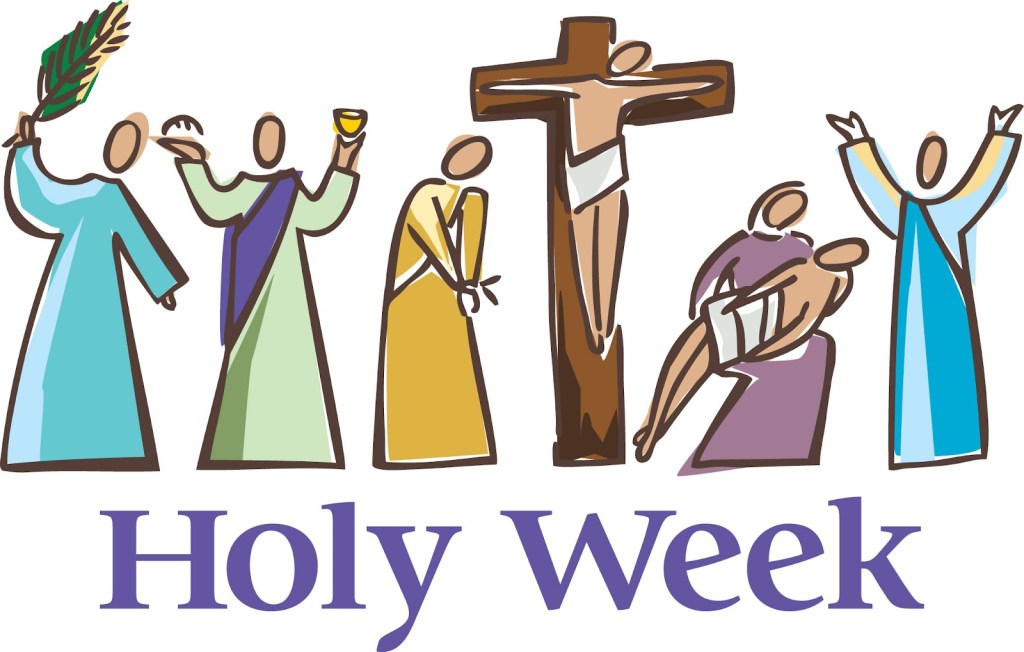
We’re about to enter Holy Week, an opportunity to feel the power and the poignancy of the life, death, and resurrection of Jesus the Christ. We can choose to walk through those eight days as a memorial, a tradition, a liturgical banquet, a personal sacrifice. For me, this Lent, I’m drawn to reflect deeply on how each day’s drama is challenging me to live differently, starting now. How might my daily life be transformed?
My prayer is for God to change my heart. This song, “Last Words” by Karl Kohlhase has offered me a framework to press into opening my heart more fully. It calls me to see the habits I must let go to allow my heart to be – every day – more tender, trusting, thankful, holy, loving, perfect, and faithful.
"Father, forgive them, they know not what they do,”
I hear you pray for those who torture you.
These are the words that tear my grudges all apart.
Create in me a tender heart.

You turn your head to address a dying thief.
“Today you’ll be in paradise with me.”
These are the words where every hopeless soul must start.
Create in me a trusting heart.

Your darkest hour you cried out from the tree,
“My god, my god, why have you forsaken me?”
These words of anguish pierce me through just like a dart.
Create in me a thankful heart.

Then unto Mary, “Woman behold your son,
Behold your mother,” your dying words to John.
These words begin a family of which I’m part.
Create in me a holy heart.

You said, “I thirst,” yet it was not for wine.
You thirst for love from desert souls like mine.
And with these words a flowing river you impart.
Create in me a loving heart.

Then “It is finished!” Your work on earth was done.
For in three days your battle would be won.
These are the words with which you crown your works of art.
Create in me a perfect heart.

“Into your hands, Father, I commend my breath.”
Your final prayer as you close your eyes in death.
And with these words one day I’ll fly to where you are.
Create in me, create in me, create in me a faithful heart.
                                                   “Last Words” by Karl Kohlhase
Thomas Mousin, an Episcopal priest in the Diocese of Maine, has created daily Keeping Advent reflections for many years. Using scriptural passages he finds Advent themes and elaborates on them with apt insight and relevance. As a subscriber I have found them consistently evocative and pertinent in my baptismal journey to Christmas.
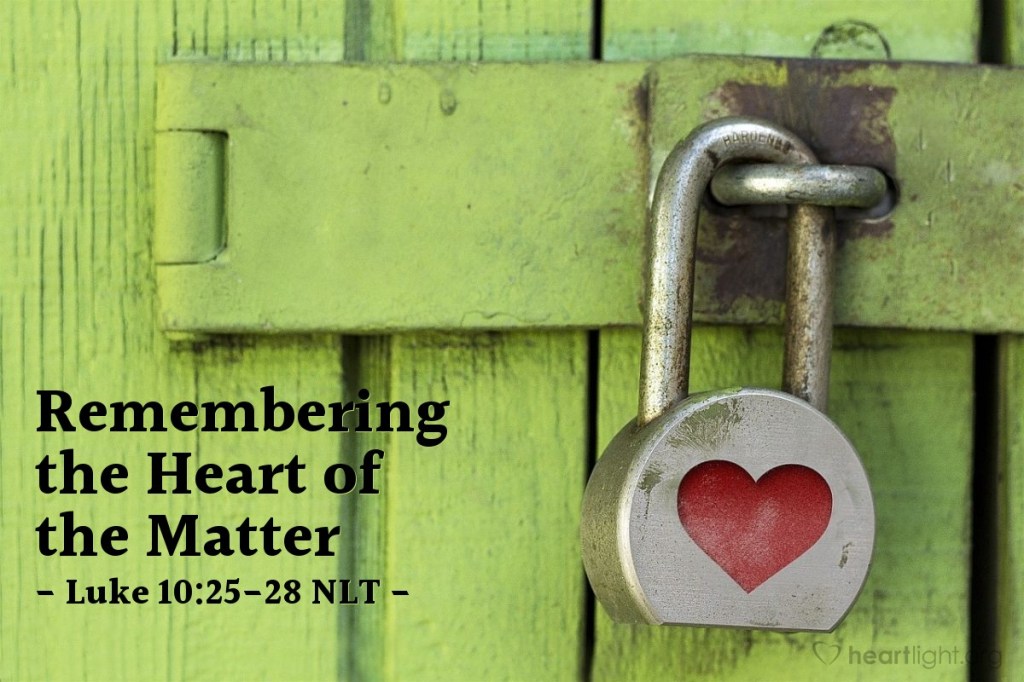
Just then a lawyer stood up to test Jesus. “Teacher,” he said, “what must I do to inherit eternal life?” He said to him, “What is written in the law? What do you read there?” He answered, “You shall love the Lord your God with all your heart, and with all your soul, and with all your strength, and with all your mind; and your neighbor as yourself.” And he said to him, “You have given the right answer; do this, and you will live.”
Luke 10:25-28
Be strong.
We can spend a lot of time thinking about the life to come. Such was the question asked by the lawyer who was testing Jesus. In one sense, Jesus answered clearly, saying these are the things you need to do. He also knew that the lawyer, having asked the question, already knew the answer.
But the truth of that answer has not to do with what ensures our eternal fate, but what it means to live each moment of each day. What does it mean to love God with all our heart, all our soul, all our strength, and all our mind? And what does it mean to love our neighbor as ourselves? These are the questions we work out in the everydayness of our lives.
When Jesus commended the lawyer on his response, he did not say, “You have given the right answer; you will do this and you will have eternal life.” Instead, he said, “You have given the right answer; you will do this and you will live.” We are meant to live, today in this moment and every moment, as we love God and our neighbor as ourselves for the life we are given today.