Do you believe in miracles?

Photo by Jen Theodore on Unsplash

by Demi Prentiss

Misinformation. Disinformation. Outright lies. Twisted truth. So many of the words we hear and see are not intended to communicate truth or inspire hope.  The outcome for many is a deep, corrosive cynicism or paralyzing despair – or both.

We can often find more clarity when we venture beyond words, and use the real world for our touchstone. The deeper truths of life are plainer when we, as they say, “touch grass” – ground our experiences in the natural world, and ponder the truth we encounter there. Cultivating a bedrock foundation of creation’s wisdom as we engage wonder instead of analysis.

While the speed and complexity of communications have magnified the difficulty of remaining grounded, the need to go deep is not new.  Every time we run into God’s gift of diversity, the resulting culture shock compels us to question where we look for deep truth, and how we discern our North Star.

Mei Li, a new immigrant from China in the Rodgers and Hammerstein musical Flower Drum Song, offers wonder as a tool for gaining clarity:
My father says
That children keep growing,
Rivers keep flowing too.
My father says
He doesn’t know why,
But somehow or other they do.

They do!
Some how or other they do.

“A hundred million miracles,
A hundred million miracles
Are happening every day,
And those who say they don’t agree
Are those who do not hear or see.
A hundred million miracles,
A hundred million miracles
Are happening ev’ry day!”
[1]
Lyrics By Oscar Hammerstein II  Music By Richard Rodgers

The miracles aren’t confined to the natural world.  Amazingly, when we choose to partner with God as cocreators, we can grow in ways that we can hardly imagine.

As Br. Curtis Almquist, SSJE, reminds us, “The most amazing thing about miracles is that they happen. They still happen. Saint Paul had his own miraculous experiences, repeatedly, which led him to write that ‘[God’s] power at work within us is able to accomplish abundantly far more than all we can ask or imagine.’ Don’t give up. Give in. Give into the reality of God’s magnificent, sometimes amazing work in us and through us. Watch for it. Wait for it.”


[1] “A Hundred Million Miracles” (Rodgers/Hammerstein)
© 1958, Copyright Renewed, Williamson Music Company (ASCAP) c/o Concord Music Publishing

Encountering God through others’ eyes

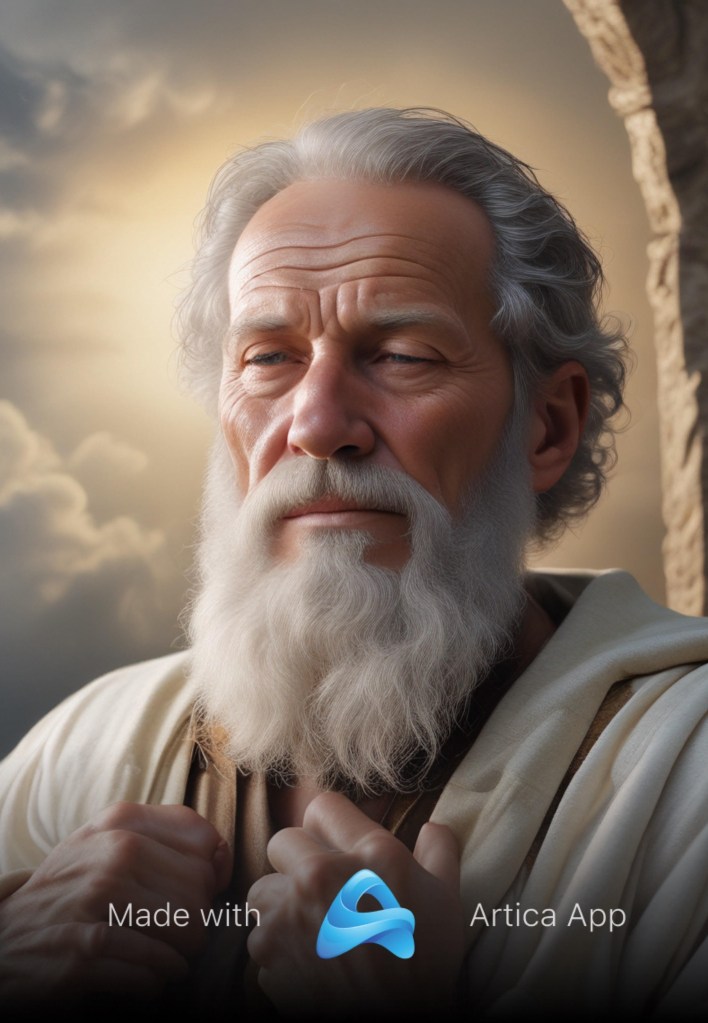
Paul’s revelation: “My grace is sufficient for you, for power is made perfect in weakness.” – AI-assisted illustration by Brandon Beck

by Brandon Beck

“I know a person in Christ who fourteen years ago was caught up to the third heaven – whether in the body or out of the body I do not know; God knows. And I know that such a person – whether in the body or out of the body I do not know; God knows – was caught up into Paradise and heard things that are not to be told, that no mortal is permitted to repeat. On behalf of such a one I will boast, but on my own behalf I will not boast, except of my weaknesses. But if I wish to boast, I will not be a fool, for I will be speaking the truth. But I refrain from it, so that no one may think better of me than what is seen in me or heard from me, even considering the exceptional character of the revelations. Therefore, to keep me from being too elated, a thorn was given me in the flesh, a messenger of Satan to torment me, to keep me from being too elated. Three times I appealed to the Lord about this, that it would leave me, but he said to me, ‘My grace is sufficient for you, for power is made perfect in weakness.’ So, I will boast all the more gladly of my weaknesses, so that the power of Christ may dwell in me. Therefore I am content with weaknesses, insults, hardships, persecutions, and calamities for the sake of Christ; for whenever I am weak, then I am strong.” (2 Cor 12:2-10, RCL)[1]

On this blog on July 9, the Rev. Pam Tinsley posted a brilliant narrative of her experience preparing an eight-year-old child for baptism. Rev. Pam focused on grace in her story. In reflecting on the July 7 Epistle reading from 2 Corinthians through the lens of Rev. Pam’s story, I am struck by the revelation to Paul of God’s message, “My grace is sufficient.”

Even having heard this 2 Corinthians passage, especially this small fragment of verse 9, time and time again, and having studied the Pauline epistles in EfM, small group Bible studies, and divinity school, Rev. Pam’s words offer me an encounter with God through her eyes – and through Merritt’s eyes, the child whom she prepared for baptism.

Paul’s mysticism and focus on body-spirit divide, his further struggles with legalism, and unresolved identity development have always called the academic in me to wrestle with his words and the unknowable psychology of the man Paul rather than the potential Christ revealed in the stories he tells.

But today I encountered God through someone else’s eyes. These other eyes are Rev. Pam’s and her eight-year-old student Merritt’s. These eyes are Paul’s – with letting go of my need to psychoanalyze him.

God’s words to Paul – “My grace is sufficient” – draw me back to verse 2 of this passage. Paul says, “I do not know.” What a powerful pairing of ideas – “I do not know” and God’s “grace is sufficient.” May we all continuously encounter God with awareness and hope, remembering that seeing through someone else’s eyes might just open our own hearts to a new experience of the Divine that’s been encountering us all along.


[1] The Episcopal Church. “Proper 9, Year B.” The Lectionary Page, 1979. http://www.lectionarypage.net/YearB_RCL/Pentecost/BProp9_RCL.html.

Can grace be more amazing?

by Pam Tinsley

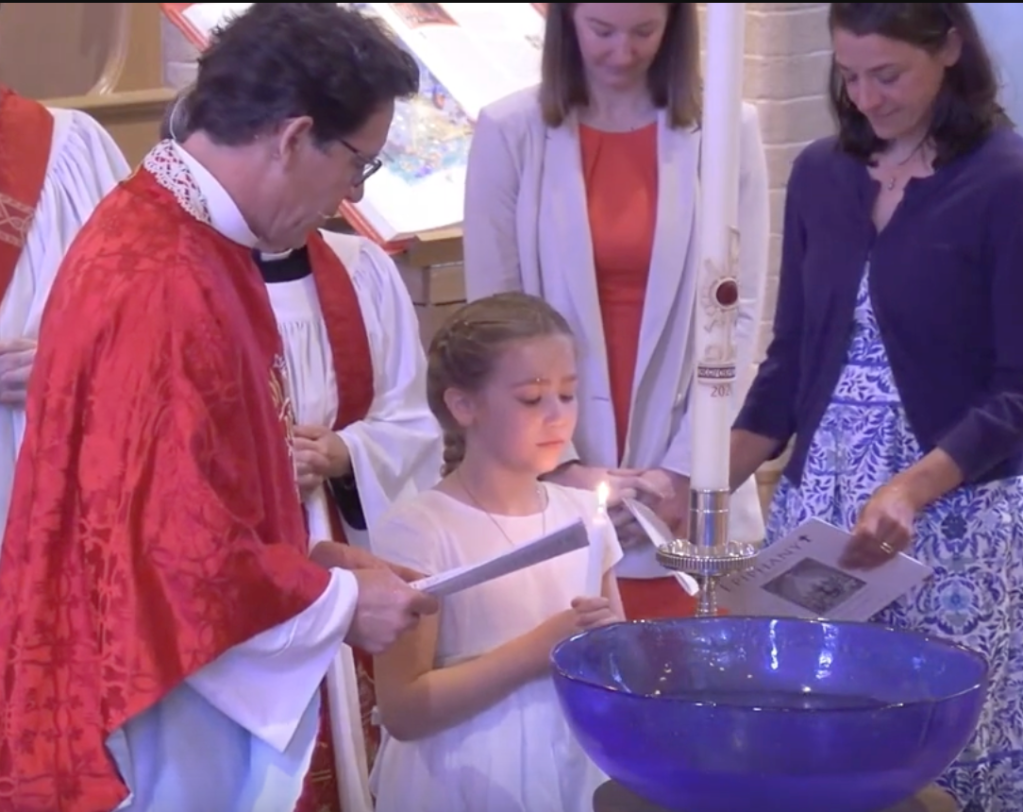
Pentecost baptism at Epiphany parish, Seattle, Washington

At Pentecost I had the joy of preparing an eight-year-old child for baptism. As I met with Merritt, her parents, and her sponsors, I loved how engaged she was. I was also excited to learn she was the one who had expressed a desire to be baptized.

I shared how Jesus himself was baptized by John the Baptist before he began any of his ministry and that by being baptized Merritt was taking her first formal step in following Jesus. Baptism, I said, is the beginning of a life-long journey of faith – a faith that has love at its heart. So, baptism is about choosing to love others each day, because God loved us first. All of humankind and all of creation are God’s beloved.

Throughout our conversations, Merritt asked several questions, and then she asked the one that opened the door to amazing grace! I had shared that baptism was the first sacrament Jesus initiated, which – of course – led to the definition of a sacrament, an outward and visible sign of inward and spiritual grace. Merritt had been wondering what grace was because her family sings the beloved hymn Amazing Grace during bedtime prayers.

Merritt’s eyes lit up as I quoted the Book of Common Prayer: Grace is God’s favor towards us, unearned and undeserved; by grace God forgives our sins, enlightens our minds, stirs our hearts, and strengthens our wills. We talked more about grace: how nothing we can do will make God love us any more; how nothing we do will make God love us any less; and how baptism happens because of God’s grace. As we talked about Pentecost and – above all – about God’s love and God’s grace, I felt enveloped by the Holy Spirit. When Pentecost arrived, Merritt stood by the font and solemnly made her baptismal promises. And we all were embraced by God’s amazing grace as she was baptized, sealed by the Holy Spirit, and marked as Christ’s own forever!

Contemplating D002

Do you appreciate our weekly postings? Want to support our work to further empower lay voices at General Convention? Please consider contributing here. And learn more about our work as part of The Consultation.

To PBL’s disappointment, the House of Bishops at the 81st General Convention of The Episcopal Church this week decided to “take no further action” on Resolution D002: Review canonical requirement for Holy Communion. The House of Bishop’s lack of action effectively kills the resolution. Despite the question now rendered moot for this General Convention, Partners for Baptismal Living (PBL) urges the church to find appropriate ways to celebrate the life-giving invitation that Holy Baptism represents. Bishop Edward Lee, a member of PBL, offers these thoughts:

by Edward Lee

The current Canon (1.17.7) reads: “No unbaptized person shall be eligible to receive Holy Communion in this Church.”

Contrast that with what the Book of Common Prayer (p. 308) proclaims in the Holy Baptism liturgy: “You are sealed by the Holy Spirit in Baptism and marked as Christ’s own for ever.”

The former is negative, juridical, exclusive, and judgmental in its prohibition.  Its blunt tone is that of a membership requirement to a country club. The latter is a solemn, inclusive, affirmative and challenging  mandate for an intentional lifelong journey in Christ’s radical mission of redemption, renewal and release.  The former is conditional; the latter is covenantal. The former is proscriptive; the latter is relational.

This contrast is why D002 in its current or an amended form must come to the floor of this Convention for discussion and action. The House of Bishops, the initiating body, is strongly urged to make this happen. Letting the present Canon stand or just be deleted is unacceptable. Both options would ignore and undermine the profound solemnity of Holy Baptism that is inherent in the Prayer Book liturgy. After almost a half century its centrality is secure in the worship and practice of the church.  But what is yet to be fully realized is the  radical character of what it means to be indelibly sealed and marked as Christ’s own disciple for ever.

Contained and found in this sacramental action is the unique Christian identity and vocation for ministry of every baptized person starting with the laity (99% of the church) and sequentially by the (1%) clergy. See the Catechism on The Ministry, BCP, p. 855. Therefore it is asked of all of us, how seriously do we understand, claim and embrace this baptismal mandate of seeing ourselves as ministers and our lives as ministry?

What has also brought this matter to General Convention’s attention is the increasingly common practice in many parishes of inviting and welcoming worshippers to receive Holy Communion whether they are baptized or not. There is no prior checking or public alert. Clearly a contradiction of the existing Canon but a point of entry and welcome for uncertain seeking and searching persons.  It’s regarded as radical hospitality consistent with Jesus’s association with and inclusion of religiously unqualified persons of his time. It is radical as it should be, yet it should not diminish the centrality and solemnity of Baptism. It’s not an either/or matter but rather a both/and. 

The suggestive language in the enumerated resolves of D002 propose an understanding of the connectedness of the Eucharist, Baptism and the inclusive fellowship that constitutes Christian community. For example, a revision to the canons that would be “a positive statement affirming that the fullest meaning of our Holy Eucharist is lived out through our Baptism and Baptismal Covenant.” (#6) Also, “develop a generous pastoral and invitational rubric to Baptism and Communion” in the Payer Book. (#5)

Hopefully this General Convention will not bypass this crucial theological, sacramental and pastoral matter that grounds and informs our Church’s  mission and our daily baptismal ministries.

Edward L. Lee, Jr.

Steering Committee, Partners for Baptismal Living
Bishop, Diocese of Western Michigan, 1989-2002
Assisting Bishop, Diocese of Pennsylvania, 2003-2017

Engaging with General Convention

Do you appreciate our weekly postings? Want to support our work to further empower lay voices at General Convention? Please consider contributing here. And learn more about our work as part of The Consultation by reading this post.

The Consultation – a collaboration of six progressive organizations, including Partners for Baptismal Living – opened its booth today in Louisville, KY, at the 81st General Convention of The Episcopal Church. The Consultation is inviting all attending the convention to participate in an open space experience in the General Convention exhibit hall. All are invited to engage live and in person with friends and not-yet friends in ways that allow all to learn and grow together, speaking the truth in love, and respecting the dignity of every human being.

Here are some of the ways all participants are invited to connect:

  • Earnest Questions – Each day of General Convention when the exhibit hall is open (June 21 through June 27), The Consultation will publicize – on the Consultation Commons (booth #1214), via ISSUES, social media, and in-person conversations – several questions.
    • Come to The Consultation Commons in the exhibit hall to post your response in words, pictures, or other art expression.
    • Come engage in live, real-time conversation with others who are open to questioning the status quo and engaging the future.
    • Convene your own meet-up to explore your “earnest question.”
  • Lunch-time Speakers – 12-2 pm at The Consultation Commons (booth #1214)
    • Sunday, June 23 – TransEpiscopal presents the Revs. Cameron Partridge and Gwen Fry, who will host a conversation to share their perspectives on the work TEC has done, is doing, and that needs to do to fully embrace trans and non-binary people in the Church and the wider world, in a time of intense attack on trans and nb people.Tuesday, June 25 – Episcopal Peace Fellowship – Palestine Israel Network presents Jonathan Kuttab, “What’s Going on in The Holy Land?: Behind the Headlines”
    • Wednesday, June 26, Episcopal Peace Fellowship presents “Gun Violence Prevention”
  • Community SingSaturday June 22 and Monday June 24, 12:30-1:30pm, come to The Consultation Commons (booth #1214) to join in paperless music and “turn-and-talk” minutes with fellow singers. Fill the exhibit hall with song! “Those who sing pray twice.”
  • Meet-ups – Schedule a 60-90 minute conversation on a vital topic. You bring the “earnest question” and the facilitator, The Consultation Commons provides the space. Sign up at The Consultation Commons (booth #1214).
  • Exploration – Learn more about the work of The Consultation and of its individual member organizations. Come engage with one of The Consultation’s booth hosts at booth #1214.

Come – Come and see!             

Come engage with fellow Episcopalians!

Agreement not guaranteed.

Come as you are for creative, generative, boundary-breaking conversation!

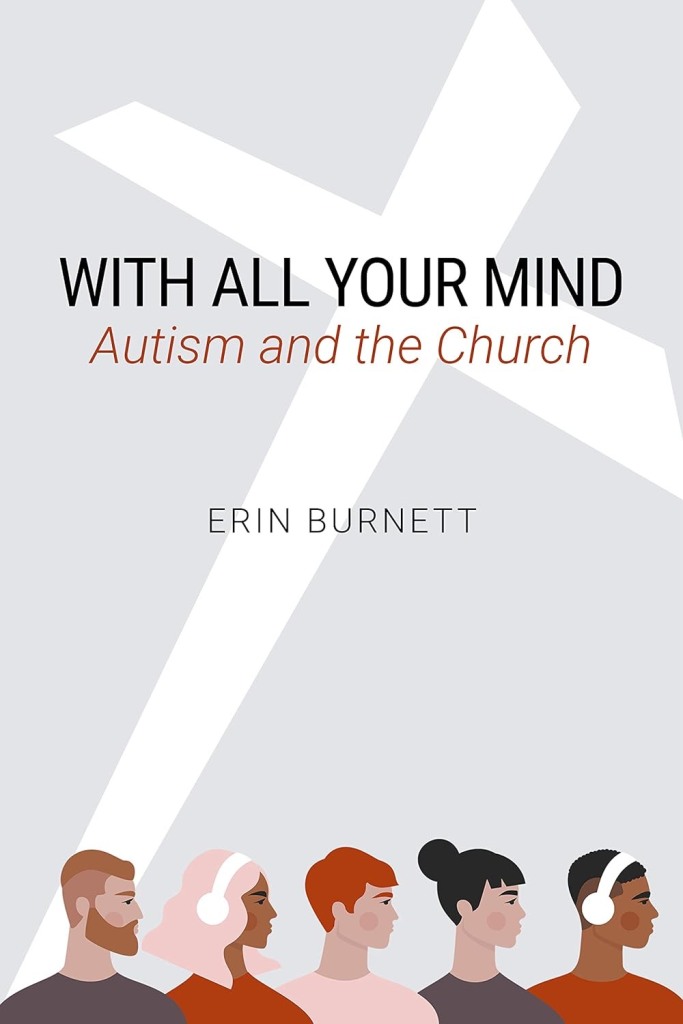
With All Your Mind: Autism and the Church by Erin Burnett, a book review

by Brandon Beck

“Love the Lord your God with all your heart, and with all your soul, and with all your mind, and with all your strength” (Mark 12:30-31)…raises some interesting questions with regards to autism: how can you love God “with all your mind” when your mind works differently? (p. 41)

At St. Mark’s Episcopal Church in San Marcos, TX, in the Diocese of West Texas I experience our church community in what, I hope, is the way Erin Burnett has experienced church. We, as a church family, too, pray that other autistic people and neurospicy families can experience church community as we do. We have many children and adults on the autism spectrum, and, when the gestalt-processing, echolalic, 8-year-old shouts, “The Blood of Christ. The Cup of Salvation,” and runs to the Communion rail clapping his hands, all of us, the St. Mark’s family, smile and celebrate with him, knowing all are welcome here. In a classroom at the back of the Sanctuary building, St. Mark’s Director of Family Ministry has created a Sensory Space with sensory play toys and books and a calm zone with the service streamed to a TV, so all the families in the church know that those with differing sensory needs, members and guests, young and old, can attend church in a way that is comfortable and accessible for them. My experience as part of this neurodivergent-aware church led me to Erin Burnett’s 2022 With All Your Mind: Autism and the Church.

Burnett’s “booklet” (p. 1) is invaluable to churches wanting to be places for all people. Burnett says, “It is very difficult to precisely define autism, as it is a spectrum condition that manifests differently for each person” (p. 1). She shares basics of autism in Chapter 1, such as characteristics of autism, autism statistics, use of language around autism, and some autistic role models. Each chapter ends with reflection questions to assist you in further relating to the content.

Chapter 2, “Autism and the Church,” brings us to Burnett’s own context of being autistic and Christian in the UK. Her story is applicable to all Christians who want to understand the role of inviting, welcoming, and connecting autistic persons to church in full communion. Burnett says, “Churches should follow the example of Jesus, who reached out to those who were ostracised from society” (p. 19). Burnett exegetes 1 Corinthians 12:14-27 and Luke 14:15-24, concluding that “Jesus takes inclusivity very seriously!” (p. 24) She moves into practical advice for churches based on a research project she conducted in which she asked, “What sorts of adjustments can make churches more welcoming for autistic people?” (p. 25) Participants most popularly suggested that churches, especially those with loud and/or contemporary worship, provide earplugs or noise-canceling headphones.

Chapter 3 and Chapter 4 focus on theology and spirituality. In Chapter 3, “Autism and God,” and Chapter 4, “The Spirituality of Autism,” Burnett explores “how autistic people may experience the Christian faith in a way that differs from the norm” (p. 31). Burnett reviews articles from Psychology Today and The Cognitive Science Society that reveal a link between autism and atheism. She expounds on the articles saying, “Autistic people are less likely to experience sensus divinitatus, the inexplicable feeling of God’s presence” (p. 32), bringing her own research and experience into conjunction with the research she reviews to demonstrate that it is not so much that atheism and autism must go together but that church must reach people with autism in different ways because of their possible missing sensus divinitatus experience.

Remembering that Burnett began by sharing that autism manifests differently for each person, we know that she is not saying here that no autistic lacks sensus divinitatus, rather that some autistic persons might experience God in ways other than what would be described as supernatural. Burnett cites John Shelby Spong’s now infamous Tweet: “God is not a noun that demands to be defined, God is a verb that invites us to live, to love, and to be” (p. 34). She says that Spong’s view of God is encouragement for autistic Christians to embrace their different ways of experiencing God, especially the more concrete-rational experience of God in the action of striving to live by love through action.

In Chapter 4, Burnett further discusses the concept of practical love in the context of autism, Imago dei, and human connection, as “the National Autistic Society [UK] reports that autistic people are seven times more likely to feel isolated compared to the general community” (p. 43).

The most recent youth confirmation class at St. Mark’s in San Marcos, TX, had several autistic youth in it. To hear the parents rejoice that these youth had a place where they felt that they fit in and that their questions could be asked and discussed in their unique ways of thinking and seeing reminded me of Burnett’s self-description. Seeing them acolyte and serve as lectors for their own confirmation ceremony and speak with the Bishop filled the House with a Spirit of Unity and Love.

Burnett concludes her booklet with these words: “I hope and pray that more autistic people can experience church community like I have. Amen” (p. 54).

Your support fuels PBL

Do you appreciate our weekly postings? Want to support our work to further empower lay voices at General Convention? Please consider contributing here. And learn more about our work as part of The Consultation by reading this post.

Pentecost 2024

As we approach the opening of the 81st General Convention of The Episcopal Church on June 23, we invite your financial support of Partners for Baptismal Living (formerly Episcopalians on Baptismal Mission and creators of the LivingGodsMission.org blog). We are a group which continually seeks ways to remind us Christians that we are all empowered by baptism – the Church’s first order of ministry – to proclaim and live out God’s Beloved Community in our daily lives, here and now. We are appealing to you because we know you care deeply about the calling of all the baptized, 99% of whom are lay people.

PBL is a small group with church-wide impact. Our work, leading up to the 2018 General Convention, created and passed Resolution C005. That resolution formed a task force that has worked to see baptismal ministry intentionally implemented throughout the church. A member of PBL served on the task force that promoted passage of Resolution A037, “Establishing a New Standing Commission on Formation and Ministry Development,” during the 2022 80th General Convention. This new standing commission focuses on affirming, developing, and upholding the ministry of all the baptized.

With no paid staff and no building or equipment to maintain, PBL’s expenses are modest and fall into two main categories:

  • Participation in the work of The Consultation, a collaboration of advocacy organizations in the Episcopal Church. Partnership with this group multiplies our impact.  Although most meetings are virtual, one meeting per year calls for in-person attendance by two individuals.
  • Attendance and participation at General Convention, assuring that PBL’s voice and presence are known and recognized in the larger church.

Every gift makes a difference. If you’d like to sponsor a specific expense (brochures and stickers for General Convention, Consultation dues, etc.), we’d be happy to offer “sponsorship opportunities” tailored to your interests. And, because we are a 501(c)(3), we are happy to provide a tax statement for your contributions.

You can support PBL monetarily by

  • making an online donation at PBL’s blog site www.livinggodsmission.org  OR
  • mailing a check/money order made payable to Partners for Baptismal Living to:
 Partners for Baptismal Living 
 c/o Pamela Tinsley, Treasurer 
 4810 N. 28th St. 
 Tacoma, WA 98407

Can we rely on YOU to help continue this transformational work and build on our continuing successes?

With gratitude for your generous support,

The Steering Committee of Partners for Baptismal Living
Brandon Beck, PhD (Dio W Texas)
Nanci Gordon (Dio Vermont)
The Rt. Rev. Edward Lee (Dio Western Michigan)
Adam Lees (Dio Alaska)
Demi Prentiss (Dio Colorado)
Tieran Sweeney-Bender (Dio Olympia)
The Rev. Pamela Tinsley (Dio Olympia)
The Rev. Dr. Jennifer Woodruff Tait (Dio Lexington)

And Colleague Founders now in God’s nearer presence:
The Rev. J. Fletcher Lowe
The Rev. Peyton Craighill
The Rev. A. Wayne Schwab

P.S. Your tax-deductible contribution to PBL’s work means more people will be on mission every day, wherever their daily life takes them. Thank you for your support!

Pentecost unbound

(For optimum viewing, use desktop or tablet.)
Do you appreciate our weekly postings? Want to support our work to further empower lay voices at General Convention? Please consider contributing here. To learn more about our work as part of The Consultation, read our March 5 post.

by Demi Prentiss

All of them were filled with the Holy Spirit and began to speak in other languages, as the Spirit gave them ability. — Acts 2.4

Pentecost was not, as some say, “the undoing of Babel” —
now we all speak the same language!
No, it was the opposite: the blessing of Babel.
We learn one another's languages.
We embrace diversity, and learn to listen to each other,
to see from another's perspective,
to give voice to a life other than our own,
to make central a language that's not our own,
to communicate grace that's not on our own terms.
We acknowledge the differences in our lives,
honor one another's various home places and cultures,
and cross over the boundaries of comfort and familiarity.

On that Pentecost day I don't imagine they were eloquent.
They spoke in halting Phrygian, mangled Mesopotamian.
It probably took some back-and-forth, some double-checking.
It required not just proclaiming but listening, relating,
and patience on the part of the hearers,
and courage and humility on the part of the speakers —
willingness to be beginners, to risk, to appear foolish,
to forgo the safety of being in the dominant group.

Pray for such humility and courage, to risk for the sake of love,
to be foolish for the sake of relating,
to let other people's reality be real.
In such loving, the Holy Spirit will speak, loud and clear.
by Steve Garnaas-Holmes

We’re barely past Pentecost and already we’re tempted to put those tongues of fire back in the box until next year. “Not yet,” we’re inclined to say.  Then Brian McLaren reminds us

The good news is that the Spirit is already here, living and active – and has been since the dawn of creation. Our challenge – as we pray “Come, Holy Spirit, come” – is not to persuade the Spirit to be present. May we pray to be born anew, so that we may see the reign of God. Allow us to see through God’s eyes to perceive the Spirit at work everywhere around us.

To the members of Christ's body,
to the branches of the Vine,
to the Church in faith assembled,
to her midst as gift and sign:
Come, Holy Spirit, come.
– Carl P. Daw, Jr. – “Like the murmur of the dove’s song”

 [1] Brian D. McLaren, We Make the Road by Walking: A Year-Long Quest for Spiritual Formation, Reorientation, and Activation(New York: Jericho Books, 2014),203, 205. 

Safe

New Episcopal Shield released for Pride, May 16, 2024

by Brandon Beck

Won’t you help me if you can – find a safe place to be myself?

I learned a new song Sunday, May 19, 2024. What an appropriate day in the church calendar to learn new words, right? The Holy Spirit came down like tongues of fire, as if a sound of rushing wind, and I was changed. I felt the Spirit move not just in me but in all those gathered as the choir director read the composer’s words from the cover of the score to this 2019 song I’d never heard before – this song written by a progressive, Baptist, music minister, singer, composer, teacher, and all-around-super-cool South Carolinian named James Kevin Gray. Gray, in that note to this 2019 score, writes:

[This composition] was inspired by a young friend of mine who bravely shared his story of being bullied. Hearing him recall and confront this issue inspired me to research it further and spend time listening to others tell them into a narrative of pain and redemption. Near the end…you will hear the choir surround the vocal narrator(s) with the phrase, “You are not alone – I am with you.”

We must challenge ourselves to get up off of the sidelines and call out abuse. When a “one” is joined by another, the “one” becomes a “they,” and as the group grows, so does its power. This is the force that can be used for the sake of peace, love, and understanding.

I would encourage each choir who performs this piece to set aside some time for sharing and validation of individuality. You might be amazed at the healing you witness in the process.

You are not alone – I am with you.

James Kevin Gray says this in his 2019 choral piece “Safe Place.” Is he echoing The Holy Spirit flaming on the disciples and all the nations on Pentecost? Echoing YHWH speaking to the people through Moses?

We are turning toward June in the next few days. June marks many justice events, but I appreciate that we have been marking Pride in June in some form or fashion since the Queens and trans women and men and gay men and lesbians of New York City began rioting near the Stonewall Inn on June 28, 1969. They were asking the world, “Won’t you help me if you can – find a safe place to be myself?”

As we enter June of 2024, can we each ask ourselves and then extend our inquiry to our congregations, “How am I/are we helping someone find a safe place to be themselves?”

You are not alone – I am with you.

Can we say that we have embodied the philosophy of YHWH, Jesus, and the Holy Spirit this Pride Month? Have we shown someone they are not alone? I’m not asking if we’ve paid lip-service to someone with the nonchalant, passing phrase, “You’re not alone.” Rather, I’m wondering when and how you’ve changed how you behave so that a person who has “bravely shared [their] story of being bullied” sees you “get up off the sidelines and call out abuse.”

Listen to composer James Kevin Gray share his story of change after listening to his young friend, his hopes for how we will hear his song, and learn to reach out, speak up, come together, and be loving, liberating, and life-giving.

After, maybe you and your congregation will even go attend your local Pride event or celebrate a Pride Eucharist for your community.

Need resources? Check out TransEpiscopal and LGBTQ+ in the Church. Or let get in touch with me or my colleagues at Baptismal Living; we’re always ready to talk with you.

Baptized for hope

Do you appreciate our weekly postings? Want to support our work to further empower lay voices at General Convention? Please consider contributing here.  To learn more about our work as part of The Consultation, read our March 5 post.

Hope Starts at Home – photo by the Rev. Paul Lebens-Englund, rector of St. Andrew’s Episcopal Church, Tacoma, WA.

by Pam Tinsley

Last week I attended a breakfast to support our local interfaith organization, Associated Ministries. Most of the 400 attendees were community volunteers and leaders. A few clergy were also present. It’s clear that AM’s strength in the community rests in the hands of lay people who are committed to making our local community – and ultimately our society – more loving and just.

The breakfast’s theme was Hope Starts at Home. It was immediately apparent that each one of these faithful individuals is a beacon of hope in a world seemingly overwhelmed by hopelessness. Thanks to their commitment and partnership with community-supported businesses, they show that one person can act in faith and work with others to transform lives – not least of all, their own.

What they say and do can change individual lives, one-by-one. And when one person’s world changes, then that person can work to change another person’s world. We heard an inspiring story of hope from a woman who left an abusive relationship over a decade ago. With help from the AM community – including subsidized housing for herself and three young children – she overcame incredible obstacles to eventually earn not only a high school diploma, but then her bachelor’s degree! She is now employed by AM, walking with and serving as a beacon of hope for others.

In his inspiring remarks, Michael Yoder, executive director of Associated Ministries, shared the following quote from poet Clarissa Pinkola Estes:

Ours is not the task of fixing the entire world all at once, but of stretching out to mend the part of the world that is within our reach. Any small, calm thing that one soul can do to help another soul, to assist some portion of this poor suffering world, will help immensely.

It is not given to us to know which acts or by whom, will cause the critical mass to tip toward an enduring good. What is needed for dramatic change is an accumulation of acts – adding, adding to, adding more, continuing. We know that it does not take “everyone on Earth” to bring justice and peace, but only a small, determined group who will not give up during the first, second, or hundredth gale.[1]

You and I are called by our baptism to be part of this small, determined group who are willing to persist in seeking and serving Christ each day – and always with God’s help.


[1] Excerpted from Do Not Lose Heart, We Were Made for These Times ©2001, 2016