by Brandon Beck
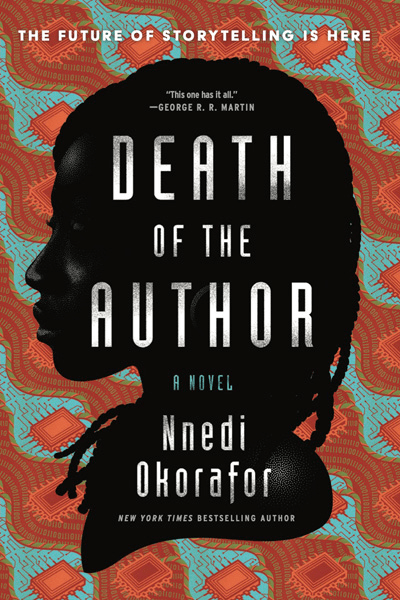
On her own website, Nnedi Okorafor’s 2025 bestselling novel Death of the Author is described in these words:
In this exhilarating tale by New York Times bestselling and award-winning author Nnedi Okorafor, a disabled Nigerian American woman pens a wildly successful Sci-fi novel, but as her fame rises, she loses control of the narrative – a surprisingly cutting, yet heartfelt drama about art and love, identity and connection, and, ultimately, what makes us human. This is a story unlike anything you’ve read before.
Her bio describes her as “the global leader of Afrofuturism,” saying,
She writes speculative fiction for adults, young adults, and children…One of the most lauded writers in modern science fiction and fantasy, her honors include the Wole Soyinka Prize for Literature, Nebula, World Fantasy, Locus, Eisner, and multiple Hugo and Lodestar Awards. Born in the United States to Nigerian/Igbo immigrant parents, Nnedi draws deeply from African cultures to create captivating worlds, unforgettable characters, and powerful, evocative stories. She holds a PhD in Literature and two Master’s degrees in Journalism and Literature.
Death of the Author is her latest adult novel, but Okorafor’s repertoire includes the all-ages graphic novel The Space Cat, released in 2025, many series which have been optioned for screen, the Marvel’s Black Panther series: Shuri, Wakanda Forever, and Long Live the King, and numerous other works of sci-fi and fantasy in the genre of africanfuturism and africanjujuism for adults, young adults, and children.
In Death of the Author, Okorafor crafts a narrative in which the main character, Zelu, herself an author, writes a sci-fi novel that changes her life and the lives of her family. Zelu, a paraplegic since a childhood fall from a tree, exists in a marginalized world in many ways – she’s female, Naijamerican, uses a wheelchair, is a writer in a family of doctors and lawyers, rebels against the family’s traditions, has debilitating panic attacks. After her novel gains her fame and fortune, her marginalization takes a new form: wealthy entrepreneurs seek her out to be a part of their fame, and she becomes a part of futuristic science projects that take her beyond the dreams of current humanity, but her family and friends and fans reject her for making the choices she does.
“This is a story unlike anything you’ve read before,” though, remember. As often as I’ve read theologian Howard Thurman, something he teaches hasn’t ever quite made sense to me until I read Okorafor. One of those Godwink moments happened to me as I read Death of the Author, and it brought one of Thurman’s key concepts of justice work alive for me.
As I was finishing my read of Death of the Author, on Tuesday, March 17, 2026, Joe McDaniel, Jr., and Canon Annette Buchanan of The Executive Council of The Episcopal Church shared a letter they penned entitled, “Awake the Church: Justice, Transparency, and the Freedom to Speak.” In that letter, they say:
Howard Thurman offers a complementary spiritual exhortation for those who would resist complacency: “Don’t ask what the world needs. Ask what makes you come alive, and go do it. Because what the world needs is people who have come alive.” Disrupting structural remnants of white supremacy requires not only critique but moral vitality, the courage to act even when action risks discomfort or conflict. Thurman’s charge is to find the sources of moral courage that make one “come alive” and to let those sources compel action for transformation.
McDaniel and Buchanan write in the same spirit as Okorafor; they write against an invasive and persistent White supremacy that refuses to be moved yet must be. Okorafor’s fiction dreams a future of freedom; McDaniel and Buchanan create an action plan to get there.
Through Zelu, Okorafor depicts the same message that McDaniel and Buchanan proclaim in their March 17 letter: we achieve our justice goals when we do what Howard Thurman suggests, when we ask what makes us come alive. And that’s what makes Death of the Author unlike anything you’ve read before. Zelu finds what makes her come alive, over and over again, despite all odds. And, in turn, brings those around her to their aliveness.
By coming alive and bringing others alive, Zelu critiques the oppression all around her and demands that it flex and change not just to accommodate her but to embrace her. Okorafor uses Africanfuturism to demonstrate for us what it feels like to dream the work that McDaniel and Buchanan want us to do here, now.
One of the characters that changes the most in the course of the novel is Zelu’s mother, a Yoruba princess immigrant. She becomes Zelu’s biggest champion and also one of the strongest voices for justice and change, and that takes a lot of personal growth and change on her part. She calls out to American society, “You all spin everything that is not familiar to you as either terrible or less than you. You only see things through your narrow lens and personal experiences.” (238) While Zelu is taking futuristic, sci-fi risks, she is teaching her mother to take ideological risks. Together, they call all of us as readers to challenge our own assumptions and biases and to consider taking risky actions for justice, hope, and a future fit for all people. I feel alive just recognizing the connections between Thurman and Okorafor, McDaniel and Buchanan. How much more alive might we all feel if we step into their dreamed future by waking up and coming alive together?
 Living God's Mission