by Pam Tinsley
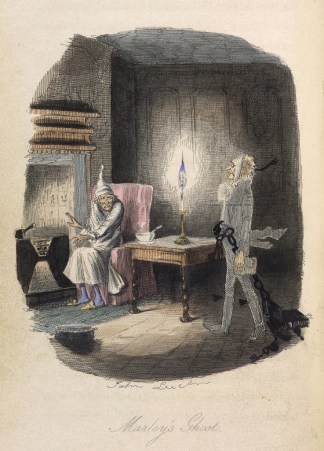 I recently saw a stage production of Charles Dickens’ A Christmas Carol. He wrote his novella in 1843, in outraged response to the dire working conditions of the poor, especially of women and children, as England became more industrialized. I’m sure you’re familiar with the story of Ebenezer Scrooge, a slave of greed – heartless and mean-spirited – who is visited first by the ghost of his deceased business partner, Jacob Marley, who voices his life regrets. He is then visited by the Spirits of Christmas Past, Present, and Future, before he awakens humbled and transformed on Christmas morning.
As I listened to Jacob Marley’s words of deep remorse for his life failings, I was struck by how they reflect our promises at baptism. After Scrooge extols Marley’s virtues as a businessman, Marley retorts,
Mankind was my business. The common welfare was my business; charity, forbearance, and benevolence were, all, my business. The dealings of my trade were but a drop of water in the comprehensive ocean of my business!…. Why did I walk through the crowds of fellow-beings with my eyes turned down, and never raise them to that blessed Star, which led the Wise Men to a poor abode! Were there no poor homes to which its light would have conducted me!
Marley had realized belatedly that the most important aspect of his daily work as a business owner was to seek and serve Christ in his neighbor; to strive for justice; and to treat everyone he encountered with dignity and respect – using our baptismal language. Helping to create a more caring and just world was his true purpose in life.
Visits by the Spirits of Christmas Past, Present, and Future reveal to Scrooge the joy he experienced in his youth before greed corrupted him; the dismal plight of the world around him; and the bleak future that lies ahead. After the Spirits’ ominous visits, Scrooge awakens on Christmas morning a new man with his softened heart filled with love and generosity for others. Humbled, he heeds the Spirits’ warnings and is transformed – and learns always to keep Christmas well.
Although A Christmas Carol is a work of fiction, it reminds us all that humankind is our business. We, too, can keep Christmas in our hearts every day and show the world God’s love through our caring words, but especially through our actions where we live and work, each and every day.


 by Fletcher Lowe
 This work of recognizing, celebrating, and engaging the laity as equal and essential partners in ministry is not limited to The Episcopal Church. Back in 2017, the Church of England launched a new program called
  In the days that led up to our contentious mid-term elections, I read an uplifting
 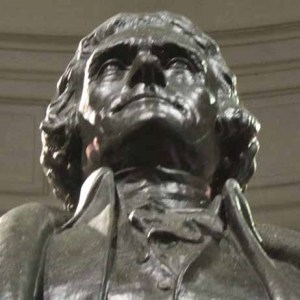 Our faith shapes our values. Not all of us are called to political office or public service. I certainly am not. Yet I am grateful to live in freedom in a republic, and I view my participation – by voting – in the political process as essential to my faith. For me, it is an expression of how Jesus commands me to seek and serve him by loving my neighbors – with God’s help. Just as I have been encouraged to pray for wisdom and integrity in exercising my right to vote and to pray for our nation and elected leaders – regardless of political affiliation – I encourage others to do so, as well. After all – in the words of Thomas Jefferson – we, the People, are the true leaders of our nation.
 I believe that our primary purpose in creation is to build a more loving and just world. And we are well on our way. Humankind has come a long way toward living in more loving and just ways – away from tribal chiefs, child sacrifice, and treating illness with spells and toward more democratic governments, more responsible care for the planet, and more effective health care by doctors and their helpers. We still have a long way to go in coping with climate change, in getting wealth out of politics, and in ending spouse and child abuse.
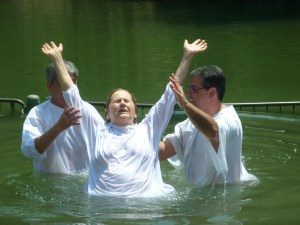 But for Bishop Ray and many others this centrality was only the beginning. The solemnity of Baptism has also to be entered into if the lives and ministries of the baptized are to be fully realized and manifest. Since most baptisms at the main service on Sundays are usually of infants or young children, it is understandable that the tone will be one of delight, joy, pride, even cuteness. That’s fine. But what about baptismal solemnity? How is that woven into the celebration and awareness of what is unfolding not only for the child but for the rest of us as well? In short, how do we understand and realize that being baptized is very serious, solemn business?
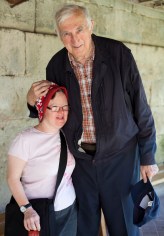


 God was making a body for Christ, Paul said. Christ didn’t have a regular body any more so God was making him one out of anybody he could find who looked as if he might just possibly do. He was using other people’s hands to be Christ’s hands and other people’s feet to be Christ’s feet, and when there was some place where Christ was needed in a hurry and needed bad, he put the finger on some maybe-not-all-that-innocent bystander and got him to go and be Christ in that place himself for lack of anybody better.
 Living God's Mission