[Friends: I wrote this overview for a meeting of the steering team for Episcopalians on Baptismal Mission (EBM). They liked it and each member will post a blog commenting on various parts of it in the next few weeks. You may want to keep this on hand for future reference. – Wayne Schwab]
Systems theory in brief (with apologies to its founder, W. E. Deming, Out of the Crisis, MIT Press, 2000):
- Every organization is a system of many parts.
- The system is designed to produce the results it is getting.
- If you want different results, you have to redesign the system. Decide what results you want from the system.
- Redesign the system to produce the results you want.
Systems theory and bringing the concepts of Ministry in Daily Life to a congregation:
- Your congregation is a system. Every system is designed to produce the results it is getting.
- What kind of members is your congregation producing?How many (%) believe they are sent on mission in each part of their daily lives – home and friends, work (paid or volunteer), community, wider world (from social norms to systems), leisure or play-time, seeking spiritual health, and congregation and its outreach?

- Your congregation is designed to produce the kinds of members it is producing. Off hand, only about 10-15% of our members believe they are sent on mission in each part of their daily lives.
- Redesign the system if you want to produce members who believe they are on mission in each part of daily life. We need to redesign our congregation.
- We need to redesign our congregation’s systems to produce the members we want to produce. We want to produce members who believe they are sent on mission in each part of their daily lives.
- What needs to be redesigned in our congregation to produce the kind of members we want? Apparently, “the mission of the church to restore all people to unity with God and each other in Christ” is not working to produce members who believe they are sent on mission in each part of their daily lives. We need to rethink the congregation’s purpose, its mission.
- We need to involve all of our leaders in determining what needs to be changed. We need to involve all of the congregation’s leaders in rethinking the congregation’s mission, its purpose.
- We need to rely on all of the leaders to redesign the group or activity they lead around the congregation’s new purpose or mission.
- We need to keep in touch with the leaders to see how they are implementing the congregation’s new purpose or mission.
- Do this for 5-10 years and you will see a difference in the kind of members your congregation is producing.
So friends, what mission or purpose will produce the kind of members who want to believe they are sent on mission in every part of daily life?
Our mission has to begin with God’s mission:
- God is on mission to make every part of daily life more loving and more just.
- Jesus Christ is on God’s mission to make every part of daily life more loving and more just.
- The church of Jesus Christ is on mission to make every part of daily life more loving and more just.
- Our congregation is called to be part of God’s mission to make every part of daily life more loving and more just through Jesus Christ.
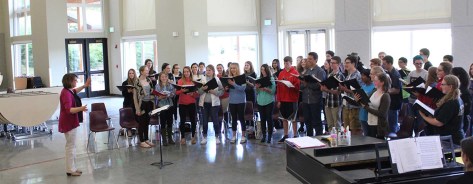 As the exquisite voices of these young women and men filled the church, the hearts of the audience were profoundly moved. My husband and I sat enchanted for over an hour as we listened to arrangements of sacred and secular music. For some arrangements the singers surrounded us, their voices blending sweetly behind and above us. At times our experience was almost transcendent, and by the concert’s end we felt renewed, even transformed.
 Here’s the story. It’s about a mother and her nine-year-old daughter. Where is justice in it?
 A large part of living our ministries in daily life is cultivating the ability to perceive where God is acting, and then aligning ourselves with what God is up to. Understanding ourselves as co-creators with God – partners in a whole-life commitment to increasing love and justice in the world – is a life-giving, purposeful way of living God’s dream for our lives.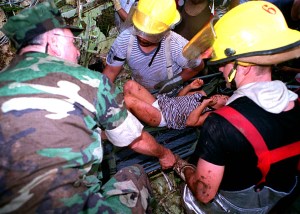
 The church I attend is a “noisy church.” When worshipping in the church, we can easily hear voices from the narthex. Sunday school classes meet in the parish hall directly beneath the church, and we often hear our children’s “joyful noise”. Our church is also located on a busy street corner, not far from a fire station, so that during a service, if you don’t hear a group of motorcycles roaring by, you’ll hear the siren of an ambulance responding to someone in need!
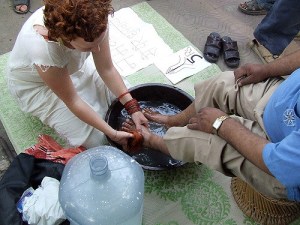 Sarah also happens to be a gifted writer. As she struggled with her grief, she wondered whether there might be a way she could find healing for herself and, at the same time, help others who were widowed at a younger age. Seeking God’s guidance, she prayed and, with God’s help, she began her “healing journey.” She took a leave of absence from work and went on several meditation retreats. And now she is blogging in the hope that she might be able to offer insights and encouragement to others. As she reaches out to others in their grief, her writing brings her healing moments in her own grief.
