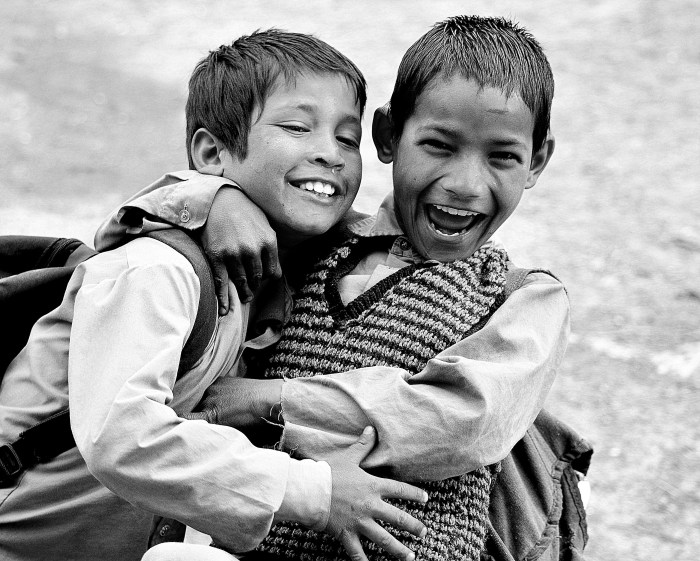
I want to walk as a child of the light*

by Demi Prentiss

For me, darkness can feel big, oppressive.  Standing outside on a moonless night, or alone in a closed, utterly dark room, there are times that the darkness seems to grow, like a slowly expanding comforter that threatens to smother me. It can feel almost invincible.

Yet when the tiny beam of my penlight cuts through that darkness, it shrinks. It practically evaporates wherever the light touches it. And a path appears, guiding my vision ahead and allowing my footsteps to follow.

As individuals, we often underestimate what we have to give. When the darkness presses in upon us, we can hardly imagine that we might wield power against it. Br. Curtis Almquist, SSJE, warns against yielding to such fear: “If you were to say, ‘there doesn’t seem to be much light in me right now…’ you might be surprised. In a dark place, even a little bit of light will have a brilliant effect.” Almquist writes:

“Your own life is a … gift from God to the world. As followers of Jesus Christ, we are to bear the beams of God’s love and light and life, especially to those who wouldn’t otherwise know it. If you were to say, ‘there doesn’t seem to be much light in me right now…’ you might be surprised. In a dark place, even a little bit of light will have a brilliant effect.”

The little bit that each of us brings is enough.  And as more of us choose to let our little light shine, we increasingly become what God has created us to be, acting as a community of faith.  As John 1:3-5 reminds us, “What has come into being in him was life, and the life was the light of all people. The light shines in the darkness, and the darkness did not overcome it.”

May we grow daily in our vocation of being light bearers, overcomers of darkness.

* The [Episcopal] Hymnal 1982, Hymn 490

Loving yourself

by Brandon Beck

There is within us something so powerful and so denied that lest we evade it, avoid it, we are brought again and again to its face.  Be here, stand with it, risk being devoured by it.  For only in dying are we born into eternal life.  – Dr. Catherine Crews, clinical psychologist, Episcopalian, and monk living in Russellville, AR

My six-year-old step-son made this at school. He gave himself the “prad to be aliv” award (proud to be alive) after choosing to take the MMR vaccine at the beginning of the recent measles outbreak here in Texas. He demonstrated an amazing act of radical self love and love of others.

When we live into the promises of our baptism, when we carry out in word and deed the beliefs we affirm in our baptismal covenant, when we say “we will” in support of the growth and formation of each newly baptized person, we are also promising to practice The Great Commandment.

Sometimes I forget how difficult it is to be “Great Commandment” people. I can be a Jesus Follower in my heart and mind and teach those ideals to others only to wake up to the realization that I have not been living a “Great Commandment” life. And it’s less likely to be in the love of God or love of neighbor part where I’ve fallen short. I am a person who struggles to love myself.

I wonder about you. Do you also wake up to the realization that you have forgotten to love yourself as God loves you?

Dr. Crews teaches this very basic Jesus concept of love for self in a postmodern, psychology way – “There is within us something so powerful and so denied that lest we evade it, avoid it, we are brought again and again to its face.” Jesus summarized God’s command to Moses: “Love God, Love your neighbor, and while you’re at it Love yourself” (Bishop Michael Curry’s translation). That thing within us that we tend to deny is our own self-doubt and even self-hatred.

If we are in the world “respect[ing] the dignity of all people” but not loving ourselves, then we are not being “Great Commandment” people. We are not living our baptismal promises.

Dr. Crews calls us to “Be here, stand with it, risk being devoured by it.” “It” is that very self-doubt and self-hatred that we face in our ministry work, in times when we most love God and neighbor but lose sight of the value of our work because we struggle to see the fruit. But Dr. Crews reminds us, “only in dying are we born into eternal life.” And it is in those very promises we’ve made to God, others, and ourselves to love more, respect more, listen more, that we have to honor the dignity of ourselves just as we do the dignity of God and others.

Crossing the future

by Brandon Beck

There is a new energy, a new feeling coming into our life. We cannot base our expectations about how we will feel tomorrow, or even a few hours from now, on how we feel at this moment.

There are no two moments in time alike. We are recovering. We are changing. Our life is changing. At times, things haven’t worked out the way we wanted. We had lessons to learn. The future shall not be like the past. (From The Language of Letting Go, “New Energy Coming,” by Melody Beattie ©1990, Hazelden Foundation)[1]

A younger me wondered what a “cross-eyed bear” meant to singer/song-writer Alannis Morissette. I didn’t have the allegorical/Biblical knowledge to hear and perceive the words Alannis actually wrote/sang. Sometimes, when we don’t have prior knowledge/experience, we misperceive the world around us; it becomes more difficult to see ourselves and others – to love ourselves and others – to choose to follow Jesus in words and deeds. In the chorus of her 1995 song, “You Oughta Know,” Alannis actually writes/sings “It’s not fair, to deny me/ Of the cross I bear,” and I am drawn more deeply into the whole story she presents now that I see the cross and co-carry it because I hear and respond to the call to do so.

Early first-century teacher-philosopher, martyr, and mystic Jesus of Nazareth is quoted throughout both canonized and interpretive theological literature as having said, “If any wish to come after me, let them deny themselves and take up their cross daily and follow me.” (Matt 10:38, 16:24; Mark 8:34; Luke 9:23) How often do we hear those words in church? In popular culture? In our hearts and minds?

The RCL Year C Collect for the Last Sunday After the Epiphany says, “O God, who before the passion of your only­begotten Son revealed his glory upon the holy mountain: Grant to us that we, beholding by faith the light of his countenance, may be strengthened to bear our cross, and be changed into his likeness from glory to glory; through Jesus Christ our Lord, who lives and reigns with you and the Holy Spirit, one God, for ever and ever. Amen.” We ask to be “changed” by carrying our cross – to become like Jesus, whom we follow because we have responded to a call to do so. We ask for the strength to do that lifting. Does the placement of this collect mean we do this only once every three years? Or is this an every moment of every day “pray continually” (1 Thess 5:17) ask?

Contemporary Christian Rock Band Big Tent Revival, in 1999, released a song called “Choose Life.” The chorus says, “Choose life/ that you might live/ The life that He gives/ He gives you forever/ Choose life/ the way that is true/ From the One who chose you/ your Father in heaven/ Choose life.” Perhaps it’s more than an ask; perhaps it is a choice. A life choice. A forever choice. Maybe it’s not just one and done, either. Maybe it’s a choice we have to make over and over again in order to live like Jesus – that choice to bear our cross.

Famed twentieth-century psychotherapist, Dr. Albert Ellis, founder of Rational Emotive Behavioral Therapy, is quoted throughout both professional and pop culture psychology literature as having said, “The best years of your life are the ones in which you decide your problems are your own. You do not blame them on your mother, the ecology, or the president. You realize that you control your own destiny.” (my emphasis) Is controlling my own destiny compatible with my theology and interpretation of Scripture? Is it possible to decide my problems are my own and to bear my cross and follow Jesus at the same time? What would it mean for me to choose life, not blame others for my problems (not even God or the president), and to carry my cross – to see Jesus in and be Jesus to others? Maybe, just maybe, if I decide to carry my own cross, I might have a “new energy, a new feeling” or hope and possibility that Jesus followers, bearing crosses, are all around, making a difference for peace and justice in our world.


[1] https://www.soberrecovery.com/forums/friends-family-substance-abusers/193061-language-letting-go-jan-23-new-energy-coming.html

Striving to be one with God

by Pam Tinsley

During this past two weeks, we have collectively remembered two individuals who dedicated their lives to seeking and serving Christ in each person they met. One was a pastor – Martin Luther King, Jr. – who dedicated his short life to civil rights and racial justice. The other was a statesman – President Jimmy Carter – who dedicated his long life to improving innumerable lives through his geopolitical and humanitarian work, in addition to his faithful support of Habitat for Humanity.

As I was reflecting on these two individuals and the many challenges facing our nation and the Church today, the following reflection from Forward Day by Day landed in my inbox:

Ephesians 4:6 One God and Father of all, who is above all and through all and in all.

The Message adds another sentence to this verse that helps me see the implication of Paul’s words: “Everything you are and think and do is permeated with Oneness.” Imagine what our lives, and what the world, would be like if we truly believed this, knew this to be true, and lived this truth out every day.

If those of us who say we know and love God acted as though God was Father of all, above, through, and in all – all people, every living thing on earth, the very earth itself – and that we are permeated with Oneness, how would things change? I think we can begin living this out by offering everyone kindness and compassion. This, then, grows into dignity and respect, which eventually evolves into harmony and peace and ultimately becomes simply Love. This is a world I want to inhabit. It begins with me, now and in each moment. May I live into the Oneness I know exists with God, my neighbor, and all things, and may you, too.

MOVING FORWARD: What step can you take today to living into this Oneness?

I’m reminded that – even in the most challenging of times – each of us is an instrument of God, called to reveal God’s love for all despite the many obstacles. We have voice, and we have agency because we serve the God of love, justice, and peace – and love will cast out fear.

The work of Christmas is begun

by Demi Prentiss

Celebrating the Feast of the Epiphany – January 6 – recognizes the Incarnation as God at work before our eyes – in all of creation and in God’s good news in Christ. For me, it’s more creaturely than Christmas and brings Easter and Pentecost to life.

Jim Strathdee’s song “I Am the Light of the World” increases my joy each time I hear it.  Singing this song is the best way I can imagine walking through the next eight weeks – the season of Epiphany that takes us from the visit of the Wise Men to Ash Wednesday.

I Am the Light of the World by Jim Strathdee

CHORUS:
“I am the Light of the World,
You people come and follow me.”
If you follow and love, you'll learn the mystery
Of what you were meant to do and be.

1. When the song of the angels is stilled,
When the star in the sky is gone,
When the kings and the shepherds have found their way home,
The work of Christmas is begun:

2. To find the lost and lonely one,
To heal that broken soul with love,
To feed the hungry children with warmth and good food,
To feel the earth below the sky above!

3. To free the prisoner from all chains,
To make the powerful care,
To rebuild the nations with strength and goodwill,
To see God’s children everywhere!

4. To bring hope to every task you do,
To dance at a baby's new birth,
To make music in an old person's heart,
And sing to the colors of the earth!

Words & Music: Jim Strathdee, © 1969 Desert Flower Music
Written in response to a Christmas poem by Howard Thurman

Nestled by the manger

by Pam Tinsley

Crowded Creche – Photo courtesy of Pam Tinsley

Although our family custom is to wait until Christmas Eve to decorate our tree, by the second Sunday of Advent I have begun to adorn the house for Christmas. I have a collection of small wooden figurines that I’ve mostly inherited from parents or my mother-in-law. Several have been gifts from my husband, son, or brother. The newest is a small crèche that I purchased in 2022 in Bethlehem while on pilgrimage. I cherish the memories that each figurine evokes as I contemplate the mystery that is about to unfold again, Christ’s birth in a manger in Bethlehem.

Most of these figurines are placed on the mantel or on top of a tallish cupboard. The home for the family crèche, however, is atop a cupboard that is out of harm’s way from a boisterous basset hound and an inquisitive toddler. Of course, in good Episcopalian style the Magi are far from the stable; the angels and shepherds are in distant fields; and the baby Jesus is discreetly hidden.

After seeing my arrangement of the crèche, on the 3rd Sunday of Advent, our 5½ year-old granddaughter Sienna had a different idea! After dinner she spent close to 30 minutes re-arranging the figures. She carefully placed Jesus in the manger and all the other figurines inside the stable. The little lambs are pressed right up against the manger. The shepherds, the Magi, and the angels are as close to the baby Jesus as his parents are.

I love the image that Sienna’s rearrangement of the crèche depicts: the baby Jesus already radiates the love that draws the world to him – from the angel and exalted heavenly choirs to the majestic Magi from the East to the lowly shepherds, and even the lambs.

Then, as we were all admiring her handiwork, Sienna motioned me to take a closer look, and she pointed at one of the lambs next to the manger. She whispered softly, yet intently, “That’s me.” Just the day before, she’d played a lamb in her ballet’s production of “The Nativity,” and she’d recreated the ballet’s closing scene with our crèche. For Sienna, it was more than that, though. For her, it was longing to be close to Jesus.

Each year, we are invited into the wonder and awe of Christmas. Like Sienna’s heart, our hearts long to be close to Jesus. And like Sienna – and the shepherds – after beholding God in a manger, we long to share the Good News of the Incarnation with others.  

Forward in Love

Excerpts from a post-election reflection in “Letters from Europe,” distributed periodically to The Convocation of Episcopal Churches in Europe by The Rt. Rev. Mark D.W. Edington, Bishop in Charge

Released on the basis of a Creative Commons CC-BY-NC-ND 4.0 license. for more information, see https://creativecommons.org/licenses/by-nc-nd/4.0/

Edited by Edward Lee

Followers of Christ are rightly concerned with the ways elections are held, and the ways in which their results shape the well-being of societies and their citizens. Advancing the cause of justice is always the proper work of the governments we create; affirming the equal dignity and equal worth of every person in society is the expectation placed on us by our baptismal covenant, one that we, in turn, work to realize in the public square.

So elections are never a matter of indifference to Christians. But at the same time, we are never either defined by nor reduced to a given political party or outcome. Until the Kingdom of God prevails on Earth, we will always be in the position of loving critic of, and active participants in, secular governments….

And we know, too, that when institutions fall, when the rule of law is degraded by corruption, and power is concentrated in the hands of an unaccountable few, the first to suffer are the most vulnerable in society — the poor, the outcast, the refugees, the despised and the dispossessed. And that, too, is a matter of fundamental Christian concern.

But we have been here before. We should not from this moment draw the lesson of resignation, or abdicate the duties of disciples.

We must remember:

  • No election can take away from us our call in baptism to join God’s mission, wherever we live and whatever our circumstance. 
  • No election will ever render a government that fully satisfies God’s hope for all people, because governments are human creations, and humans are fallible. 
  • The privilege — and the responsibility — of our calling as Christians is to show, at all times and in all ways, that “loving my neighbor as myself” is the guideline by which we make our choices as citizens and as servants of Christ.

Our task as Christians in the public square is to support with all our strength the building and functioning of institutions that do the work of justice, of mercy, of guarding the dignity and rights of all equally and without favor.

That work continues every day, even — especially — in the days after any election. May God guide us in the doing of that work in whatever our place or nation, and strengthen us to be courageous in mercy, consistent in love for others, and defiant in the face of injustice and hatred. 

Ashes and stardust

by Demi Prentiss

Advent weaves together multiple strands of our faith experience, sharpening our vision of God’s already/not yet/still-in-progress redemption of the world. I was struck by Pastor Steve Garnaas-Holmes’s poem, which encourages my hopeful waiting in this season:

Prepare

           Prepare the way of the Holy One,
           make straight the paths of God.
                         —Luke 3.4

Mary, waiting for her child, is powerless, patient,
dependent on a greater movement—
not uncertain, but also not in control.
Like waiting for the sunrise.
Waiting for God to appear in a new way.

Yet waiting like Mary is not passive,
but preparing, being transformed.

The “way” of God is not elsewhere,
some road God needs to enter the world.
God enters by the unlikeliest path,
through the least accessible means.
The Mystery will enter as Mystery wills.
So maybe to “prepare” is not so much waiting
for God to appear as changing how we see,
becoming ready to see God in new ways.

And God enters the world through us.
So waiting with Mary, we are waiting
as God transforms within us.

We are the way God is preparing.

How are you preparing yourself
to be the way God enters the world?

Deep Blessings,
Pastor Steve
__________________
Steve Garnaas-Holmes, Unfolding Light, http://www.unfoldinglight.net

Pastor Steve’s call to preparation reminds me of the duality we all are called to live with, expressed so beautifully in the Hasidic tale known as “Two Pockets.” It is said that Rabbi Simcha Bunem of Pershyscha always carried two slips of paper, one in each pocket. On one he wrote: Bishvili nivra ha-olam — “For my sake the world was created.” On the other he wrote: V’anokhi afar v’efer” — “I am but dust and ashes.” He would take out each slip of paper as necessary, as a reminder to himself.  A bit like Walt Kelly’s cartoon character Pogo, who offered the warning,  “We have met the enemy, and he is us.”

In the same spirit, Pastor Steve reminds us, “We are the way God is preparing.”  In the reflective posture of Pogo and the teacher Simcha Bunem, “How are you preparing yourself to be the way God enters the world?”

What day is it?

by Brandon Beck

Adapted from a piece published in The Community of Hope, International, Fall 2024 Newsletter

The little food pantry at Church of the Reconciliation, San Antonio, TX – from the Church of the Reconciliation website.

Psalm 118:24 (NRSVUE) This is the day that the LORD has made; let us rejoice and be glad in it.

Every day is important, and Benedictine tradition emphasizes the importance of every day through the continued reading of Benedict’s Rule on a daily schedule. One need not have taken Benedictine vows in order to participate in the daily reading of Benedict’s Rule. Many translations and interpretations can be found, and the suggested reading is divided into a day-by-day reading over three months to be repeated three times a year.

I wrote the first version of this reflection on a Sunday – November 17, 2024. I was sitting in the family minister’s office at Church of the Reconciliation (CoR) in San Antonio, TX, awaiting breakfast before formation hour and service.

Our reading in RSB was about the proper amount of food, and here at CoR we were studying a month-long theme on food insecurity in our neighborhood in combination with a campaign of service and generosity to provide food for those in need in our neighborhood. The breakfast we serve every Sunday before formation and service is a hot meal open to all, and unsheltered folx from the community enjoy dining with us. We have a little food pantry attached to our little free library that we are stocking regularly; the pantry guild is a new addition to the teams of service for CoR. This campaign boosted awareness in our church of how far and wide our program reaches, how big the need for it is, and allowed more people who are capable of contributing in a variety of time, talent, and treasure ways to get involved.

Fulfilling my baptismal covenant in these Sunday meals and other aspects of the food insecurity awareness and helping ministry means preparing my heart, mind, and body – much as we are doing in Advent – for whatever may come. In this situation at hand, I am learning about food insecurity and about the people as a community and as individuals, both those who provide the meals and those who eat the meals. I am also spending time in self-reflection considering my own hungers – do I feel called to participate in these breakfasts out of a hunger for closeness to God? To Ego? To food? To pity? To empathy? Or am I able to turn my own weaknesses, burdens, and sorrows over to God for a moment because I have and will again attend to them with God and my spiritual director and therapist, in my heart (monastic cell?) so that I can be fully present to hold space for God to show up for those serving the meal and those attending whose needs differ from mine?

As we enter Advent, I look back to early 2024 – the early days of our food ministry awareness campaign – and this reflection I wrote. The commentary I read on November 17 is the tried and true 2010 commentary by Sr. Joan Chittister, OSB, in which she tells us that “Benedict of Nursia never takes food away from the community…. Everybody needs something in life to make the rest of life doable and uplifting.” (p. 184-185) As we provide for ourselves in our homes (twenty-first-century monasteries?), let us also remember to share what we have so that all may rejoice and be glad in waiting for whatever is to come.

We waited

by Pam Tinsley

…and may the blessing of God Creator, Liberator, and Sustainer be with you this day and forevermore. Amen.

We decided to wait. I’m so glad that we did. We were at an assisted living residence to break bread together – communion. And it seemed as though one thing after another was trying to prevent it from happening. First Michael, who had arranged for our worship space – for the Feast of St. Michael and All Angels – was delayed. Somehow his electric wheelchair managed to get wedged against a table leg. We had to wait for help.

Then, a familiar face greeted me in the library. A familiar face in an unexpected location. Hillary from Seattle was now in our local assisted living residence! And Doris was there, too! It was a joy to see Doris after, what, at least six years!

But where was Don? Michael had invited him. Both Hillary and Doris knew that he had planned to join us. So, Hillary went to search for him.

So, of course, we waited! When Don finally arrived, he was beaming! I hadn’t seen Don since before the pandemic. Between the pandemic and his immobility, he’d been unable to physically worship in church for years.

And then, when I ran into Don’s son several days later, he said to me, “Dad called me after your visit and exclaimed, ‘Guess who I saw this week!!’”

All of this reminded me of how important it is to take time to nurture my relationships by spending time with others. Yes, sharing communion together was sacred. But so, too, was our time of fellowship.

And it happened because we waited. We waited for Don, and who knew how much it had meant to him to receive communion with this little group? Who knew what it had meant to him to reconnect – if ever so briefly – with me? Don, who welcomed my family and me so warmly and enthusiastically so many years ago when we found our way to his parish. Don, who would receive his heavenly reward only twelve days later.

All because we waited.

As we approach the season of Advent, how might you embrace waiting as a spiritual practice?