Core of priest’s calling: listening to laity

by Fletcher Lowe

fr-bausch-by-Catherine-Love

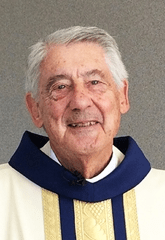
Tom Roberts in the January 22, 2016 edition of the National Catholic Reporter shares the story of the Rev. William Bausch, a New Jersey Roman catholic priest.

As a young priest in the 1960s, while serving at St. Joseph Church in Keyport, NJ, Fr. Bausch was assigned to be the chaplain to a Christian Family Action group (known as Christian Family Movement in most dioceses). One of the rules of the lay movement required him to be silent until the meeting ended.

“I remember that they made me sit on my hands because if I can’t use my hands, I can’t talk. I was never so humiliated and humbled in my life,” he said …. “Not because I had to sit on my hands but because, forced to be silent for two years, I had to listen, really listen, to their stories of how, day after day, they struggled to be good Christians. Month after month, I listened to them struggling inwardly with shady practices at the company at which they worked, the politics of the workplace, the compromises they were forced to make, the fear of losing their jobs, difficulties with children — school, rebellion, drugs — trying to make ends meet, hardly ever getting a vacation, trying not to lose faith in hard times, struggles with prayer, not feeling God’s presence, doubts.”

Through his tenure as chaplain, said Bausch, “I knew I had found my priesthood’s core: that they, the laity, would teach me, not only the other way around.”

This “profound sense of reverence and respect” for the lives and gifts of laypeople deeply affected his approach to being a pastor. “I made it clear to the people from day one that I was there to promote and call forth the gifts and charisms they already had, to teach them who they were as a people of God, to support and learn from them….”

Blogger’s questions:

  • To the clergy: how might you facilitate listening to lay folks share their daily life stories?
  • To lay folks: how might you facilitate your clergy to hear your daily life stories?

What EBM stands for, in a nutshell

by Peyton Craighill

I belong to a “subversive” organization known as “EBM – standing for Episcopalians on Baptismal Mission (the organization that sponsors this blog). Its goal is to convince all Christians that they should take their baptismal vows seriously by living them out in all their daily-life activities, Monday through Sunday.

And (this is the “subversive” part), their congregations are supposed to help them do this!

This means converting our congregations from “shelters” (protecting their members from the stormy blasts of life), into “base camps” – inspiring, directing, equipping, and supporting their members for their missions in their daily lives, wherever Christ leads them on their journeys.

The typical “shelter” congregation places their primary emphasis on “Come” to church on Sunday mornings. The “base camp” congregation primarily emphasizes “Go” out in your daily lives to serve Christ’s mission, Monday-through-Sunday.

Danger! Baptismal Water!

I Am Baptizedby Demi Prentiss

On Sunday the preacher, referencing Luke’s story of the baptism of Jesus, reminded the congregation, “The baptized life is risky business.” She shared an excerpt from a poem by Richard Jespersen in the book I Am Baptized:

Danger!

Baptismal water!

A relentless undertow of grace,

crosscurrents pulling us in over our heads

and out of our depth in Christ;

the drowning of the self-as-god

and the rising of the self-in-Christ.

God buries in a watery grave everything not of God

and raises to new life everything of God,

our watery Good Friday and Easter….

In water,

we see reflections of the world as it is.

In baptismal water, we see reflections of the world as it will be,

and we are changed.

To live the baptized life

is to follow

the way of the water and Word.

To live baptized is to walk wet.

The risk in walking wet is the risk of vulnerability. While fear holds us back and imprisons us, the courage to allow ourselves to be vulnerable sets us free, to live fully into the identity God dreams for us.

Walk wet. Walk with Jesus, who reminds us, even in the midst of the storm, “Courage! It’s me. Don’t be afraid.” (The Message, Mark 6:50)

With thanks to The Rev. Joy Daley, rector of the Episcopal Church of St. Thomas the Apostle, Dallas, TX

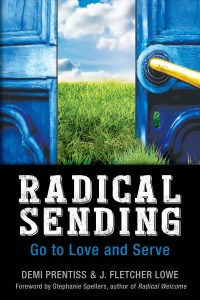
Radical Sending – shifting ‘Come’ to ‘Go’

radical-sending-full-rgbby Peyton Craighill

Many church people rate the success of a congregation by two measures: one, the size of the congregation on Sunday morning, and two, the size of the offering on the Sunday service.

These are “Come” measures of success.

But that’s not enough for the new Presiding Bishop of the Episcopal Church. Bishop Michael Curry measures the success of a congregation in terms of “Go” considerations: how many members of that congregation are living the Good News of Jesus Christ in everything they do, Monday through Sunday.

Radical Sending is about turning congregations from a “Come” congregations to a “Go” congregations. The emphasis on “Come” is important – but the emphasis “Go” is even more important! When new members are introduced to Christ and are not challenged and supported to serve in Christ’s mission in their daily lives, the mission of the congregation fails in its mission to serve Christ!

The best section of the book introduces the metaphor “base camp” for the congregation. Mountain climbers can’t succeed in their mission without base camp.

Similarly, for us Christians, we can’t succeed in our mission to serve Christ’s mission in our daily lives without a base camp. And that base camp for us is our congregation. We come to church on Sunday morning to be sent out empowered and redirected to serve Christ in his mission throughout the week ahead.