One step further

by Wayne Schwab

As Fletcher Lowe wrote in an earlier blog, when he hears of a person in ministry, he comments, “That is a ministry.” If there is interest, he pursues how it is a ministry. The other is grateful.

I find a simple add-on works, too. You get a sense of how people can see God at work in their lives now.

Alba Campus – One Step Forward….

When I hear a mission (my term for a ministry), I begin with, “Can I ask you some, maybe, personal questions?”

If no, I say: “I won’t. Thanks for being direct.” And I go on with other conversation.

If yes, I ask, “Are you a church member?’

Again, if this answer is yes, I ask, “Do you see God helping you in any way in this mission?” I always get a rich answer!

If the answer is no, I ask, “Does the idea of God work for you in any way?”

If no, I comment something like that’s true for lots of people and go on to other conversation. If yes, I ask, “Do you see God helping you in any way to do this?”

Be amazed, as I always am. I get a rich answer here too.

‘You can’t not do this thing’

by Edward L. Lee, Jr.

David Brooks is one of my favorite writers and commentators. His twice-weekly op-ed articles in the New York Times are a must read for me. He isn’t just an opinion columnist or political observer. In my judgment he’s a serious moral philosopher for our age. I recommend reading his 2015 book, “The Road to Character.” In it he probes for moral depth by blending psychology, politics, spirituality, and humility in the pursuit of a virtuous life with authentic character.
In a 2016 Times column titled “Why America’s Leaders Fail” Brooks got to the heart of the matter when he wrote:

“Over the past few decades, thousands of good people have gone into public service, but they have found themselves enmeshed in a system that drains them of their sense of vocation.


“Let’s start with a refresher on the difference between a vocation and a career. A career is something you choose; a vocation is something you are called to.

“A person choosing a career asks, How can I get the best job or win the most elections? A person summoned by a vocation asks, How can my existing abilities be put in service of the greatest common good?


“A career is a job you do as long as the benefits outweigh the costs; a vocation involves falling in love with something, having a conviction about it and making it a part of your personal identity.


“A vocation involves promises to some ideal, it reveals itself in a sense of enjoyment as you undertake its tasks and it can’t be easily quit when setbacks and humiliations occur. As others have noted, it involves a double negative — you can’t not do this thing. … People with a vocation mind-set have their eyes fixed on the long game. They are willing to throw themselves toward their goals imaginatively, boldly, and remorselessly.”

For the Christian, baptism is a vocation and not a career; a call to serve, not an optional opportunity. It is indeed a part of our personal identity. It’s serious, solemn and yet joyful business. Isn’t that what we mean when after a person is baptized we pray, “Sustain them, O Lord, in your Holy Spirit. Give them an inquiring and discerning heart, the courage to will and to persevere, a spirit to know and love you, and the gift of joy and wonder in all your works”? (Book of Common Prayer, p. 308)

I believe so. Baptism is living and doing God’s mission. It’s a vocation. It’s a holy endeavor we cannot not do.

3 ways for worship to support everyday life

by Demi Prentiss

Do the people in your congregation leave worship each week knowing God loves their daily work, and celebrating how they contribute to what God is doing in the world? Equipping people to be co-creators with God – sowing love and justice in the places they live and work – is a transformative purpose of the church. Too often our focus in worship is on what we do while we’re inside the church building, rather than on how we can be God’s agents of transformation once we leave the church grounds.

Made to Flourish is “a network of pastors who seek to encourage and resource each other to integrate faith, work and economic wisdom for the flourishing of our communities.” One of the ways they do that is to challenge pastors – and their congregations – to make weekly worship a place where people learn the many ways they are sent out into the world.

How’s your congregations doing? Made to Flourish pastor Isaac Wardell offers an audit that examines three areas – practice, pastoral care, and posture.

  • Practice touches on what we do and talk about during worship, and the difference that can make to people’s understanding of their work.
  • Pastoral care looks at some of the ways that some vocations are disrespected in our culture, and how the church might be more intentional in “respecting the dignity of every human being” (Book of Common Prayer, Baptismal Covenant, p. 305), especially in their work.
  • Posture deals with how the willingness to become a “learner” opens doors for life-giving relationship with those we pray for and minister to.

Once you’ve discovered an area you might like to work on, Wardell also offers suggestions on small changes that can make a big difference.

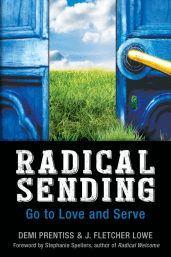
Want to go deeper? Take a look at our book Radical Sending for some more stories, suggestions, and strategies.

Claiming the mission

by Fletcher Lowe

Lynn McDonald, registered dental hygienist at the Naval Branch Medical Clinic’s Dental facility, gives a visiting student a ride in the dental chair. Photo by Verda L. Parker

As I sat in the dentist’s chair somewhat anxious (isn’t that what most of us feel!) awaiting the dentist, I began a conversation with the hygienist.  She spoke about how much she loved what she did, how fulfilling it was.  I said, “Sounds like you have a real ministry here.”  She paused and said, “I never thought of it as a ministry.”  I then pressed it a bit as to her strong commitment in using her God-given skills to help others, and she then reflected, “Well, perhaps it is a ministry…. Yes, I think it is.”

Last Sunday after a church service when I was talking with a newcomer, I asked what she did professionally.  She said she worked in a Social Service office.  I commented what a gift she must be to the people with whom she worked.  She responded by saying how much she did like what she did and, for the most part, she enjoyed the clients with whom she worked.  I said, “That is a real ministry.” To which she replied, “I never thought of it in that way. But maybe it is.”

These conversations reflect a couple of things to me:

  1. How isolated the word “ministry” is in many church-going people’s minds – limited to those who are professional “ministers.”
  2. How that isolation reflects on the opportunity the Church has – to acknowledge that chasm by helping people name the name, recognizing that what they are doing with their God-given time and ability is really a God-given ministry.

Christians are engaged in ministry every day in their daily lives, be it at work or in the community or at home.  We just need to help them name it.  In doing so we empower people to see that what they are doing is an expression of what God has called them to do and be.

Resolutions

by Pam Tinsley

As we turn the pages of our calendars to January 2018, perhaps we look with hopeful expectation to the New Year. Perhaps we think of it as a fresh start. And it will indeed be a new year: although our rituals and the seasons lend continuity and a sense of familiarity, each day opens us to a new beginning.

We may even contemplate New Year’s resolutions! Yes, I know: within a week, 25% of resolutions will be history. By year’s end, fewer than 10% will have been fully kept.

As much as I’m not a particularly avid “resolutionist,” a newspaper article[1]  recently caught my eye:  The Only Way to Keep Your Resolutions. The author suggests that, if we rely on self-control and willpower, resolutions will fail. Instead, he contends, our emotions — specifically, gratitude, compassion and an authentic sense of pride (not “hubris”, but what I would call “inner joy”) — encourage us to behave in ways that result in self-control. When our values are focused outwardly toward others, rather than inwardly toward ourselves, we are more likely to make meaningful changes in our lives. In short, these qualities – gratitude, compassion and a sense of inner joy – are also the basis for establishing and sustaining relationships.

And, certainly, as followers of Christ, we understand that our values are shaped by Jesus’ values of love, compassion, gratitude and inner joy.

This insight is helping me reframe my own perception of resolutions and to consider how I might take steps to embrace Jesus’ values more fully in my daily life. What about you? How might your New Year unfold if you embrace Jesus’ values of love, compassion, gratitude and inner joy in your daily life?

[1] DeSteno, David. “The Only Way to Keep Your Resolutions.” The New York Times, December 29, 2017. https://www.nytimes.com/2017/12/29/opinion/sunday/the-only-way-to-keep-your-resolutions.html