Did you send a valentine to anyone this year? Did you receive a valentine? I hope it warmed your heart, and that it came to you from someone special.
This year, Valentine’s Day and Ash Wednesday were only days apart. And in the midst of all that, as the Sunday Gospel, we read Matthew’s story of the Transfiguration of Jesus (Mt 17:1-9). That intersection of holy days and holidays and God-at-work over the centuries struck me as special.
Do you know how you shine with my radiance? Can you hear my name for you? “My beloved, my delight.”
I said it to you at your baptism; I whisper it to you every day. You were born of light.
Sometimes it’s only a mountaintop experience that reveals it clearly, but once you’ve seen, you know.
No one can build a monument to it, no one can capture it, but it’s there, as secret as the sun.
Do you realize the ancients walk with you, murmur to you, cheer you on?
It’s true, from the mountain you see the cross, but also the horizon beyond.
Will you go there? Will you walk in love? My dearest, I want you with me.
Will you be my Valentine? Will you take my love to an uncertain world?
Will you carry my love like a little red candy heart, to a world needing to know?
I’m with you. I love you. Will you be mine?
Then Gail L. Miller, in Luther Seminary’s “God Pause,” chimed in with words of her own, adding a grace note to Pastor Steve’s “Transfiguration Valentine”:
“…Interestingly, it was [God’s] voice and not the vision that knocked the disciples to the ground and filled them with fear. But just as they were overcome by fear upon hearing God’s voice, they were comforted and encouraged by Jesus’ words to “get up and not be afraid.” “Get up!” Interestingly, in Greek it is the same word as Resurrection! Jesus gently resurrects the disciples this side of the grave, so that they can travel with him down into the valley, into the way things really are….”
So even when we come down from the mountain and wear the ashes of repentance and mortality – when we’re surrounded, in the valley, with “the way things really are” – we can claim our identity as children of God, beloved and called, equipped by Christ’s gentle call to “Get up!” and go down into the valley, perceiving all around us the presence of Christ.
May you walk your path during Lent with God’s Transfiguration valentine in your pocket. “I’m with you. I love you. Will you be mine?”
Reprinted from “Living God’s Mission,” Jan. 24, 2025
by Pam Tinsley
During this past two weeks, we have collectively remembered two individuals who dedicated their lives to seeking and serving Christ in each person they met. One was a pastor – Martin Luther King, Jr. – who dedicated his short life to civil rights and racial justice. The other was a statesman – President Jimmy Carter – who dedicated his long life to improving innumerable lives through his geopolitical and humanitarian work, in addition to his faithful support of Habitat for Humanity.
As I was reflecting on these two individuals and the many challenges facing our nation and the Church today, the following reflection from Forward Day by Day landed in my inbox:
Ephesians 4:6 One God and Father of all, who is above all and through all and in all.
The Message adds another sentence to this verse that helps me see the implication of Paul’s words: “Everything you are and think and do is permeated with Oneness.” Imagine what our lives, and what the world, would be like if we truly believed this, knew this to be true, and lived this truth out every day.
If those of us who say we know and love God acted as though God was Father of all, above, through, and in all – all people, every living thing on earth, the very earth itself – and that we are permeated with Oneness, how would things change? I think we can begin living this out by offering everyone kindness and compassion. This, then, grows into dignity and respect, which eventually evolves into harmony and peace and ultimately becomes simply Love. This is a world I want to inhabit. It begins with me, now and in each moment. May I live into the Oneness I know exists with God, my neighbor, and all things, and may you, too.
MOVING FORWARD: What step can you take today to living into this Oneness?
I’m reminded that – even in the most challenging of times – each of us is an instrument of God, called to reveal God’s love for all despite the many obstacles. We have voice, and we have agency because we serve the God of love, justice, and peace – and love will cast out fear.
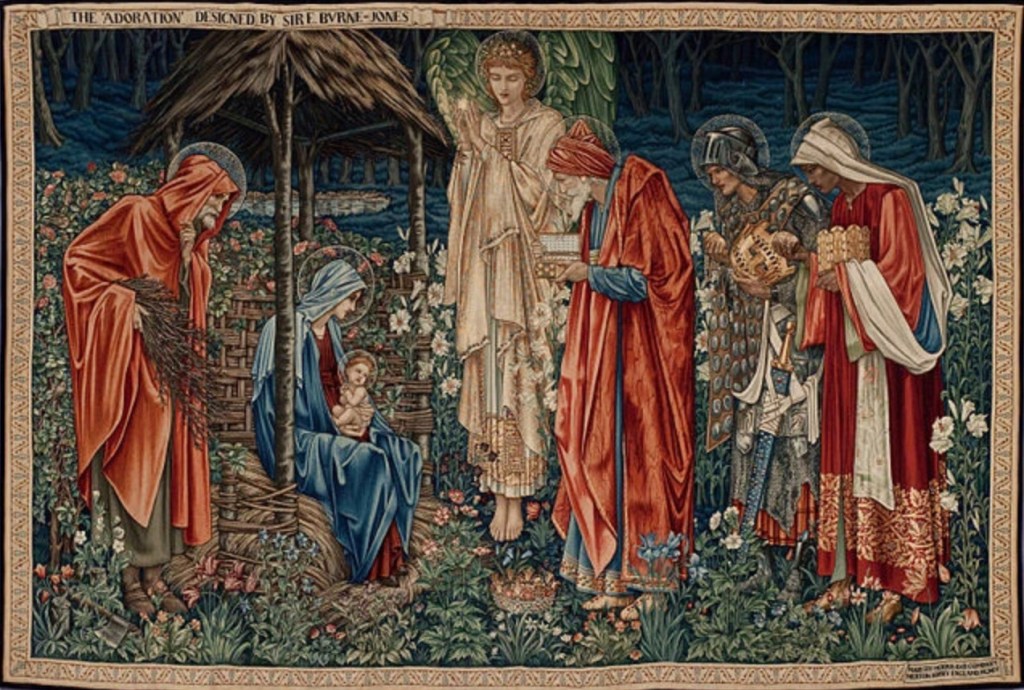
The Adoration of the Magi by Edward Burne-Jones (1904)
by Brandon Beck
Isaiah 68:1-6
Arise, shine; for your light has come,
	and the glory of the LORD has risen upon you.
For darkness shall cover the earth,
	and thick darkness the people;
but the LORD will arise upon you,
	and his glory will appear over you.

Do you remember the camp song, “Rise and shine and give God your glory, glory”? The Feast of the Epiphany, January 6, is a day, certainly, to “rise and shine and give God your glory and glory.” It marks Jesus’ manifestation to the world, the remembrance of the magi receiving Jesus on behalf of the world. On the celebration of the Epiphany, we are called to think about what is revealed in our own lives as Jesus is revealed to the world; where have we seen the light?
The magi, understanding the darkness of the world into which Jesus was born, “returned to their country by another route” so as not to deal with Herod and his dark ways again. (Matthew 2 NIV) Even the ones on whom the Light rose directly still faced the darkness of the world and had to contend with it. Sometimes, the light is not easy to see; the darkness is all around. But, like the magi, we can find those other routes in order to see what is being revealed, to remember that revelation, and to share that revelation with others.
Sometimes, we just have to change the way we look at things in order to see the light. Take the classic “Rubin’s vase.” Can you focus on the light to see the vase? Changing the way we look at things takes practice; it is an exercise. I have to focus and re-focus to see the vase; the dark faces want to pull my attention away from the light in “Rubin’s vase.” Some people even call the image “Rubin’s faces” instead because of the powerful pull of the dark part of the image.
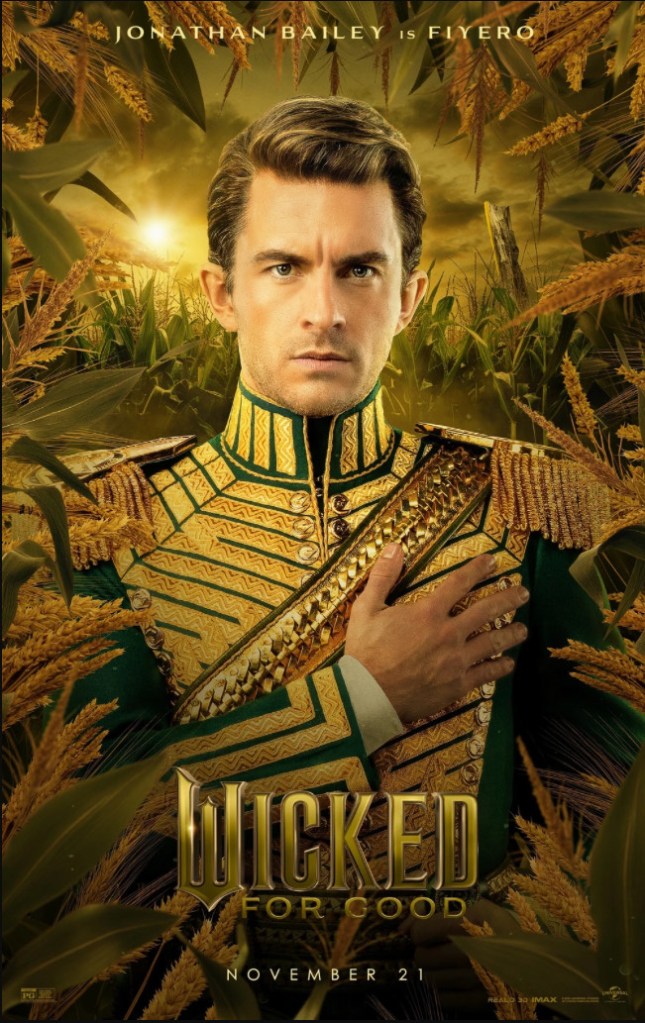
Sometimes, we have to be able to discern the truth in messaging to be able to see the light. Leaders, news media, other people give messaging and opinions about who is important and even who is worthy. Just as Herod gave messaging to the magi. And as they discerned through the revelation of Jesus to them that Herod’s messaging was false, we must be open to the revelation of the truth in messaging we hear. For those of you who have seen Wicked and Wicked: For Good, think about how Fiyero was able to discern the true character of Elphaba despite the propaganda against her. For those of you who haven’t seen the musical or the movies (or haven’t read the book), I encourage you to do so with your eyes open for the metaphors, allusions, and calls to social justice.
Sometimes, the epiphany is in seeing Christ in and being Christ to others as led and empowered by grace. Even if those others are people we’ve been taught to fear or even hate. Even if those others are people we just don’t like or just disagree with. The great darkness covering the world right now is full of injustice and division among people. But the light shining in the darkness reminds us that God’s love knows no boundaries and will rise and shine. We, the people of God, by striving for justice and peace, can make Jesus manifest every day. We are the light shining in the darkness.
That camp song is actually about Noah and the flood, a time of great darkness for the world. Yet the song is upbeat, joyous, and full of life. The chorus shouts a resounding, “Rise and shine and give God the glory, glory.” It is another route to remembering that Jesus is manifest in the world. We don’t have to wait; the light is already shining in the darkness. How will you amplify the light today?
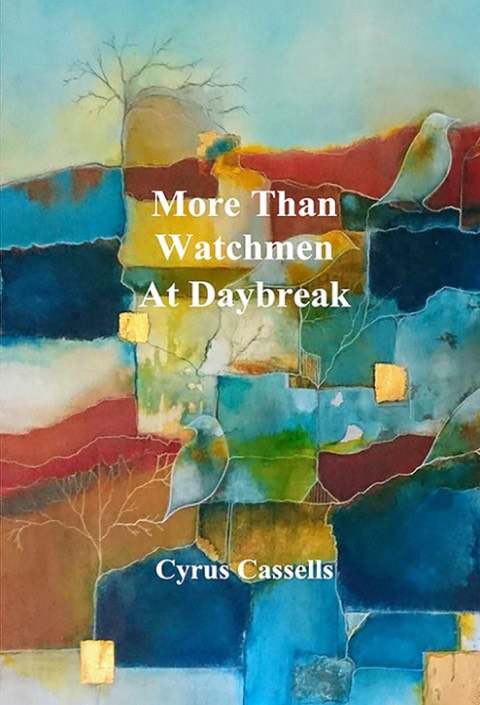
This is Cyrus Cassells. He is a poet, an actor, a cultural critic, and a professor. He earned the Jackson Poetry Prize and the Lambda Literary Award; a Guggenheim Fellowship and a Pushcart Prize; the William Carlos Williams Award, a Lannan Literary Award, a nomination for a Pulitzer Prize, and was a finalist for the NAACP Image Award. He has ten books of poetry published, two books of original translations of Catalan poetry published, and a plethora of articles of cultural criticism especially in the genre of film studies. His upcoming publications include two novels, one about a fictional Harlem Renaissance poet and another an historical fiction based on the life of St. Damien and the colony for victims of Hansen’s disease he served in Hawaii.
Cyrus Cassells strives for justice and peace among all people, respecting the dignity of all human beings through his poetry. One of his earliest poems, “Soul Make a Path Through Shouting,” tells the story of Elizabeth Eckford, the young girl who bravely, symbolically integrated public schools in Arkansas in 1957. His translations of the poems of Francesc Parcerisas strive to preserve and amplify the Catalan language. Poems from his collection Beautiful Signorexplore the beauty of gay love. His experimental collection The Crossed-Out Swastika is research-based poetry telling the stories of young people facing the terror of World War II, and The World that the Shooter Left Us provides powerful commentary on violence in contemporary America.
When I pray Compline (Book of Common Prayer, p. 127) and repeat the Antiphon —
     Guide us waking, O Lord, and guard us sleeping;
     that awake we may watch with Christ, and asleep we may rest in peace.—
God brings many associations to me, especially ways that God is creating justice for me and for people like me in God’s world. Tonight, as I repeated this Antiphon, Cyrus Cassells came to mind. Cyrus Cassells’ poetry guides me waking and guards me sleeping as I watch with Christ for justice and peace in this world.
In 2019, Cyrus published a short collection of poetry he wrote while staying at Christ in the Desert Monastery for a writing residency. He took the title of his collection from Psalm 130:5-6:
I wait for the Lord; my soul waits, and in his word I hope; my soul waits for the Lord more than those who watch for the morning, more than those who watch for the morning.
     I’m thirsty, fallible,
     Incensed and restive in this desert monastery,
     But not yet resigned,
     Full of questions and parrying
     From wolf’s hour to blue hour
     To burgeoning dawn —
He is the “watchman” from Psalm 130 in today’s political and social climate. The watchman of Psalm 130 is not unlike the oracle the prophet Habakkuk saw, who, in Chapter 1, as read on Proper 26, Year C, Track 1, Sunday November 2, 2025, cries out:
     O Lord, how long shall I cry for help,
     and you will not listen?
     Or cry to you “Violence!”
     and you will not save?
That Psalm 130 watchman, that Habakkuk oracle, Cyrus in the desert today, me praying Compline now — we are all “not yet resigned.” We are all willing to strive for justice and peace among all people because, as Cyrus says in his poem,
     the soul says,
     Yes, I was there.
I was there, just as the watchman was, when she looked out of the monastery to cry to the monks, “The sun is up; it is time to pray.” I was there, just as the watchman was, when she looked out of the military fortification and shouted to those she protected, “They attack! To arms!” I was there, just as the watchman was, when he awoke from accidentally falling asleep, and cried, “Jesus! You are betrayed!” I was there, just as the watchman was, when we all knelt together and prayed:
     O God our Father, whose Son forgave his enemies while he
     was suffering shame and death: Strengthen those who suffer
     for the sake of conscience; when they are accused, save them
     from speaking in hate; when they are rejected, save them
     from bitterness; when they are imprisoned, save them from
     despair; and to us your servants, give grace to respect their
     witness and to discern the truth, that our society may be
     cleansed and strengthened. This we ask for the sake of Jesus
     Christ, our merciful and righteous Judge. Amen. (BCP, 823)

and

     Grant, O God, that your holy and life-giving Spirit may so
     move every human heart [and especially the hearts of the
     people of this land], that barriers which divide us may
     crumble, suspicions disappear, and hatreds cease; that our
     divisions being healed, we may live in justice and peace;
     through Jesus Christ our Lord. Amen. (BCP, 823)
Almighty God, you have so linked our lives one with another that all we do affects, for good or ill, all other lives: So guide us in the work we do, that we may do it not for self alone, but for the common good; and, as we seek a proper return for our own labor, make us mindful of the rightful aspirations of other workers, and arouse our concern for those who are out of work; through Jesus Christ our Lord, who lives and reigns with you and the Holy Spirit, one God, for ever and ever. Amen. – Collect for Labor Day, Book of Common Prayer
As Labor Day approaches, I’ve been reflecting on the meaningfulness of work and how its function is being transformed by technology and Artificial Intelligence. Our work has meaning because it matters to God. From the beginning, humans have sensed that creation is alive with God’s presence, and our role has been to do God’s work in the world.
The Hebrew word “avodah” means “work, worship, and service.” The word used to describe worship – liturgy – means “the work of the people.” And when we place God at the heart of our daily work, the eternal is drawn into the temporal. It becomes sacramental. Labor is sacramental not only for what it produces but for how it shapes our human dignity, builds community, and reflects God’s creative purpose. Honoring workers, therefore, is also honoring the divine image in each person and the sacred character of each person’s daily toil.
Even as technology reshapes jobs and entire economies, our deeper vocation will not change. Work is not simply what we do to earn money. It is who we are as beings made in the image of God: people of faith and gratitude linking heaven and earth. Every job – from the humblest to the most prestigious – carries the same sacred title when offered to God.
Although work may take on new forms, on Labor Day we remember and commemorate the true essence of work: to worship, to give thanks, to serve, and to reflect the presence of Christ in all people and in creation. Work is holy because it is our destiny—not defined by tasks or paychecks, but by our identity as God’s holy people, made to love and to reflect God through the work of our lives.
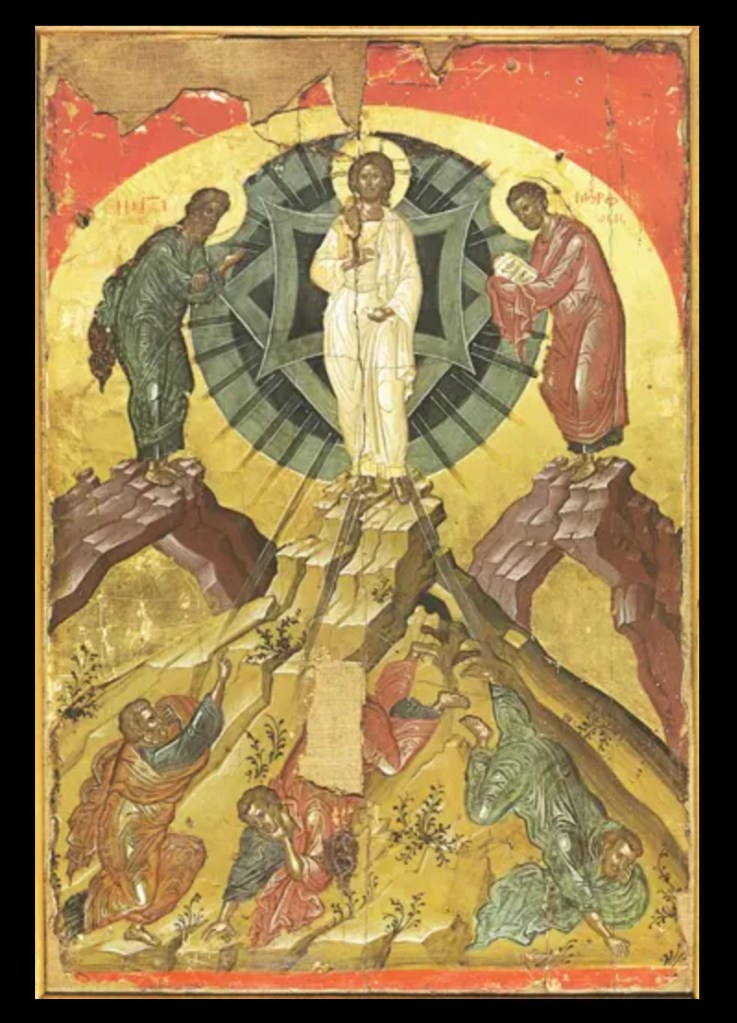
Icon of The Transfiguration written by Theophanes the Greek
by Brandon Beck
Wednesday, August 6, 2025 we celebrated the Transfiguration of Jesus. According to the Gospel of Luke, “about eight days after” Jesus foretells his death,
Jesus took with him Peter and John and James and went up on the mountain to pray. And while he was praying, the appearance of his face changed, and his clothes became as bright as a flash of lightning. Suddenly they saw two men, Moses and Elijah, talking to him. They appeared in glory and were speaking about his exodus, which he was about to fulfill in Jerusalem. Now Peter and his companions were weighed down with sleep, but as they awoke they saw his glory and the two men who stood with him. Just as they were leaving him, Peter said to Jesus, “Master, it is good for us to be here; let us set up three tents: one for you, one for Moses, and one for Elijah,” not realizing what he was saying. While he was saying this, a cloud came and overshadowed them, and they were terrified as they entered the cloud. Then from the cloud came a voice that said, “This is my Son, my Chosen; listen to him!” When the voice had spoken, Jesus was found alone. And they kept silent and in those days told no one any of the things they had seen. – Luke 9:28-36 (NRSVUE)
In the Anglican/Episcopal tradition, in addition to the August 6 Feast of the Transfiguration, the Transfiguration of Jesus comes to us during the Lectionary Cycle as well. This year, Sunday, March 2, was Transfiguration Sunday. At Church of Reconciliation in San Antonio, TX, we celebrated Recovery Sunday with Transfiguration Sunday. I had the privilege to bring the message that day. I share an excerpt from my Transfiguration/Recovery Sunday message with you on “Living God’s Mission” today:
Welcome to Recovery Sunday—Transfiguration Sunday—at the Episcopal Church of Reconciliation. My name is Brandon, and I’m speaking here today to support my own recovery journey.
I do Recovery one moment at a time, one day at a time, with the help of God, as I understand God. However you identify, whomever you love, and wherever you are on your own journey, I hope you find that you’re welcome here.
Recovery happens in AA, as well as in all other denominations of anonymous programs formed in the 12-step tradition. Recovery also happens in Celebrate Recovery, Positive Recovery, SMART Recovery, Refuge Recovery, and other recovery programs I’m still learning about. Whichever program you rely on—thank you. Thank you for your willingness to keep showing up and for showing up today.Thank you for your experience and your transfiguration.
You were one way and now you are completely different.
God has forgiven you; your face is unveiled; you have climbed the mountain and seen the glowing and transfigured face of Jesus; now everyone can see your face glowing because you were one way and now you are completely different.
Do you remember your first recovery meeting? It quite possibly was on a property much like this one…maybe even right here at Reconciliation, in fact. For those of us in recovery, our relationship with ourselves, with our loved ones, and with God felt broken; fortunately we found groups within which we learned to Reconcile with ourselves, others, and God.
If you haven’t ever been to a recovery meeting, I invite you to give one a try. Here at Church of Reconciliation at least six different recovery groups host approximately 30 recovery meetings each week; we gratefully welcome more groups and meetings all the time.
Because we all share here, through direct experience or in loving support, in the transfiguring power of recovery, we live into our name–we are Reconcilers. We all were one way and now we are completely different. For each of us, something transfiguring moved us to change. I feel that expressed in the readings we heard earlier.
Those readings for today include: a story about Moses from the book Exodus; Psalm 99; a brief statement from the 2nd letter of Paul to the Corinthians; and the story that gives today its “churchy” name―Transfiguration Sunday―an excerpt of the Gospel of Luke Chapter 9.
One of the reasons I love the Episcopal Church is its use of this Common Lectionary. In addition to connecting us with our interdenominational siblings, the lectionary helps us see how scriptures from all different parts of the Bible might connect together to tell a bigger story.
Today’s readings connect in the telling of transfigurations—stories of visible life changes. If so many stories of dramatic change are part of our spiritual heritage, then my dramatic change must be important too. I wonder if you have noticed how important your story is?
“I was one way, and now I am completely different.” I’m borrowing that quote to tie everything together today. It comes from The Chosen, a planned seven-season drama of the life of Jesus based on the text of the Gospels but with added characters, dialogue, historical context, and artistic imagination. The creator, Dallas Jenkins, does some outstanding work with The Chosen, giving us characters that defy traditional, oppressive stereotypes in order to remind everyone that they are part of the story.
And, in Episode 2 of Season 1 of The Chosen one of these characters who has been given new life speaks the line: “I was one way, and now I am completely different.” Mary Magdalene, played by Elizabeth Tabish, experiences a profound change at the end of the first episode, then, in episode 2, she explains it by saying, “I was one way, and now I am completely different.”
This is loving, life-giving, liberating, transfiguring, recovery Truth.
What changes Mary Magdalene’s character? She learns something from Jesus that I think those of us in Recovery learn during our journeys: We hurt ourselves and others because we don’t feel like we deserve love, but, it turns out, every single one of us is worthy of love, respect, and dignity.
In The Chosen, Jesus, played by Jonathan Roumie, looks at this woman when she is at rock bottom, and he sees the saint inside the sinner and calls her by name.
“Mary,” he says. When Mary hears Jesus say her name, everything changes for her. She becomes willing to turn her life and will over to God. She tells people, “I was one way, and now I am completely different. And the thing that happened in between was him.”….
(To hear the rest of the message, please visit the Reconciliation YouTube page. The March 2 message begins around minute 29; however, I recommend viewing the service in its entirety for the entire Transfiguration/Recovery experience.)
Overwhelming hunger abounds. We read daily reports of the abject hunger imposed upon the starving children in Gaza; famine in Africa; hungry children even in the United States. Hunger abounds, and the lives – and, surely, long-term development – of infants and children are at stake.
At the same time, food sources abound. How much food intended for delivery overseas rotted in warehouses when USAID funding was cut off? Expiration dates are almost here for close to 200,000 boxes of nutritional supplement that have been paid for but not shipped by the U.S. government. According to the Washington Post[1], the food and supplements at Mana Nutrition alone could help as many as 60 million people. In the meantime, limited hands are available to harvest this summer’s produce on our nation’s farms and orchards as ICE agents target migrant workers. The amount of food wasted in our country is egregious, and in response, Congress has cut funding for food assistance for needy families.
The lack of concern for the plight of others is at odds with the basic teachings of Jesus. Instead of sending people away hungry, Jesus had compassion. Jesus says to his disciples, “You give them something to eat,” instructing them to feed the multitudes by gathering the seemingly meager rations of food at hand – only to have leftovers!
For Jesus, abundance means sharing. Likewise, the Apostle Paul urged the Corinthians to contribute to the needs of the community of believers in Jerusalem from their own abundance (2 Cor 9).
Although our country is one of the world’s wealthiest, we have lost compassion for those living in poverty and famine, both abroad and at home. Leaders profess Christian values but often neglect to demonstrate the essential Kingdom values of love and mercy.
In today’s world, Jesus calls us to speak up and express compassion and empathy toward those in need. Supporting and caring for the vulnerable and innocent is a collective responsibility, and by working together, we can make a difference. This is what it means to be a follower of Jesus today.
If you make friends with crows…the rope and bucket that haul you up…Tiny violets reassure the hillside…a kid you don’t know smiles at you anyway…Inspired by “Wonder is saving enough,” by Steve Garnaas-Holmes
by Demi Prentiss
In the 1979 Book of Common Prayer’s Rite of Baptism, nestled between the water and the oil of chrism, is a beautiful prayer that helps us remember how we’re called to live. After thanking God for the gift of new life, and asking to be sustained by the Holy Spirit, we ask for four things:
An inquiring an discerning heart
The courage to will and to persevere
A spirit to know and to love [God]
The gift of joy and wonder in all [God’s] works
We’re inclined to forget that “wonder” part. Not many hymns about wonder. (#400, #412, and #580 in The Hymnal 1982 are notable.) Scripture mentions “awe of the Lord” pretty often. But for me, wondering is a much more incarnational practice. I’m encouraged to use all my senses as well as my mind to study the subject of my wonderment – to absorb the full gift of what I’m observing. And I’m often reminded that God is God, and I am not.
When I asked EpiscoBOT about the word “wonder” in liturgy and scripture, here’s the reflection that came up:
The Episcopal tradition cherishes wonder as a doorway to faith. In scripture, wonder often follows an encounter with God’s power or love. In our worship, prayers and hymns continually invite us to stand in awe before God’s works—reminding us that faith is not just about understanding, but about being open to mystery.

If you’d like more specific references or ideas for including “wonder” in your prayers or teaching, please let me know. And remember: it is a holy thing to pause in wonder before the living God.
I love thinking of faith as opening ourselves to mystery, and wonder as a doorway to faith. Wonder leads us to discovery and innovation.
This past week I encountered a poem that blessed me with a broader perspective of wonder as a saving gift of grace, “the rope and bucket that haul you up out of your dank well”:
Wonder is saving enough

Have you noticed the pheromones
the world is sending out to you?

Not wanting you to save it,
just to fall in love with it.

Tiny violets reassure the hillside
which every winter has been tormented by ice.

When the dam is removed after a century, salmon
already know their way to their ancestors' birthplace.

The jazz of the meadowlark.
Laughter, even at funerals.

Such things are the rope and bucket
that haul you up out of your dank well.

The smell of lilacs is meant for bees
but it comes to you.

If you make friends with crows
they give you gifts.

Downtown a kid you don't know
smiles at you anyway.

It's the world's way of letting you know
it wants to stay married to you.

  ―  by Steve Garnaas-Holmes
May we live into that baptismal prayer that claims for us “the gift of joy and wonder” in all God’s works. May we walk through our lives with enough courage and curiosity to notice the glory of God all about us. May we find ourselves fully alive to God’s presence, “lost in wonder, love, and praise.”
As I listen to the news these days, I’m distraught by the direction that our country seems to be heading. Our economy is impacted by our over-consumption; and our reliance on cheap – even child – labor deprives people of the dignity of a living wage. We’re destroying our planet with our over-reliance on fossil fuels, our wasteful attitude toward water, and the destruction of our forests and wetlands. We support systems of domination, as the rich get richer on the backs of those less fortunate. We’re mortgaging our children and grandchildren’s future.
And the budget reconciliation bill passed by Congress on July 3 only exacerbates matters. When I read about its provisions to strip people of their health insurance, cut food assistance for the poor, and curtail clean-energy development, I ask myself: How do we, as people of faith, respond to the injustices around us?
In the midst of my personal anguish, words of the late Rev. Canon Fletcher Lowe – one of the founders and convener of Partners for Baptismal Living (Episcopalians on Baptismal Mission) – come to mind. Fletcher often reminded us that the intersection of Church Street and State Street is where we bring our faith to bear on public policy, striving to promote the common good and to protect those pushed to the margins and those unfairly treated.
Fletcher’s words are a call to action, because, whether we want to be or not, we’re embedded in relationships with one another. And today’s political environment fails to recognize how deeply interconnected we are.
Earlier this month, Presiding Bishop Sean Rowe echoed that sentiment when he wrote in Religion News, “God calls us to place the most vulnerable and marginalized at the center of our common life, and we must follow that command regardless of the dictates of any political party or earthly power. We are now being faced with a series of choices between the demands of the federal government and the teachings of Jesus, and that is no choice at all.”
At baptism we promise to follow Jesus and Jesus alone – with God’s help. We are called to serve as instruments of God’s healing, and that begins by striving to seek and serve Christ in all persons and by respecting the dignity of every human being. Today.
Over the past several weeks I’ve been reflecting on the post-resurrection conversation between Jesus and Peter at the end of John’s gospel. Peter and some of the disciples had left the upper room in Jerusalem where Jesus had breathed the Spirit upon them, empowering and sending them to continue his ministry. But they don’t seem to have done so. Instead, they’ve returned to their former occupations as fishermen.
So, Jesus appears on the beach, makes them breakfast, and reminds Peter that it’s time for him – and the others – to do what he has sent them to do: to feed and tend his sheep.
Feeding and tending Jesus’ sheep – God’s sheep – are what all of us as Jesus’ disciples are called to do. But what does this mean today?
We’re to feed and tend the sheep Jesus puts in our path: the marginalized; the hungry; the fearful; the unloved; and refugees, to name only a few.
Certainly, we’re called to feed them in the literal sense of the word. Especially today, as food insecurity is aggravated by severe cuts to programs that provide food benefits. Food banks and school lunch programs are already experiencing severe shortages.
Yet, we’re called to feed others spiritually as well. We do this whenever we root ourselves in Christ – treating others with the respect and dignity that Jesus teaches. We feed others when we, ourselves, are fed spiritually at the eucharistic table so that we can seek and serve Christ in the world. We feed others when we invite them to join us in spiritual community.
Tending God’s sheep calls us to do more, to put ourselves between our sheep and the wolves, to stand up for the weak and vulnerable, the voiceless – or those whose voices have been silenced. We tend God’s sheep when we stand up to unjust power structures – those power structures that divide, separate, and dehumanize God’s children. We tend God’s sheep when we openly claim and proclaim the goodness that God infuses into all of creation, into all of God’s creatures and creation itself.
How will you feed and tend the sheep Jesus places in your path today?










 Living God's Mission