by Brandon Beck
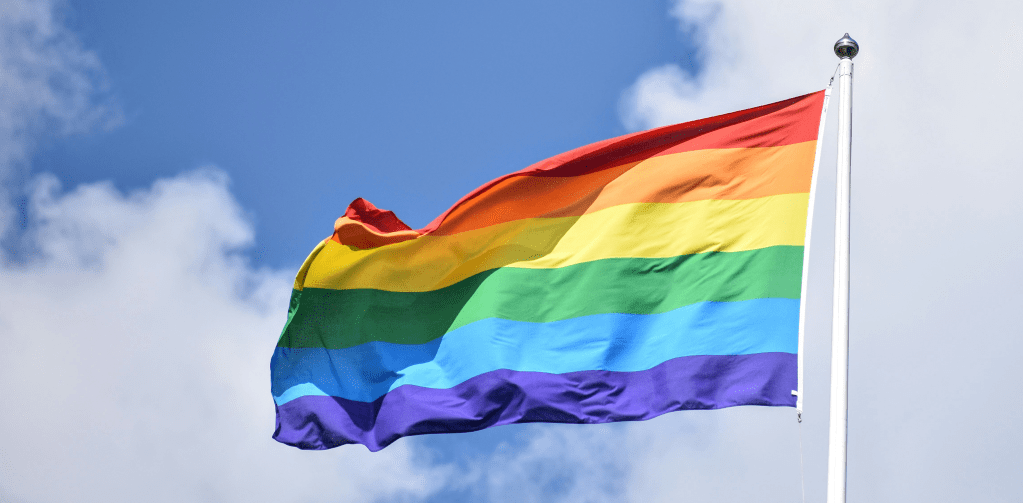
In my post last month, I shared a resolution I wrote as part of an assignment for a theological studies class at Brite Divinity School. The spirit of the assignment was to be “in conversation with” a theologian we had read. The insightful work of Dr. Natalya Cherry, as she elucidates in her still-new book Believing into Christ : Relational Faith and Human Flourishing, inspires my conversation, as I look at the human flourishing and “dignity and respect” of Queer persons. In one of my footnotes to that resolution, I took a moment to discuss my personal thoughts on the still-controversial nature of that term — “Queer” — despite its now relatively common and longitudinous usage in both academic and everyday parlance. This month, I’ve decided to talk more about that term and to highlight my thoughts in preparation for June, the month in which we celebrate, recognize, honor, remember, and amplify the Queer community in honor of the Stonewall Riots of June 28, 1969.
I believe strongly that the words and names we give ourselves matter. In mental health and recovery, we talk about “positive self-talk,” and I think this kind of defining of Queer for myself — and being able to name myself Queer — matters in the same way that teaching myself to stop the “stinking thinking” does in AA.
I use the term Queer to identify the population of people who are kind of like me in that they live outside the mainstream of cishet presenting roles and rules. It is “my” word simply because it speaks to my experience as a person marginalized by my sexuality and gender identity.
Some people like me love this word; others prefer terms of their own.
Dr. Cherry teaches that we have to define controversial terms so that our oppressors not only won’t but can’t co-opt them. I have found her words to be powerfully true in my own experience as a Queer person. In my experience, Queer operates as a noun, adjective, and verb, and that multipartite facility complicates the way readers and listeners perceive it, so I use it with bold caution. I am a Queer; I am a Queer Person; and I Queer the way I do things in the world. Let all three meanings be heard in the spaces where I use the word. Let all three meanings stand for justice among all people who might find themselves part of communities marginalized because of sexuality or gender identity. I’m seeking a Queer(er) understanding of the Love of God when I describe myself as Queer.
The bold caution with which I use the term Queer reminds me of my trans-cestors who rioted at Stonewall, against whom the term was flung in hate, while also liberating me and encouraging others to find liberation by Queering words and practices so often forced into the “closet.” My privilege that comes from my multiple, intersecting identities — that often are seen before my Queerness — cause me to take pause when I use words that still harm some yet bring me joy. So, my use of Queer is just that — mine. Every time I use the word Queer — as a noun, verb, or adjective to describe myself, my theology, or something happening in the world — my decision to do so is both personal and political because I do it in order to lift myself up and to change the world. I am calling for God’s “flourishing” to come from my Queer “believing into Christ.”
In his foundational text Fear of a Queer Planet (1993), on page xiii, which introduced us to the term “heteronormativity,” Michael Warner says:
Every person who comes to a queer self-understanding knows in one way or another that [their] stigmatization is connected with gender, the family, notions of individual freedom, the state, public speech, consumption and desire, nature and culture, maturation, reproductive politics, racial and national fantasy, class identity, truth and trust, censorship, intimate life and social display, terror and violence, health care, and deep cultural norms about the bearing of the body. Being queer means fighting about these issues all the time, locally and piecemeal but always with consequences. It means being able, more or less articulately, to challenge the common understanding of what gender difference means, or what the state is for, or what ‘health’ entails, or what would define fairness, or what a good relationship to the planet’s environment would be.
As we continue to “strive for justice and peace among all people and to respect the dignity of every human being,” I hope that our efforts to Queer language and our own ways of being and seeing continue to become Queer(er) and Queer(er) so that all people “flourish” in diversity and belonging.
And always remember, if you don’t understand, someone else probably doesn’t either. So ask.

