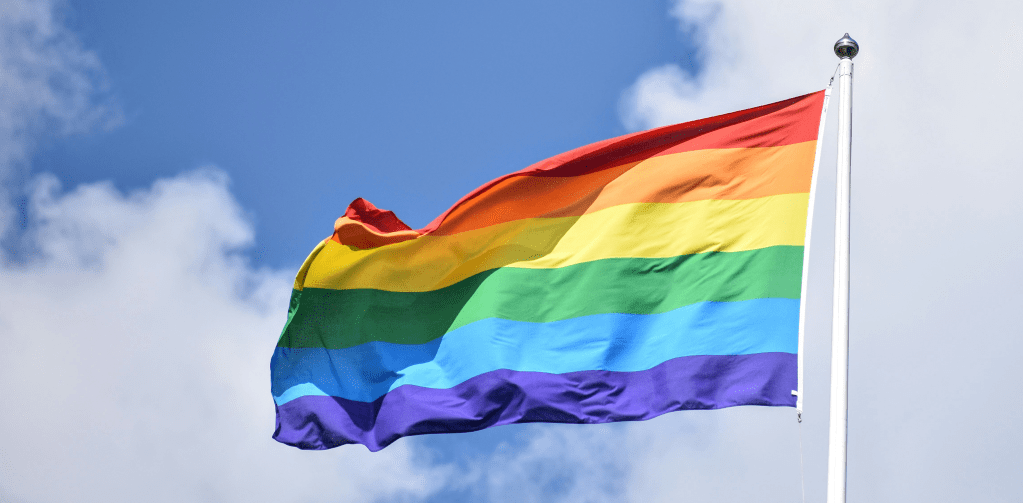
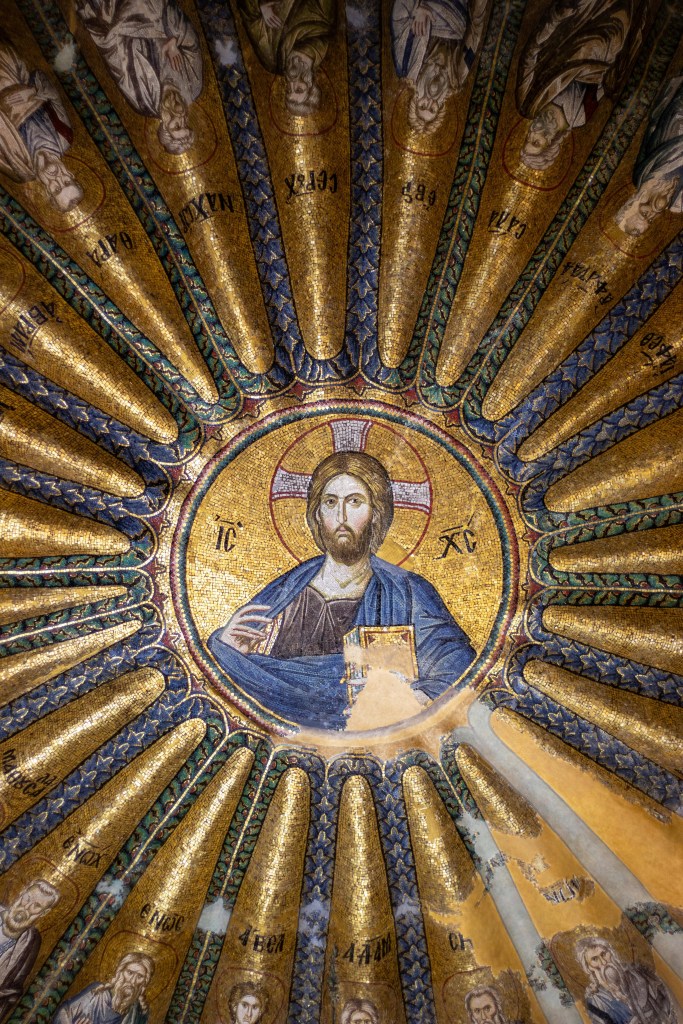
In my post last month, I shared a resolution I wrote as part of an assignment for a theological studies class at Brite Divinity School. The spirit of the assignment was to be “in conversation with” a theologian we had read. The insightful work of Dr. Natalya Cherry, as she elucidates in her still-new book Believing into Christ : Relational Faith and Human Flourishing, inspires my conversation, as I look at the human flourishing and “dignity and respect” of Queer persons. In one of my footnotes to that resolution, I took a moment to discuss my personal thoughts on the still-controversial nature of that term — “Queer” — despite its now relatively common and longitudinous usage in both academic and everyday parlance. This month, I’ve decided to talk more about that term and to highlight my thoughts in preparation for June, the month in which we celebrate, recognize, honor, remember, and amplify the Queer community in honor of the Stonewall Riots of June 28, 1969.
I believe strongly that the words and names we give ourselves matter. In mental health and recovery, we talk about “positive self-talk,” and I think this kind of defining of Queer for myself — and being able to name myself Queer — matters in the same way that teaching myself to stop the “stinking thinking” does in AA.
I use the term Queer to identify the population of people who are kind of like me in that they live outside the mainstream of cishet presenting roles and rules. It is “my” word simply because it speaks to my experience as a person marginalized by my sexuality and gender identity.
Some people like me love this word; others prefer terms of their own.
Dr. Cherry teaches that we have to define controversial terms so that our oppressors not only won’t but can’t co-opt them. I have found her words to be powerfully true in my own experience as a Queer person. In my experience, Queer operates as a noun, adjective, and verb, and that multipartite facility complicates the way readers and listeners perceive it, so I use it with bold caution. I am a Queer; I am a Queer Person; and I Queer the way I do things in the world. Let all three meanings be heard in the spaces where I use the word. Let all three meanings stand for justice among all people who might find themselves part of communities marginalized because of sexuality or gender identity. I’m seeking a Queer(er) understanding of the Love of God when I describe myself as Queer.
The bold caution with which I use the term Queer reminds me of my trans-cestors who rioted at Stonewall, against whom the term was flung in hate, while also liberating me and encouraging others to find liberation by Queering words and practices so often forced into the “closet.” My privilege that comes from my multiple, intersecting identities — that often are seen before my Queerness — cause me to take pause when I use words that still harm some yet bring me joy. So, my use of Queer is just that — mine. Every time I use the word Queer — as a noun, verb, or adjective to describe myself, my theology, or something happening in the world — my decision to do so is both personal and political because I do it in order to lift myself up and to change the world. I am calling for God’s “flourishing” to come from my Queer “believing into Christ.”
In his foundational text Fear of a Queer Planet (1993), on page xiii, which introduced us to the term “heteronormativity,” Michael Warner says:
Every person who comes to a queer self-understanding knows in one way or another that [their] stigmatization is connected with gender, the family, notions of individual freedom, the state, public speech, consumption and desire, nature and culture, maturation, reproductive politics, racial and national fantasy, class identity, truth and trust, censorship, intimate life and social display, terror and violence, health care, and deep cultural norms about the bearing of the body. Being queer means fighting about these issues all the time, locally and piecemeal but always with consequences. It means being able, more or less articulately, to challenge the common understanding of what gender difference means, or what the state is for, or what ‘health’ entails, or what would define fairness, or what a good relationship to the planet’s environment would be.
As we continue to “strive for justice and peace among all people and to respect the dignity of every human being,” I hope that our efforts to Queer language and our own ways of being and seeing continue to become Queer(er) and Queer(er) so that all people “flourish” in diversity and belonging.
And always remember, if you don’t understand, someone else probably doesn’t either. So ask.
A Resolution on “Believing into Christ” for the Flourishing of Queer Christians:
Dr. Natalya Cherry, in Believing into Christ: Relational Faith and Human Flourishing (2021), asks, “What does it mean to flourish?”[1] I urge Christians who covenant in Baptism to “believe into Christ,”[2] as we affirm our Niceno-Constantinopolitan creedal statement, to listen deeply to Queer[3] Christians at the intersection of identity and faith.
WhereasThe International Standard Bible Encyclopedia gives three terms that have been translated as “to flourish:” the Hebrew Parach (פָּרַח) and Tsuts (צוּץ) and the Greek Anathallo (ἀναθάλλω), referencing human likenesses to plants in growth potential, need for nurture, renewal, vitality, etc, especially in the Psalms;[4]
Whereas Merriam-Webster offers this definition of “to flourish”:
     intransitive
     1.	:to grow luxuriantly: THRIVE
     2.	a:to achieve success: PROSPER
        b:to be in a state of activity or production
        c:to reach a height of development or influence
     3.	:to make bold and sweeping gestures

     transitive
        :to wield with dramatic gestures: BRANDISH;[5]
Whereas the people of The Episcopal Church covenant in Baptism to “strive for justice and peace among all people, and respect the dignity of every human being;”[6]
Whereas the Niceno-Constantinopolitan Creed begins, “when rendered in Latin, Credimus in Deum, literally mean[ing] ‘We believe into God;’”[7]
Whereas credere in Deum, according to Cherry, is “technically translated into English as ‘believing into God;’”[8]
Whereas “it’s one thing to believe God exists, another to believe God’s promises come true, and still a whole other thing to do what translates as ‘believing into God,’”[9] as per Cherry;
Whereas Cherry suggests that human flourishing, especially Christian flourishing, is defined by our credal statement to believe into God, and, by extension, into Christ;[10]
Whereas surveys underreport numbers of people who are [Queer];[11]
Whereas 8% of U.S. adults identify as [Queer] according to a 2024 Pew Research Center survey;[12]
Whereas The Williams Institute, in 2020, reports 5.3 million religious [Queer] adults, of whom 1.5 million are Protestant, 1.3 million are Roman Catholic, 1.3 million are another Christian religion;[13]
Whereas, “our religious narratives have contributed to the unlivability of life for [Queer] people, resulting in suicide;”[14]
Whereas The Episcopal Church, The United Methodist Church, and The Evangelical Lutheran Church have a short but vibrant and public history of out clergy serving, including in episcopal roles, including figures such as Bishop Gene Robinson, Bishop Karen Oliveto, and Bishop Megan Rohrer;[15]
Whereas Jesus says:
I am the true vine, and my Father is the gardener…
I am the vine; you are the branches. If you remain in me and I in you, you will bear much fruit; apart from me you can do nothing…You did not choose me, but I chose you and appointed you so that you might go and bear fruit–fruit that will last–and so that whatever you ask in my name the Father will give you. This is my command: Love each other. (John 15:1-17 NRSVUE); and
Whereas Paul proclaims the Way of Jesus following the botanical metaphor of vines and branches, encouraging the grafting in of Gentiles (Romans 11), the cultivating of the fruits of the Spirit (Galatians 5), and the co-laboring in God’s garden of the Church (1 Corinthians 3);
Therefore be it resolved, that because Christians have covenanted in Baptism to “believe into Christ”[16] as we affirm our Niceno-Constantinopolitan credal statement of belief in God, we must listen deeply to Queer[17] Christians at the intersection of identity and faith;
Be it further resolved that the “flourishing” witnessed in Queer Christians depends on our “believ[ing] into Christ; and
Be it further resolved that I call on the Church, especially the progressive Protestant Churches in the United States, to “believe into Christ” and to “believe into God” in order to nurture the flourishing of Queer people in specific ways including, but certainly not limited to these:
Listen to the needs of all current members (not only Queer members) of your church to find the “grace margin” between comfort and fear because this is where growth can and will occur toward greater diversity and cultural awareness;[18]
Listen to Queer members of your church to build awareness of their lived experiences of your church culture’s practices (or lack thereof) of welcoming and inclusion toward them, recognizing that each individual experience is unique;
Express and celebrate Queer lives in worship, religious education, and social events by “welcoming not only [Queer people’s] presence but the unique gifts and particularities of their lives as well;”[19]
Learn, continually, through research, direct listening, and educational opportunities language of inclusivity and use what your learn;[20]
Speak through dialogue with local Queer organizations, critical conversations with Queer members of your church, outspoken allyship and advocacy, and outward and visible print and social media publishing your inclusive policies and practices which continually change reflecting your ongoing learning;[21] and
“Believe into Christ” by living out the radical love of Jesus toward every person, recognizing that Jesus’ radical love is Queer and is embodied in Queer Christians, who are a model for flourishing[22] living between fear from marginalization and possibly death and comfort in being a branch of Jesus.
Bibliography
Beck, Brandon. “Keep Your Eyes Ablaze: Living Our Core Values in the Grace Margin.” Sermon. Presented at the Lent 1 11:00 AM Holy Eucharist, February 22, 2026. https://www.facebook.com/share/v/1GZqN6AG2v/.
Episcopal Church. The Book of Common Prayer, and Administration of the Sacraments and Other Rites and Ceremonies of the Church, Together with the Psalter or Psalms of David, according to the Use of the Episcopal Church. New York ; Oxford: Oxford University Press, 1979.
Evangelical Lutheran Church in America. Evangelical Lutheran Worship. Minneapolis: Augsburg Fortress, 2006.
[3] Queer remains a controversial term. I use the term with what I hope is bold caution, acknowledged via footnote and continued sous rature of other identifiers such as LGBT or LGBTQ in quoted material. My decision to do so is both personal and political, it is one of “flourishing” and “believing into Christ.” I am Queer, and I do theology in a Queer way. In his foundational text Fear of a Queer Planet (1993), on page xiii, which introduced us to the term “heteronormativity,” Michael Warner says, “Every person who comes to a queer self-understanding knows in one way or another that [their] stigmatization is connected with gender, the family, notions of individual freedom, the state, public speech, consumption and desire, nature and culture, maturation, reproductive politics, racial and national fantasy, class identity, truth and trust, censorship, intimate life and social display, terror and violence, health care, and deep cultural norms about the bearing of the body. Being queer means fighting about these issues all the time, locally and piecemeal but always with consequences. It means being able, more or less articulately, to challenge the common understanding of what gender difference means, or what the state is for, or what ‘health’ entails, or what would define fairness, or what a good relationship to the planet’s environment would be.” Sometimes, the words we give ourselves matter. My use of Queer to identify the population about which I talk in this paper is simply that–my word because it speaks to my experience as a person marginalized by my sexuality and gender identity. Some people like me love this word; others prefer terms of their own. In 2014, in my doctoral dissertation, on page 20, I wrote “Even the progressive Handbook of Research on Educational Leadership for Equity and Diversity in the chapter ‘Creating Inclusive Schools for LGBTIQ Youth, Staff, and Families’ acknowledges [that] ‘Various acronyms associated with identifying queer populations can admittedly be confusing’ and recommends ‘using either LGBTIQ or queer as appropriate descriptors’” (my emphasis now). Because Queer is a noun, adjective, and verb, I use it, as I said, with bold caution. I am a Queer; I am a Queer Person, and I Queer the way I do things in the world. Let all three meanings be heard in the spaces where I use the word. Let all three meanings stand for justice among all people who might find themselves part of communities marginalized because of sexuality or gender identity.
[6] Episcopal Church, The Book of Common Prayer, and Administration of the Sacraments and Other Rites and Ceremonies of the Church, Together with the Psalter or Psalms of David, according to the Use of the Episcopal Church. (New York ; Oxford: Oxford University Press, 1979), 305.
[17] Queer remains a controversial term. I use the term with what I hope is bold caution, acknowledged via footnote and continued sous rature of other identifiers such as LGBT or LGBTQ in quoted material. My decision to do so is both personal and political, it is one of “flourishing” and “believing into Christ.” I am Queer, and I do theology in a Queer way. In his foundational text Fear of a Queer Planet (1993), on page xiii, which introduced us to the term “heteronormativity,” Michael Warner says, “Every person who comes to a queer self-understanding knows in one way or another that [their] stigmatization is connected with gender, the family, notions of individual freedom, the state, public speech, consumption and desire, nature and culture, maturation, reproductive politics, racial and national fantasy, class identity, truth and trust, censorship, intimate life and social display, terror and violence, health care, and deep cultural norms about the bearing of the body. Being queer means fighting about these issues all the time, locally and piecemeal but always with consequences. It means being able, more or less articulately, to challenge the common understanding of what gender difference means, or what the state is for, or what ‘health’ entails, or what would define fairness, or what a good relationship to the planet’s environment would be.” Sometimes, the words we give ourselves matter. My use of Queer to identify the population about which I talk in this paper is simply that–my word because it speaks to my experience as a person marginalized by my sexuality and gender identity. Some people like me love this word; others prefer terms of their own. In 2014, in my doctoral dissertation, on page 20, I wrote “Even the progressive Handbook of Research on Educational Leadership for Equity and Diversity in the chapter ‘Creating Inclusive Schools for LGBTIQ Youth, Staff, and Families’ acknowledges [that] ‘Various acronyms associated with identifying queer populations can admittedly be confusing’ and recommends ‘using either LGBTIQ or queer as appropriate descriptors’” (my emphasis now). Because Queer is a noun, adjective, and verb, I use it, as I said, with bold caution. I am a Queer; I am a Queer Person, and I Queer the way I do things in the world. Let all three meanings be heard in the spaces where I use the word. Let all three meanings stand for justice among all people who might find themselves part of communities marginalized because of sexuality or gender identity.