
by Demi Prentiss
Just this past Sunday, many Christian congregations celebrated the Feast of Pentecost as “the birthday of the church.” The word “Pentecost” comes from the Greek word for “fiftieth,” and was marked as the fiftieth day after Passover with the Feast of Weeks (Shavuot). In first century Judaism, Shavuot celebrated the end of the wheat harvest and was considered the anniversary of the giving of the Torah (the Law) to Moses on Mount Sinai. Pentecost was one of three major festivals when Jewish men made a pilgrimage to the Temple in Jerusalem, so on that day the city was packed with pilgrims from many lands.
Acts 2 tells the story of Pentecost as the day when the Holy Spirit – manifest in wind and fire – fell upon the crowd of Jesus followers and skeptics alike. The early church understood that Pentecost extended the giving of the Law, written on stone tablets, with the out-pouring of the Holy Spirit, writing God’s laws on the hearts of all believers. The Message, a paraphrase of the Bible, says, “like a wildfire, the Holy Spirit spread through their ranks, and they started speaking in a number of different languages as the Spirit prompted them…. When [the crowd of Shavuot pilgrims] heard the sound they came on the run. Then when they heard, one after another, their own mother tongues being spoken, they were blown away…. ‘How come we’re hearing them talk in our various mother tongues?’” (Acts 2:2-8)
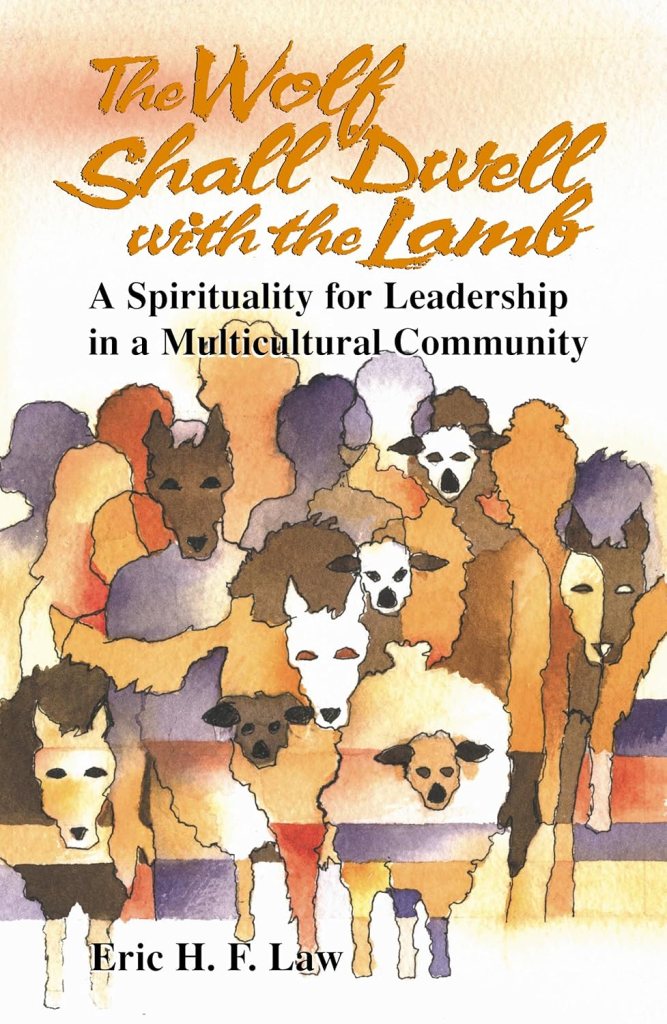
Eric Law, in his book The Wolf Shall Dwell with the Lamb, explains the miracle of Pentecost as a two-fold breach of cultural boundaries. The Christ-followers – largely Galileans, considered rednecks with country accents – were suddenly speaking aloud, describing God’s mighty works. And the skeptical Shavuot pilgrims – many of them among Judaism’s elites – were listening and understanding. The Galileans’ “miracle of the tongue” was matched by the elites’ “miracle of the ear.” The marginalized gained their voices, despite their fears, and the elites understood more than words, overcoming division and contempt. Instead of the Tower of Babel, the crowd experienced cross-cultural connection and clarity. The multi-dimensional transformation was not “one size fits all.”
Br. Lain Wilson, SSJE, speaks to the reach of the transformation unleashed by the events of Easter – life-giving transformation in multiple dimensions far beyond first-century Jerusalem and beyond our own doubts:
Our primary response, in bearing witness to the Resurrection, is to be transformed – to recognize ourselves as having passed through death with Christ into a new life, a life marked by mercy, peace, love, truth, and hope. To believe that this joy we feel is real. And to hold this fact as primary, and thereby to meet all the suffering that surrounds us as a transformed, Easter people.
The new life we enter may be distinctive for each of us, addressing our personal pain, doubts, and fears and kindling hope. As Pentecost proclaims, beyond those personal transformations, God is at work through the shared life of the community of believers. Through the Body of Christ, the work of the Spirit extends to all God’s people – Greek or Jew, servant or free, woman or man (Galatians 3:28), and even bumpkins or elites. God’s Spirit reaches beyond our small stories to shape the larger story of God working in and through all of us.

