Seeing saints

by Fletcher Lowe

“They lived not only in ages past, there are hundreds of thousands still.

The world is bright with the joyous saints who love to do Jesus’ will.

You can meet them in schools or in lanes or at sea, in church or in trains or in shops or at tea,

For the saints of God are just folk like me, and I mean to be one too.”

St. Gregory of Nyssa Church in San Francisco, CA

This past All Saints Sunday we sang this familiar hymn, and for the first time I really heard those words from the last stanza.  How relevant to connecting Sunday with Monday, liturgy with life, worship with work!!

To paraphrase the Ten Commandments (Please don’t send a lightning bolt, Lord!),

Remember the weekday to keep it holy!!

All of which reminds me of a reflection that George McLeod, a Scottish pastor who founded the re-opening of the Iona Community, made many years ago:

I simply argue that

the CROSS

should be raised in the center of the market place

as well as on the steeple of the church. 

I am recovering the claim that

Jesus was not crucified in a cathedral between two candles,

but on a cross between two thieves,

on the town’s garbage heap,

at a crossroad so cosmopolitan they had to write his title in Hebrew, and Latin and Greek…

at the place where cynics talk smut

and thieves curse

and soldiers gamble.

Because that is where he died,

and that is what he died for,

and that is what he died about,

and that is where churchmen ought to be

and what churchmen out to be about.

You Are the Light of the World

by Pam Tinsley

The verse, “You are the Light of the World,” from Matthew 5:14 was the theme of my congregation’s 2018 Stewardship Campaign. What I like about this theme is that it helps us focus outward from within the church. Jesus calls us to live as the light of the world every day – not just during stewardship campaigns – and the theme captures the relationship between stewardship and ministry in daily life. Our stewardship brochure asked the questions “How does our church shape the rest of your week?” or “What does ‘being the light of the world’ mean to you?”  We invited all members of the congregation to reflect on those questions during the month of November.

We also asked a handful of parishioners to share how they feel our church helps them to shine the light of Christ in the world. A small business owner said that her faithful Sunday worship and meaningful relationships within the church community help her to be a better wife, mother, grandmother, and a better boss.  A millennial para-educator, who drives 30 minutes to attend our church, describes it as an anchor that rekindles her own lamp so that God’s light can shine through her when she pours herself out at a job she loves – but which is also a job filled with challenges. A high school teacher believes our communal worship helps him to recognize his students’ vulnerability as well as their sense of compassion and justice. During the week he seeks to bring God’s grace into his relationships outside the church. And a retiree realizes that she kindles the light of Christ through worship, study and service. Then she can be the light of the world outside of church walls and outside of church-related ministries when she helps at the local food bank and other community service activities.

I find it striking how those rather simple questions prompted such meaningful reflections. By sharing their own experiences in writing or during a worship service, others in the congregation were invited to reflect more deeply on how they, too, might respond.

And now I invite you to consider:

  • How does regular worship shape the rest of your week?
  • What does “being the light of the world” mean to you?

The Gospel and the call to live it

by Wayne Schwab

Evangelism is the call to join the church. That is only half of Jesus’ story – and the smaller half, at that. The big part of Jesus’s story is calling the hearer to join his mission. We seldom get around to that. No wonder Christians are so mute and invisible on solving the issuers of the day – of adequate health care for all, a living wage, and care for “this fragile earth, our island home.”

When you talk of God, Jesus, and the church, go on to talk about joining the mission.

I have been working on evangelism for a long time. From the start, there was something missing. Presiding Bishop Michael Curry’s talk of the Jesus movement has been part of finding what is missing. Calling to join Jesus’ mission to make the world more loving and more just is the missing piece.

Mark’s Gospel has helped me the most. From the start, this first-written of the four Gospels tells of Jesus’ good news that God’s kingdom or reign is at hand (Mark 1:15). Eugene H. Petersen puts it this way in a present-day wording: “Time’s up! God’s kingdom is here. Change your life and believe the Message.”

Creative Commons: mac8oppo

Now comes the “eye-opener,” perhaps for you as well as for me. Jesus’ first act is to call Simon (to be called Peter) and Andrew to join him, to live the good news of God’s reign. “Follow me and I will make you fish for people.” Do not take “fishing for people” as fishing for believers and church members. Jesus is calling them – and us – to be part of his work, his mission to make the world more loving and more just.

Yes, evangelize and call to join the mission.

God loves you; God calls you to love others!

Name it, claim it

by Fletcher Lowe

“I really like my work here.” the dental assistant said as I sat patiently waiting for the dentist to appear. “I like what I do and the people I work with and the patients—at least most of them, including you,” she continued.

Francesca Balajadia, Red Cross volunteer, is participating in the Red Cross Dental Assistant Training program. (U.S. Air Force photo/Staff Sgt. Alesia Goosic)

I said, “It sounds like you have a real ministry here.” There was a pause, and then she said: “Really?  I never thought of it like that, but maybe what I do really is ministry.”

“Well.” I said,” it certainly sounds like a ministry to me.”

This is not an isolated event.  There are so many people working so many jobs that really are their ministry.  We just need to help them name and own it.  In so doing we put another dimension in what they do: That it is more than a job, really a ministry, God-given, through which they live out their faith in their work.

Christians of all sorts and conditions are doing ministry in all kinds of places and positions.  Our role is to help them name what they are doing as ministry and to help them own it.  What about the Uber driver or the ER nurse or the cleaning person in our office building or the receptionist in that office or the teller at our bank or the clerk in the clothing store…. The very act of affirming what a person does, thanking them for their work, can begin a short conversation that leads to naming what they do as ministry.

So often we limit the use of words like ministry and vocation and calling to those who are ordained, whereas all the Baptized are called to live into their Baptism in their daily lives, which is their ministry.  We need to help folks make that connection by naming it, so they may own it.

As Martin Luther once remarked, “The housemaid on her knees scrubbing the floor is doing a work as pleasing in the sight of the Almighty as the priest on his knees before the altar saying Mass.” We have a mission: To help the “housemaids” whose lives intersect with ours—even briefly—to own their work as ministry.

Shifting from ‘adulting’ to vocation

by Demi Prentiss

A recent blog post caught my eye. While it was aimed a young adults, I think the message is a profound one for the entire faith community:

“According to the Bureau of Labor Statistics, young adults have lower employment levels and smaller incomes than previous generations. In addition, young adults are more frequently strapped with student loan debt which impacts their options for housing and reduces their buying power. Young adults are waiting longer to complete traditional milestones of adulthood like marriage and starting a family. At the same time, new milestones of adulthood have yet to emerge.

“When my young adult friends say “I’m tired of adulting” they are most often sharing their frustrations over these realities. They feel stuck because in many ways they are. To adult is to become an effective manager of your life and while that is good, it feels incomplete.

“This hunger for meaning is where I believe communities of faith can help. Revitalized communities of faith provide alternatives to “mindless adulting” by equipping men and women – both young and old – to discover and live their vocations. In these communities, stale catechesis is replaced by a Culture of Encounter and Vocation.

“How do congregational leaders begin this revitalization?

  • Let go of old program models that don’t work
  • Create space for people to listen and hear God who is calling
  • Help people identify their gifts
  • Appreciate the diversity of talents present in the community
  • Call gifts from the margin to the center
  • Uphold the dignity of all work
  • Place people in relationship with one another so needs can be shared without shame
  • Celebrate and find meaning through story sharing”

What might our faith communities look like if believers were formed to discover and live their vocations – not simply on the church grounds or on a mission trip, but every day? How do we uphold and celebrate the daily life ministries of all the baptized? What needs to change in your faith community to take the first step in this direction?

Blessing our pets — and more

by Pam Tinsley

Toby receives a blessing.My church, like many, celebrates the Sunday nearest the Feast of St. Francis with a Blessing of the Animals. Pet blessings take place in different ways: outdoors following the service or in a church hall with the pets present throughout worship. My own church chooses to celebrate the Feast of St. Francis in the church with pets, appropriately leashed or constrained, “participating” throughout the service.

I look forward to the Sunday our pets join us in church. Yes, the dog hair on the pews is a bit messy, and there’s mild commotion during the service. (I’ve cringed when my elderly basset added some heartfelt “amens” during the sermon.)  Yet, it’s an inter-generational experience that helps us share part of our personal lives, even if we don’t all have pets. A mother of young children said to me, “I love this Sunday because everyone here with pets frets about their behavior; now they understand how I feel every Sunday with my children in church, even though I know they are welcome!”

What I like most about this Sunday, however, is that it is a way to share stories of ministry from our daily lives.  These stories are mostly shared without words, yet are reflected by our love and care for our four-legged, furry companions, or those in an aquarium or crate. Others witness that love and care for God’s creatures, as we tend to them, soothe the anxious ones, and gratefully bring them forward to be blessed and to be blessed ourselves as their devoted caregivers. And, sometimes professionals, such as veterinarians, humane society workers, and dog walkers, might receive special blessings. These stories of this ministry of caring for our beloved pets reveal a side of our “Monday through Saturday self,” which is blended on this one Sunday during our common worship.

Such opportunities to bring a personal part of our daily ministry together with our church lives seem to occur infrequently. It strikes me that, by making this a special occasion, we’re suggesting that church should be separate from daily life. Yet, if our Sunday worship is to shape our lives throughout the week, might we not also find a way to regularly share those stories of our daily ministry within the church, encouraging our congregations to recognize how each of us partners with God in God’s mission? A beginning might be modeled on the weekly prayer cycle for “The Baptized in Their Daily Life and Work” suggested by Demi Prentiss and Fletcher Lowe at http://www.RadicalSending.com. And, perhaps we might take another step and invite those who are being prayed for to come forward for prayers – just as we do with birthdays, anniversaries, and other milestones.

Holding tank to base camp

by Jennifer Woodruff-Tait

We’ve been having a thought-provoking series here recently on how to change your congregation’s system to produce a church where all the members know, and behave, as though they are sent on mission. (It was sparked by this post by A. Wayne Schwab, which you may want to keep close by for reference.)

Tents at the base camp, Susunia Hill, Bankura, West Bengal, at Basic Rock Climbing Course by MAK (Mountaineers Association of Krishnanagar)

One important piece of changing the system is the church’s leadership. Basically, the leadership needs to help determine what needs changing, redesign the ministries they lead in order to produce the change, and be accountable to someone for the change. This applies to those whose leadership we immediately think of, such as the vestry or the minister of music or the director of Christian education. But it also applies to influential people within the church even if they hold no formal position. (My father, a retired United Methodist pastor and denominational bureaucrat, likes to quip “You know why they call certain people pillars of the church? Because they hold things up.”)

Bears Bluff NFH volunteer nets a large cobia out of a temporary holding tank. Credit: USFWS Image

Whether they are official or unofficial leaders, many in church leadership are working within a paradigm where mission is seen as solely or primarily the job of paid staff. If they have a full-time priest and church staff, they expect those people to do the mission of the church; if they are (as many Episcopal parishes are) small churches who can no longer support full-time staff, they yearn for the day when they might have full-time staff again. This produces a “holding tank” church system that waits around for something to happen, instead of a base camp system equipping people to infect their communities with the love of Jesus right now.

How do we get the church leadership on board to move from holding tank to base camp? Church people have been wrestling with this question for years, and it is a question deeply intertwined with the fraught mood of our current society. We are the middle of a huge paradigm shift from church-as-business-as-usual to church-as-a-chosen-and-commissioned-way-of-life. Congregations–especially white, middle-class congregations–may feel that holding on to a priest-central model will keep them connected to their particular “good old days,” and read any change as being deeply threatening.

The important thing to remember here is that while the priest is the sacramental center of the congregation, this does not mean that he or she needs to be in the center of every ministry the Eucharist makes possible.  The Eucharist is the heart of the worshiping community, and the priest is needed to make Eucharist. But through the grace of God, that Eucharist is meant to strengthen all who worship so that they can be about the mission of God in the world. As the catechism reminds us: “The ministers of the church are lay persons, bishops, priests, and deacons” and the ministry of the laity is “to represent Christ and his Church; to bear witness to him wherever they may be”  (BCP, p. 855).

So: whatever your place in the system, begin building trust with those around you, especially those in leadership. And once trust is built, begin raising hard questions about whether you are a base camp or a holding tank. When a church’s leadership is sold on a vision of every member in ministry, commissioned by their baptism and empowered by the Eucharist, the rest of the system will become easier to shift.

5 ways to shift the system

by Demi Prentiss

Wayne Schwab’s recent post reminds us that the system that we’re working inside of is perfectly designed to give us what we’re getting. So if we want to see a different result, we need to redesign the system. The bad news is that wholesale redesign is difficult, if not impossible. The good news is that the simplest way to change a system is to change our own actions within the system.

Like Wayne and my other EBM colleagues, I long for a church system that focuses less on itself and more on its mission. I believe that the compelling mission of the Church—the Body of Christ—is to empower and embolden each believer with the result that they

act as an agent of the Living God,

working in partnership with The Ground of All Being

in each aspect of daily living

to make our world more loving and more just.

When we say we want the church to do that, then the system-shifting question is How will I, inside my faith community, do that?

How will I communicate, by word and example, how I understand myself to be sent, on mission in each part of my daily life?

What aspect of my faith community’s life can I re-focus toward ministry in daily life?

How will I discover, cultivate, and join with partners in discerning the shifts in congregational life that might re-shape the understanding of faith-filled living?

As a certified coach, I know better than to offer a one-size-fits-all prescription for any person who wants to grow and change in order to live more fruitfully.  That said, here’s a “starter packet” of five possible ways you might choose to engage those system-changing questions:

  1. Have a “one-on-one” conversation with a person you have an inkling might feel a similar stirring toward change.
  2. Create a “five by five”–a group of five people willing to gather for five meetings to focus on a particular issue.
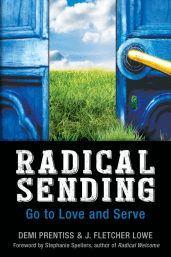
  3. Engage with a book that might offer food for thought about systemic change, like Radical Sending, or Where the Members are the Missionaries, or Every Job a Parable.
  4. Examine one area of your own life—home, work, leisure, community, wider world, congregation, spiritual life—where you see God acting, and commit to how you will join God in working to make the situation more loving and more just.
  5. Cultivate a practice of daily “examen,” asking three questions:
    • “Where did I cooperate with God today?”
    • “Where did I not cooperate with God today?”
    • “What do I want to do tomorrow to be more ready to cooperate with God?”

More on congregational systems

by Fletcher Lowe

I live in Richmond, VA, a reasonably large metropolitan area.  There are several Episcopal churches from which people can choose.  The congregation that I rectored several years ago made a conscious identity decision—to be known for its creative liturgy and for its community and international outreach.  To make that happen, the system of our congregational life was molded to affect that.  That meant having a liturgy team that could think out of the box.  It meant taking some initiative both toward community needs and international connections.

Every congregation makes decisions about its identity, some conscious, others not so. It has a system that is designed to produce certain results. The systemic question is, going back to the earlier discussion of 2 blogs ago, is your mission statement where your congregational system is?  The actual mission statement may be something that is unwritten, but really lived into—different from the one stated, yet securely at the heart of a congregation’s life. It’s how that congregation really functions and operates, its modus operandi. For example, a congregation’s mission statement may read that it believes in lay ministry, but practically its system only prepares/trains/honors laity who serve/minister in the congregation, e.g. lay eucharistic ministers, church school teachers, altar guild members.

So let’s take a congregation that really wants to live into a mission statement to empower the 99%, the lay folks, in their daily lives—the lives they live outside the church walls. Then conscious decisions are made in terms of its liturgy, pastoral care, communication, and formation which support that decision.  For example, in liturgy, how do the Sunday- and week-day- liturgies enhance the calling of all the Baptized. Through sermons, prayers of the people, the Dismissal?  On occasion are there liturgies or litanies that recognize the lay members in their work? Are there frequent Ministry Moments when congregants share their Sunday-Monday connection?  Depending on the congregation’s past, this may mean a systemic change.  But engaging with the questions makes clear the congregation’s desire to match its mission statement with its actual systemic actions.

The truth remains: A congregation’s system, not its statements, is what produces the kinds of members who fulfill that system.

So how do we redesign a congregation’s system?  Stay tuned.

Baptismal accountability

by Edward L. Lee, Jr.

In Wayne Schwab’s recent posting for Living God’s Mission titled “Designing the Right System” he posited this insight: If we want a church that gives primary emphasis to the concept of ministry in daily life then we have to  “redesign the system to produce the results you want.” That’s a big task given our current denominational and congregational traditions, practices, and governance structures. But he’s right.

An essential element in any redesign of our church systems will have to be member accountability. Why?  The church is a voluntary association of leaders and members. There are ways, both formal and informal, to hold leaders accountable. But there is little if ever any likelihood that all members will be held accountable for attitudes and behavior that contradict the norms and values of the church’s mission and ministry embodied in Baptism and articulated in the Baptismal Covenant (see Book of Common Prayer, pp. 304-305).

What is meaningful accountability in a community, a congregation of the baptized? Accountability means simply that: the ability to give an account. I Peter 3:15 puts it this way: “Always be prepared to make your defense to anyone who demands from you an accounting for the hope that is in you.” (NRSV) That hope is grounded in faithfulness to our baptism and the covenant we have with Christ in God’s mission in and for the world. That mission is daily and not just Sunday. It is in the fullness of our lives and not just in the confines of our home parish. The latter should be a place and community of empowerment, a system for supporting and affirming ministry in daily life.

How might a congregation exercise baptismal accountability? First, it makes it an expectation of membership, of what it means to be “sealed by the Holy Spirit in Baptism and marked as Christ’s own forever.” In short, that being baptized is serious and solemn business day in and day out.

Second, offer members regular opportunities to “give an accounting,” a mutual sharing of what ministry in daily life entails with all of its complexities, contradictions, challenges, and confusions.

And third, trust the community of the baptized to help answer the question, “How am I doing?” Baptismal accountability is not an inventory of success or failure, of pride or repentance, but of assessing with others how we live into and live out our baptismal mandate to see and serve God in the world as we daily encounter, endure, and embrace it.