by Demi Prentiss
For prehistoric people, differences among people or species or environments triggered fear, and not without reason. Something new – different people groups, different environments, different foods, different customs – could pose an existential threat. And those nearly automatic survival responses are still present in our 21st century brains and bodies.
Among first-century Jews, the idea of crossing cultural, ethnic, or social boundaries was threatening and revolutionary. Scholars now believe that one of the potent attractors bringing people to early Christianity was the radical acceptance shown by those early believers – most of them at the margins of society – for the outcasts and the downtrodden. Richard Rohr, in a 2028 Daily Meditation, wrote, “From the perspective of occupying Roman powers, the Christian sect was radical because it encouraged alternative behaviors that were both attractive to those at the bottom and threatening to the worldview of empire. Rather than acquiring wealth, this new sect shared possessions equally. Followers of the Way lived together with people of different ethnicities and social classes rather than following classist and cultural norms.” [1]
In her book A People’s History of Christianity, historian Diana Butler Bass writes, “For all the complexity of primitive Christianity, a startling idea runs through early records of faith: Christianity seems to have succeeded because it transformed the lives of people in a chaotic world.”[2]
The notion that diversity and difference are desirable seems counter-intuitive to many of us. But looking at the incredible diversity found in nature, we begin to grasp the idea that abundance and variety are hallmarks of God’s creation. And the profusion of variations found in nature increases the odds of survival. Variety and evolution are the twin engines of life on Earth. Variety provides the raw materials (genetic differences), and evolution determines how those materials change over generations. That’s true not only for biology, but also for human systems.
Br. Curtis Almquist, SSJE, writes about God at work in and through differences:
"It is unjust that some people don't know that they belong: that their uniqueness because of their skin color, or cultural, or ethnic, or religious heritage, or education, or age, or abilities have been used against them to keep them out push them down. God’s intention is just the opposite. These differences are evidence of the majesty of God, who has created and shared life with us in a world with almost infinite differences."

What if we could understand that every variation, of every kind of matter, is an expression of the living God, who created and is at work in and through all of God’s creation?  Poet Steve Garnaas-Holmes offers a view of the infinite and ineffable God at work in the most unexpected places:
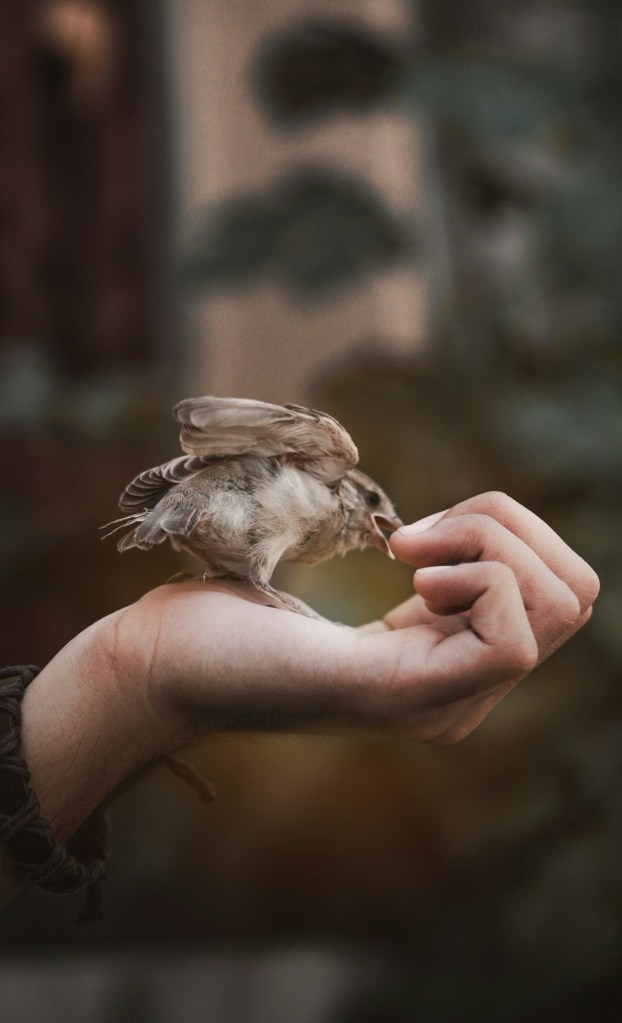
Sparrow

          Are not two sparrows sold for a penny?
          Yet not one of them will fall to the ground apart from your Abba God.
          And even the hairs of your head are all counted.
          So do not be afraid;
          you are of more value than many sparrows.
                                           —Matthew 10.29-31

They do fall.
But into the hands of God,
out of the sky that is God.

You will suffer.
But your sorrow is God,
divine consciousness,
mindful in you,

the love that has tended
every grain of your being,
every verb of your story.

Your pain is God,
divine vulnerability
alive in you.
That you are not a rock.

That you can fall
is God having woven divine light
into a body,

that you can drink the nectar of this world
and be filled,
that you can love at great cost.

Like God, who is also a sparrow,
unnoticed, in the open field.
[1] Richard Rohr, “The Beginnings of the Way,” Daily Meditation, September 2, 2018.
[2] Diana Butler Bass, A People’s History of Christianity: The Other Side of the Story (HarperOne, 2009), 26.

